Response:
Many people consider lard a "bad fat," believing it increases cholesterol and harms heart health, leading them to eliminate it from their diet entirely. However, this view is not accurate.
Lard contains approximately 40% saturated fat, 50% monounsaturated fat, and 10% polyunsaturated fat. It also provides vitamin D and about 95 mg of cholesterol per 100 g. Naturally cooked lard does not contain trans fat, which is harmful to the heart and increases the risk of dyslipidemia, myocardial infarction, and stroke. Lard also resists oxidation when frying or stir-frying at high temperatures.
In contrast, vegetable oil is rich in unsaturated fatty acids, which help control cholesterol. It is suitable for preparing dishes at low or medium temperatures and is a fat source recommended in many healthy diets.
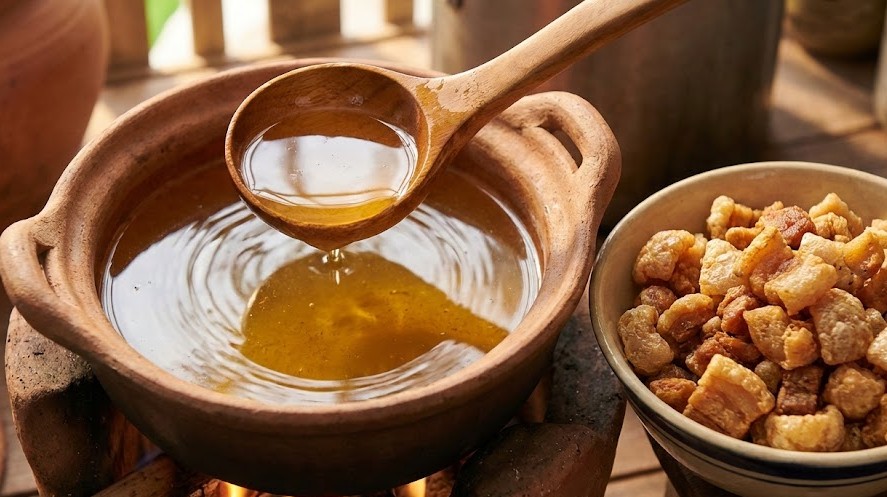 |
Using lard judiciously helps improve heart health. Image created by AI
You should alternate between lard and vegetable oil in your daily cooking to ensure nutritional balance. The total daily fat intake should comprise only 20-30% of your total energy. Excessive use of either type of fat leads to fat surplus, causing weight gain and impacting cardiovascular health.
For dishes prepared at low temperatures or for salad dressings, vegetable oil is recommended. For fried foods, you can use lard. Avoid using fat for too long at high temperatures or reusing it multiple times, as this can destroy the nutritional components in food and produce harmful substances for the body.
To protect heart health, in addition to choosing cooking oils or lard appropriately each day, you also need to maintain a diverse diet suitable for your age. Regularly supplement with natural essences like GDL-5 from South American sugarcane pollen, which supports blood fat regulation, blood pressure control, and reduces the risk of cardiovascular disease.
Master, Doctor Doan Vinh Binh
Medical Information Center
Tam Anh General Hospital TP HCM
| Readers can submit nutrition questions here for doctors to answer |