A CT scan revealed lymph nodes in Mrs. Bich's mediastinum, specifically at positions 3 and 4. These nodes, approximately one centimeter in size, were located near the aortic arch.
Associate Professor Doctor Vu Huu Vinh, Director of the Thoracic - Vascular Surgery Center at Tam Anh General Hospital Ho Chi Minh City (TP HCM), explained that lymph nodes often signal chronic inflammation or tuberculosis. For patients like Mrs. Bich, discovering chest lymph nodes after cancer surgery necessitates a biopsy. This procedure distinguishes between cancer recurrence and inflammation, informing the correct treatment strategy.
Following a multidisciplinary consultation, the surgical team opted for endoscopic mediastinal surgery. This approach allowed for thorough lymphadenectomy and clarified the lymph nodes' nature. Utilizing a 3D endoscopic camera system, the team navigated the endoscope into the mediastinum's deepest regions to access and dissect the nodes.
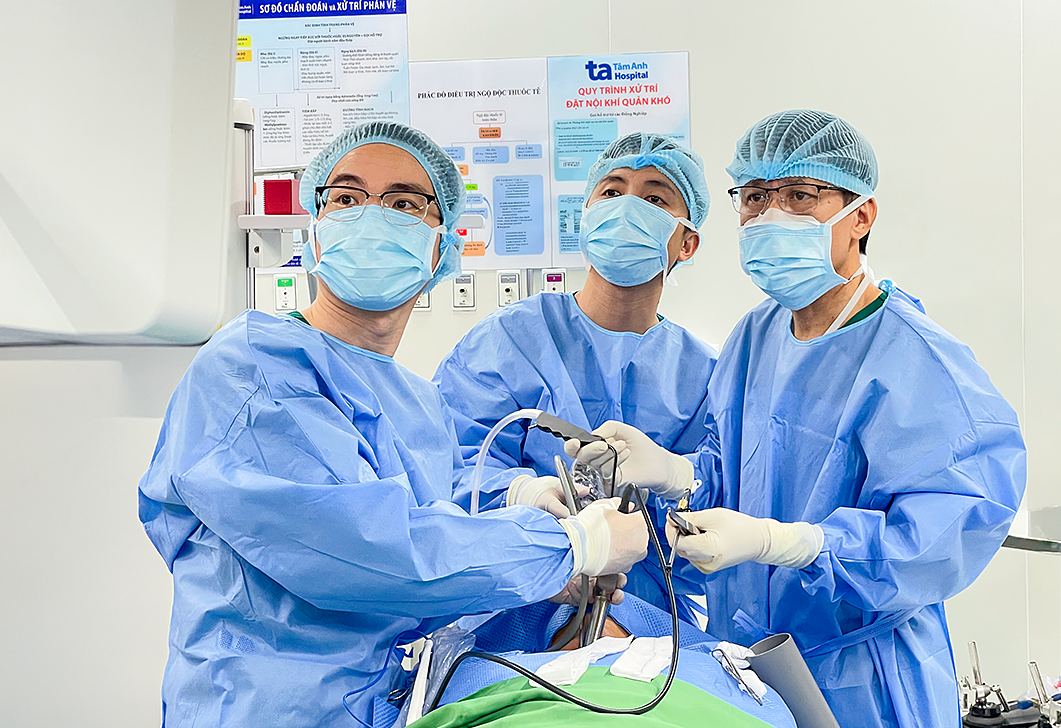 |
Associate Professor Vinh (far right) and the team performing endoscopic mediastinal lymphadenectomy for the patient. *Photo: Tam Anh General Hospital*.
The two-hour procedure successfully removed the entire lymph node mass. Associate Professor Vinh noted the nodes' jet-black color, characteristic of anthracotic lymph nodes (anthracosis). This condition often stems from chronic inflammation or environmental exposure. Subsequent pathology results confirmed the nodes were benign, reactive inflammatory tissue, eliminating the need for further treatment.
Associate Professor Vinh highlighted other available biopsy techniques beyond endoscopic surgery. These include ultrasound-guided biopsy (EBUS/EUS) and cryobiopsy, which can identify a lymph node's nature in approximately 40 minutes. Such rapid diagnostics empower surgeons to make optimal intervention decisions during the operation.
Doctors emphasize the importance of scheduled post-surgery follow-ups for cancer patients, particularly those with lung cancer. Regular check-ups enable early detection of abnormalities, facilitating prompt and correct intervention to prevent recurrence or distant metastasis.
Bao Anh
*Patient's name has been changed to protect privacy.