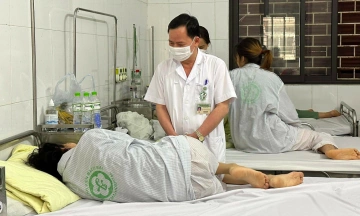
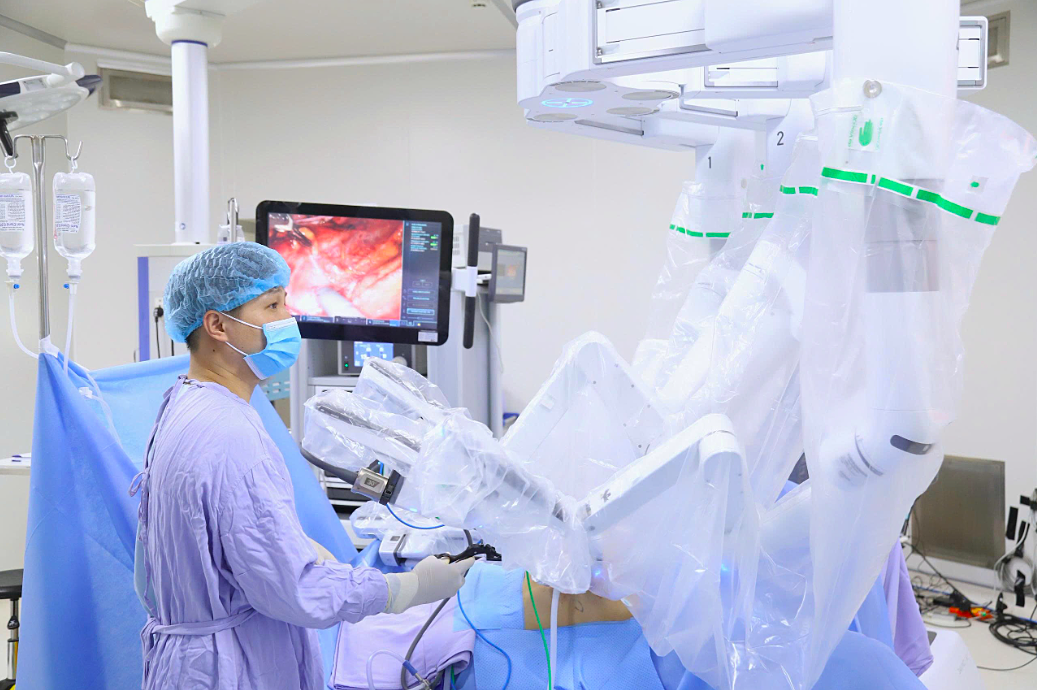
The patient was admitted to a lower-tier hospital in TP HCM with severe abdominal pain, radiating to his back and throughout his abdomen, accompanied by sweating, dizziness, and shock. Examination revealed a large abdominal aortic aneurysm, about 6 cm in size, which had ruptured, causing severe bleeding. This is a particularly dangerous emergency, where a patient can die quickly without timely intervention.
Doctors at the lower-tier hospital immediately consulted with Thong Nhat Hospital. They actively resuscitated the patient while urgently transferring him for surgery. While the ambulance was en route, Thong Nhat Hospital doctors activated the red alert protocol, preparing the operating room and necessary conditions for immediate intervention upon the patient's arrival.
The patient arrived at the hospital in severe hemorrhagic shock, with dangerously low blood pressure, requiring medication to maintain it. He was immediately transferred to the operating room.
On 10/8, Dr. Ly Minh Tung, from the Department of Cardiovascular and Thoracic Surgery, stated that during surgery, doctors noted a significant amount of blood in the abdominal cavity. The ruptured blood vessel was in a complex area, making bleeding control and surgery difficult.
During the procedure, due to extensive blood loss and severe shock, the patient's heart stopped at one point. The team simultaneously performed cardiac resuscitation and continued surgery to control the bleeding source. After urgent efforts, the patient's circulation was re-established.
Doctors successfully replaced the ruptured segment of the abdominal aorta and managed the blood clot in the abdominal cavity. During and after surgery, the patient received a total of 3,200 ml of blood and blood products to compensate for the loss. Currently, the patient's health is stable, he has returned to normal activities, and is expected to be discharged in one to two days.
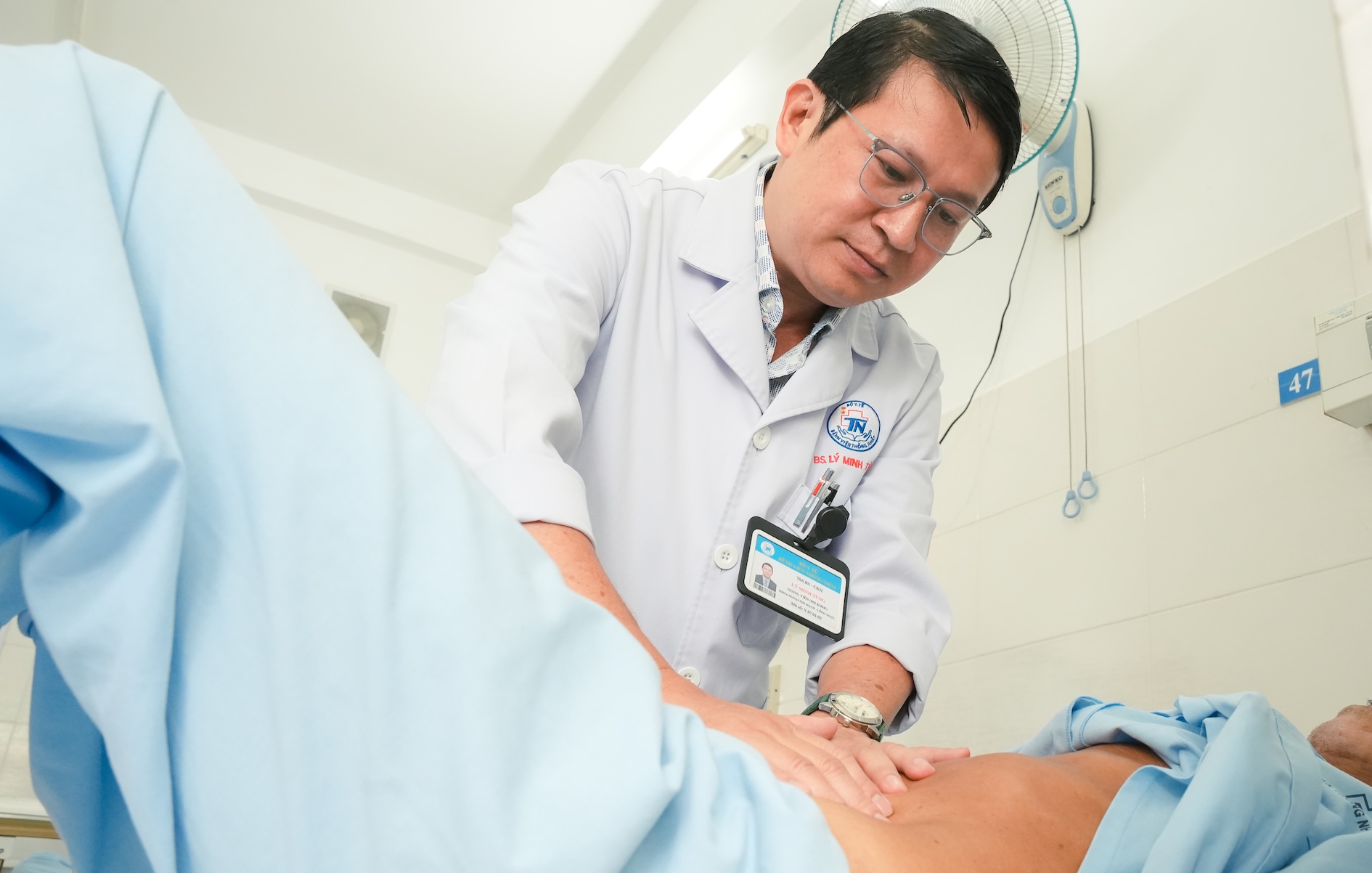 |
Bac si tham kham nguoi benh. Anh: Benh vien cung cap
According to Dr. Tung, this case highlights the importance of early recognition of dangerous conditions, timely hospital transfer, and close coordination among medical facilities. From the detection of the injury, inter-hospital consultation, emergency transport, to the activation of the red alert, preparation of the operating room before the patient's arrival, and organization of the surgery, all stages were tightly coordinated.
Abdominal aortic aneurysms often progress silently. When an aneurysm ruptures, patients may experience sudden severe pain in the abdomen or back, dizziness, sweating, hypotension, or shock. Therefore, if any unusual symptoms appear, people should quickly go to the nearest medical facility for timely emergency care.
Le Phuong