Eng English
China 中国人

Eng English
China 中国人
  • News
  • World
  • Business
  • Entertainment
  • Sports
  • Law
  • Education
  • Health
  • Lifestyle
  • Travel
  • Science
  • Digital
  • Automobiles
  • Trở lại Thể thao
  • Health
Saturday, 26/9/2026 | 17:22 GMT+7

Ministry of health tightens medical certification training

The ministry of health will reduce the pre-approval process for medical certification applications but will tighten post-training competency assessments to ensure personnel quality.

Dr. Nguyen Ngo Quang, director of the Department of Science, Technology and Training under the Ministry of Health, shared this information at a workshop on ensuring the quality of continuous training and specialized technical certification for medical staff, organized by the Department in collaboration with Military Hospital 175 on 26/9. He noted that many training units currently operate superficially, affecting the quality of human resources. Health insurance agencies have also identified some training certificates that do not comply with regulations.

Previously, continuous training courses required appraisal, approval, and licensing before being organized. Now, from october, in line with the decentralization policy, facilities can autonomously organize training based on criteria, standards, and guidelines from the Ministry of Health.

Accordingly, the Ministry of Health will reduce "pre-inspection", meaning checking and appraising before a course is organized, while increasing "post-inspection". The regulatory body will focus on high-risk groups, examining records and assessing whether trainees truly achieve the necessary competencies after training and if the training impacts patient safety.

Dr. Nguyen Ngo Quang, director of the Department of Science, Technology and Training, speaking at the workshop at Military Hospital 175 on 26/9. Photo: Hospital provided

Major General, Dr. Tran Quoc Viet, director of Military Hospital 175, identified three types of activities: continuous training, continuing medical education (CME), and training for specialized technical certification. Each type has distinct objectives, target audiences, and requirements.

For specialized technical certification courses, Dr. Viet emphasized that training facilities must demonstrate adequate conditions to teach the technique, including equipment, practical training sites, patient caseloads, and faculty. Quality assessment should not rely solely on documentation but also consider the learning process and the trainee's ability to perform the technique after training.

Drawing from management experience in TP HCM, Dr. Nguyen Van Vinh Chau, deputy director of the Department of Health, highlighted a common misconception: possessing a training certificate does not automatically grant permission to perform the technique at one's workplace.

According to Dr. Chau, after medical personnel complete a course, the medical examination and treatment facility must assess their actual competency. The professional head of the facility must then issue a written decision authorizing the individual to perform the technique. If only a certificate is held without such a decision, the cost of the technique may not be reimbursed by the health insurance agency.

Dr. Chau also cautioned against some facilities sending staff for training in a technique and then independently organizing training themselves, despite lacking sufficient practical conditions or even actual patients for trainees to practice on.

“A facility capable of performing a technique is not necessarily qualified to teach that technique, because without patient cases, practical training is impossible,” he stated.
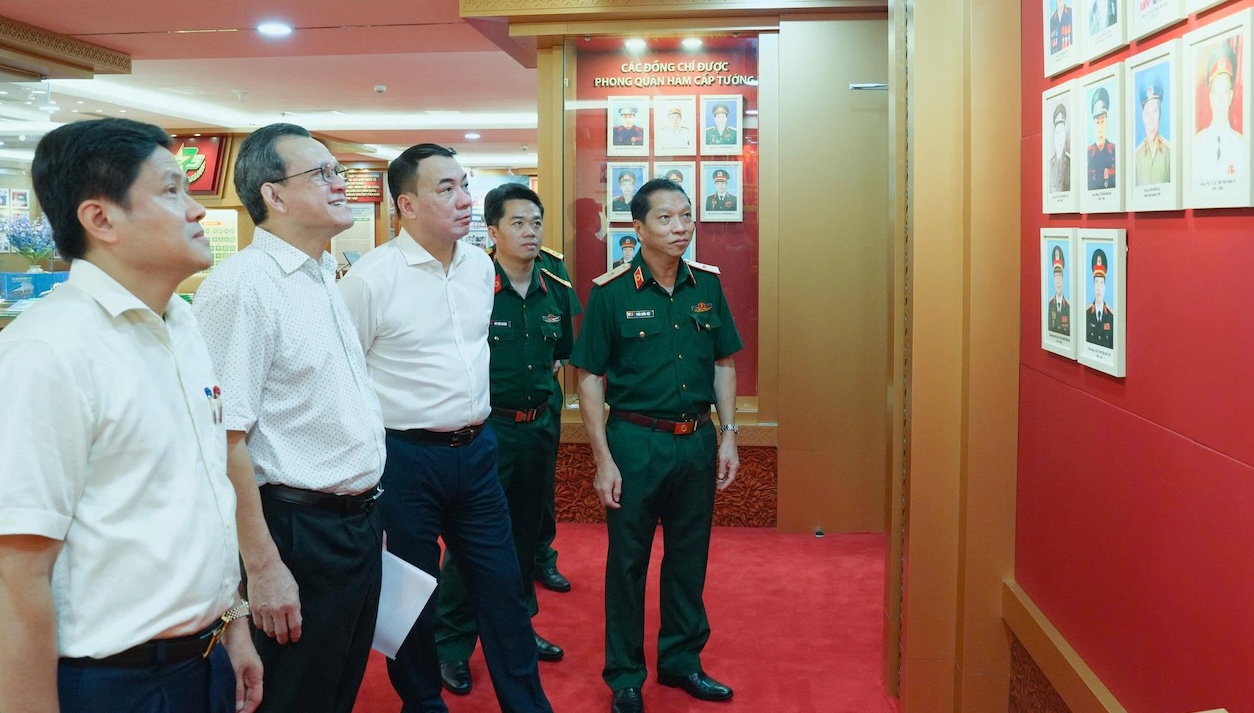
Delegates visiting the Traditional House of Military Hospital 175. Photo: Hospital provided

According to leaders from the TP HCM Department of Health, training should aim for the ultimate goal of trainees safely and effectively performing techniques, rather than merely meeting study duration requirements or passing an exam. The Department recommended that the Ministry of Health develop a minimum output standards framework, including knowledge and practical competency, to provide a basis for facilities to organize training. Additionally, techniques should be categorized by risk level, allowing regulatory bodies to focus post-inspection efforts on high-risk areas.

Le Phuong

By VnExpress: https://vnexpress.net/bo-y-te-siet-dao-tao-cap-chung-chi-y-khoa-5125080.html
Tags: medical certification medical training

News in the same category

Why vaginal bleeding occurs

Why vaginal bleeding occurs

Vaginal bleeding can be linked to injury or irritation in the genital area, cervix, or dangerous gynecological conditions.

Is treatment for endometritis necessary before embryo transfer?

Is treatment for endometritis necessary before embryo transfer?

After multiple failed in vitro fertilization embryo transfers, I successfully conceived after treating chronic endometritis. Do I need to undergo treatment again for my next embryo transfer? (Ha, TP HCM)

Four simple habits to protect your eyes

Four simple habits to protect your eyes

Recognizing risk factors, noting family history, wearing protective eyewear, and properly cleaning contact lenses help protect your eyes and limit damage.

Three daily habits support stable blood pressure

Three daily habits support stable blood pressure

Reducing salt, drinking enough water, and maintaining quality sleep can help control blood pressure, alongside regular exercise.

Why weekend sports increase injury risk

Why weekend sports increase injury risk

The body's inability to adapt to sudden increases in activity intensity and insufficient warm-ups make weekend athletes prone to injuries.

What happens to your heart when you lack sleep?

What happens to your heart when you lack sleep?

Adults who do not get enough sleep, typically less than 7 hours each night, face an increased risk of cardiovascular problems such as hypertension, coronary artery disease, stroke, and myocardial infarction.

Vietnamese accustomed to 'eating salty, drinking sweet' face heavy disease burden

Vietnamese accustomed to 'eating salty, drinking sweet' face heavy disease burden

High salt intake, sugary drinks, and insufficient vegetables and fruits among Vietnamese contribute to an elevated risk of cardiovascular disease, diabetes, obesity, and other non-communicable diseases.

Should stroke patients be placed on their side during first aid?

Should stroke patients be placed on their side during first aid?

When someone shows signs of stroke, how should first aid be administered while waiting for emergency services? Should they be placed on their side, on their back, or kept in the same position? (Hoang Nam, 42, Dong Nai)

Common mistakes when supplementing probiotics for children

Common mistakes when supplementing probiotics for children

Mixing probiotics with hot water or milk, or taking them simultaneously with antibiotics, are common mistakes parents make when giving probiotics to children.

VCF film: the 'invisible' contraceptive solution

VCF film: the 'invisible' contraceptive solution

VCF film is a localized, self-dissolving, hormone-free contraceptive used on demand, providing women with an additional option for family planning.

Eng English
China 中国人
  • News
  • World
  • Business
  • Entertainment
  • Sports
  • Law
  • Education
  • Health
  • Lifestyle
  • Travel
  • Science
  • Digital
  • Automobiles
FPT Tower, 10 Pham Van Bach Street, Dich Vong Ward,
Cau Giay District, Hanoi, Vietnam
Email: contacts@vnportal.net
Tel: 028 7300 9999 - Ext 8556
Advertise with us: 090 293 9644
Register
© Copyright 2026 vnnow.net. All rights reserved.
Terms of use Privacy policy Cookies