Each month, Trang used a phone application and ovulation predictor kits to pinpoint her most fertile window, then scheduled intercourse with her husband. This mechanical scheduling led to stress and a loss of desire for her husband, while Trang constantly worried about missing the "optimal time."
After two years without conceiving, the couple sought help at the Fertility Support Center, Tam Anh General Hospital (IVF Tam Anh). Comprehensive tests revealed good reproductive health for both: her husband's semen analysis was optimal, her ovarian reserve was good for her age, and her uterus and fallopian tubes were normal. Dr. CKI Phan Ngoc Quy diagnosed their infertility as non-pathological, attributing it to their counterproductive ovulation tracking strategy.
 |
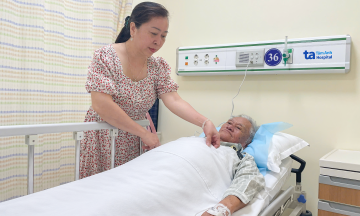
Dr. Quy consults with Trang. *Photo: Tam Anh General Hospital*
Similarly, Minh, 31, tracked her ovulation using ultrasound at a clinic and abstained from intercourse completely during the first two weeks of her menstrual cycle, focusing solely on the two most fertile days. After more than one year of marriage, she had not conceived. Examinations at IVF Tam Anh showed normal reproductive function for her, but her husband had mildly weak sperm.
"A woman's menstrual cycle and ovulation timing are significantly influenced by the endocrine system, which is sensitive to factors like stress, work pressure, or sleep patterns. Therefore, phone applications and biological test kits inherently have a certain margin of error," the doctor explained. Focusing on a single fixed day can cause couples to miss the actual ovulation cycle and diminish natural intimacy, which is a crucial biological catalyst for successful ovulation and conception.
Additionally, saving sperm for a few days each month is also a mistake. Sperm stored too long in the testicles without regular ejaculation will undergo aging, leading to reduced motility and an increased rate of abnormalities. Maintaining regular intercourse helps continuously activate new sperm production cycles, ensuring sperm remain in their healthiest state.
Furthermore, after ovulation, an egg remains optimally fertile for only about 12-24 hours before degenerating. Healthy sperm can survive and remain functional in the female reproductive tract for 3-5 days. Regular intercourse before ovulation ensures sperm have enough time to travel and are readily available in the fallopian tubes for fertilization as soon as the egg is released.
For both Minh and Trang's couples, the doctor prioritized natural conception opportunities. This approach helps patients avoid unnecessary interventions, reducing treatment pressure, costs, and time. In vitro fertilization (IVF) is only considered when there are appropriate indications.
Trang and her husband stopped using all ovulation calculation tools. They maintained intercourse 2-3 times a week and adopted a healthy lifestyle. After four months of consistently changing their habits according to the doctor's guidance, Trang successfully conceived naturally.
For Minh and her husband, the doctor advised stopping ultrasound ovulation tracking and maintaining regular intercourse. He also recommended her husband quit smoking, exercise, and supplement with zinc-rich foods. Six months later, Minh conceived naturally.
Dr. Quy advises couples hoping to conceive to maintain regular natural intercourse 2-3 times a week. If conception does not occur after one year (or six months for women over 35), a comprehensive check-up at a reputable fertility support center is necessary. Early consultation helps identify the correct cause and select the appropriate level of intervention, preventing missed opportunities for effective treatment.
Van Anh
| The Tam Anh General Hospital system is launching the "Golden Pregnancy Blessing - Support up to 10 million dong" preferential program for infertile couples undergoing in vitro fertilization (IVF) across the entire system from now until 9/7/2026. Learn more here. |