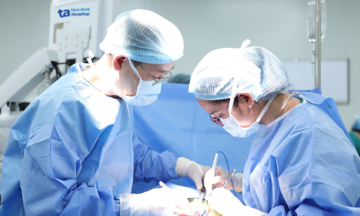
Doctor Vu Truong Khanh, Head of the Department of Gastroenterology - Hepatobiliary - Pancreas at Tam Anh General Hospital, performed a colonoscopy on Tung. The procedure revealed a 30 mm ulcerated tumor in the ascending colon, and two 20 mm polyps at the hepatic flexure and descending colon. Tung had no internal medical conditions or family history of cancer.
During the colonoscopy, doctors removed the polyps for histopathological examination and biopsied the tumor. Results confirmed poorly differentiated invasive adenocarcinoma, while the polyps were benign tubular and tubulovillous adenomas. Doctors prescribed a right hemicolectomy and adjuvant chemotherapy for Tung.
Polyps can appear throughout the digestive tract, most commonly in the colon. Colonic polyps usually develop from the mucosa; most are benign, but some change structure over time and become malignant. Early symptoms are non-specific, such as abdominal pain and changes in bowel habits, often leading to them being overlooked. Many cases are only detected when the lesion has progressed.
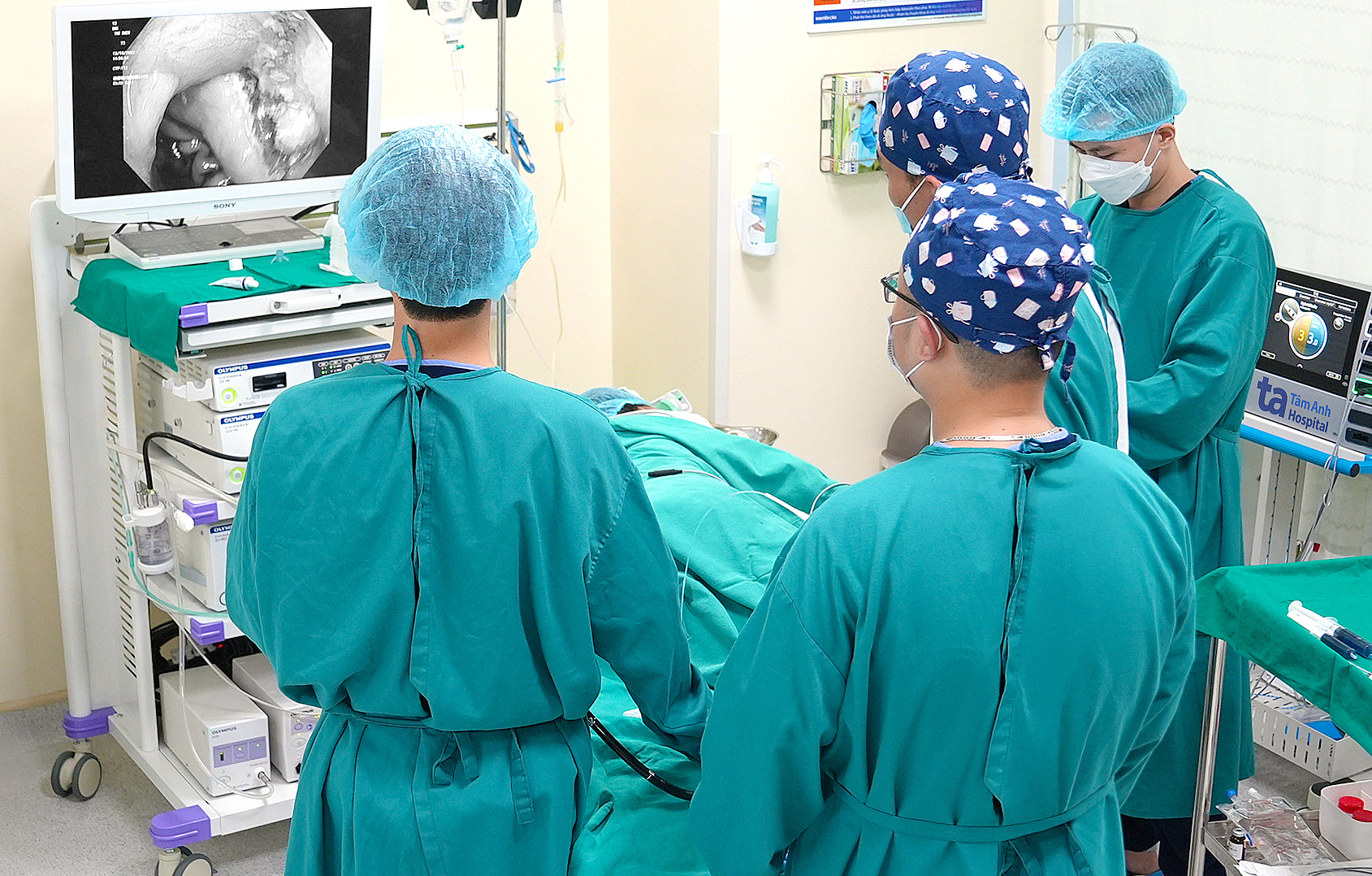 |
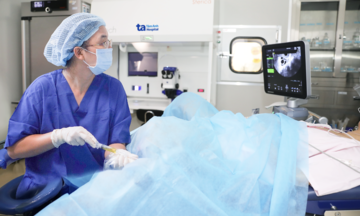
The medical team performs a colonoscopy for a patient. Photo: Tam Anh General Hospital |
Doctor Khanh noted that colonic polyps typically appear in people over 50 but are trending younger, with many cases now seen in younger individuals like Tung. Some patients have a family history of colorectal cancer or polyps. However, even those without genetic factors, like Tung, can develop polyps and early-onset cancer. This increase in younger patients with polyps and colorectal cancer may stem from various factors, such as: genetic syndromes, chronic peptic ulcer disease, high intake of saturated fats and processed meats with low fiber, smoking, and heavy alcohol consumption.
Doctor Khanh recommended that individuals without risk factors begin colonoscopy screening around 40-45 years old. Those with a family history, such as parents or siblings who have had colorectal cancer or polyps, require earlier screening based on their specific situation. Beyond regular check-ups, people with colonic polyps should maintain a healthy lifestyle, increasing their consumption of green vegetables, fruits, fish, and beans to support digestive health.
When doctors detect polyps, they remove them via endoscopy and schedule regular follow-up appointments. The follow-up period depends on the polyps' number, size, and nature, and may be shortened if the polyps are high-risk. If doctors detect the disease at a late stage, patients require colectomy surgery and chemotherapy.
Ly Nguyen
*The patient's name has been changed
| Readers can send questions about digestive diseases here for doctors to answer |