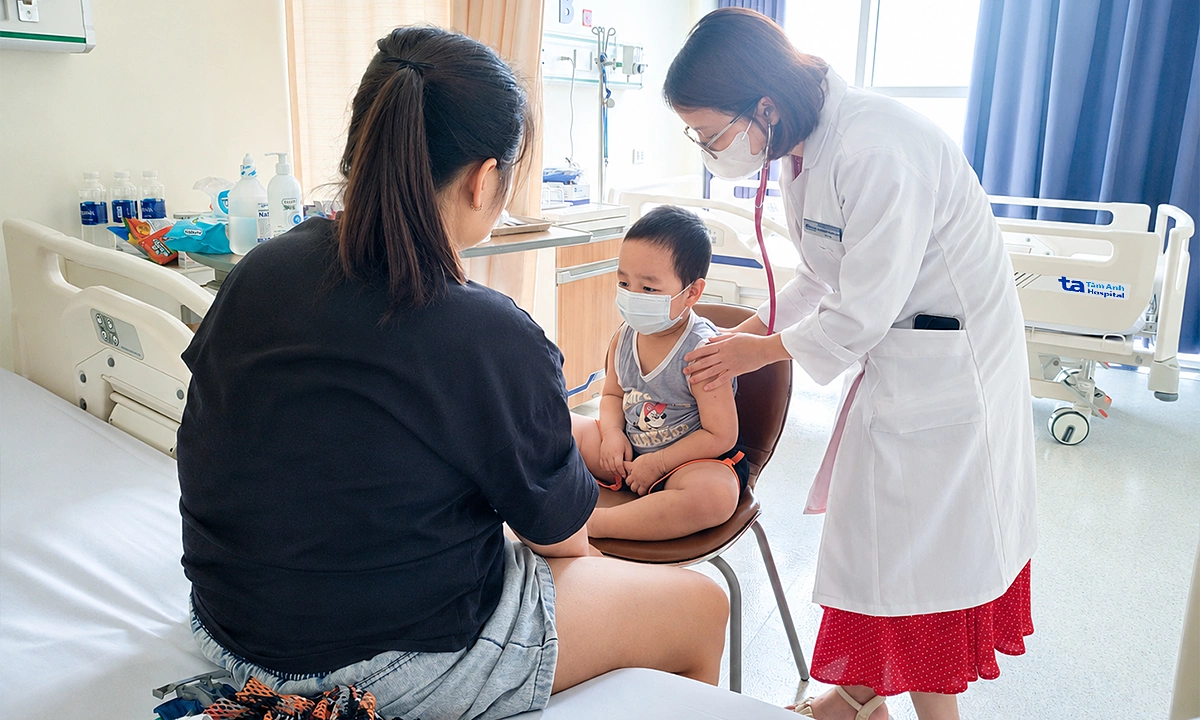
For the past year, Mr. Van suffered from nausea, chest tightness, shortness of breath, and a dry cough, with his condition not improving despite treatment. Recently, he began coughing and vomiting a significant amount of blood, prompting him to seek care at Tam Anh General Hospital, Ho Chi Minh City. A CT scan revealed a large lung tumor, measuring 87x90x93 mm, located adjacent to the left lung hilum. The tumor closely surrounded the upper lobe bronchial branches of the left lung, causing obstruction and collapse of the S7 and S8 segments of the left lung. It had extensively invaded the pericardium, compressed the aorta, and showed signs of an abscess.
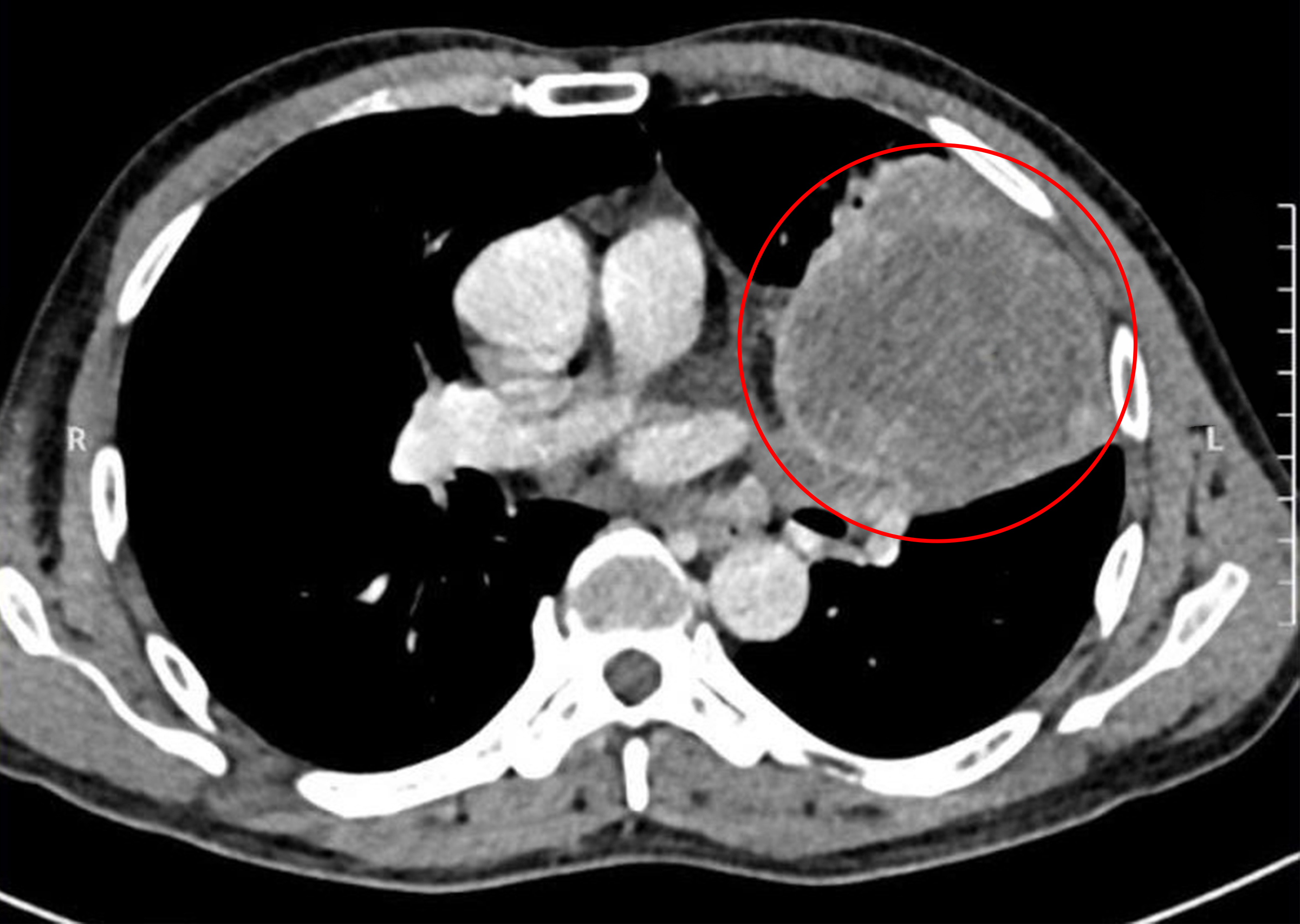 |
Image of a large lung tumor occupying the patient's chest. *Photo: Tam Anh General Hospital* |
Associate Professor, Doctor Vu Huu Vinh, Director of the Thoracic - Vascular Surgery Center, recommended surgery for Mr. Van. However, upon opening the chest, the long-standing necrotizing tumor had completely deformed the anatomical structures, adhering tightly to the bronchi and major blood vessels. Each step of dissection, heart manipulation, or tracheal contact heightened the risk of sudden, life-threatening hypotension.
To ensure maximum safety, the surgical and anesthesia teams meticulously calculated each incision and precise blood vessel ligation to control the risk of massive blood loss.
Associate Professor Vinh meticulously dissected the necrotizing tumor, carefully avoiding any pulling on structures around the heart and aorta. This approach minimized vagus nerve stimulation that could cause severe hypotension. Subsequently, the team removed the invaded portion of the pericardium and lung lobe to relieve pressure on the circulatory and respiratory systems.
Intraoperative frozen section biopsy results identified the tumor as pulmonary sarcomatoid carcinoma, a type of malignant cancer. This rare form accounts for approximately 0,1-0,4% of all lung cancers. Pulmonary sarcomatoid carcinoma originates from the lung parenchyma and can metastasize rapidly.
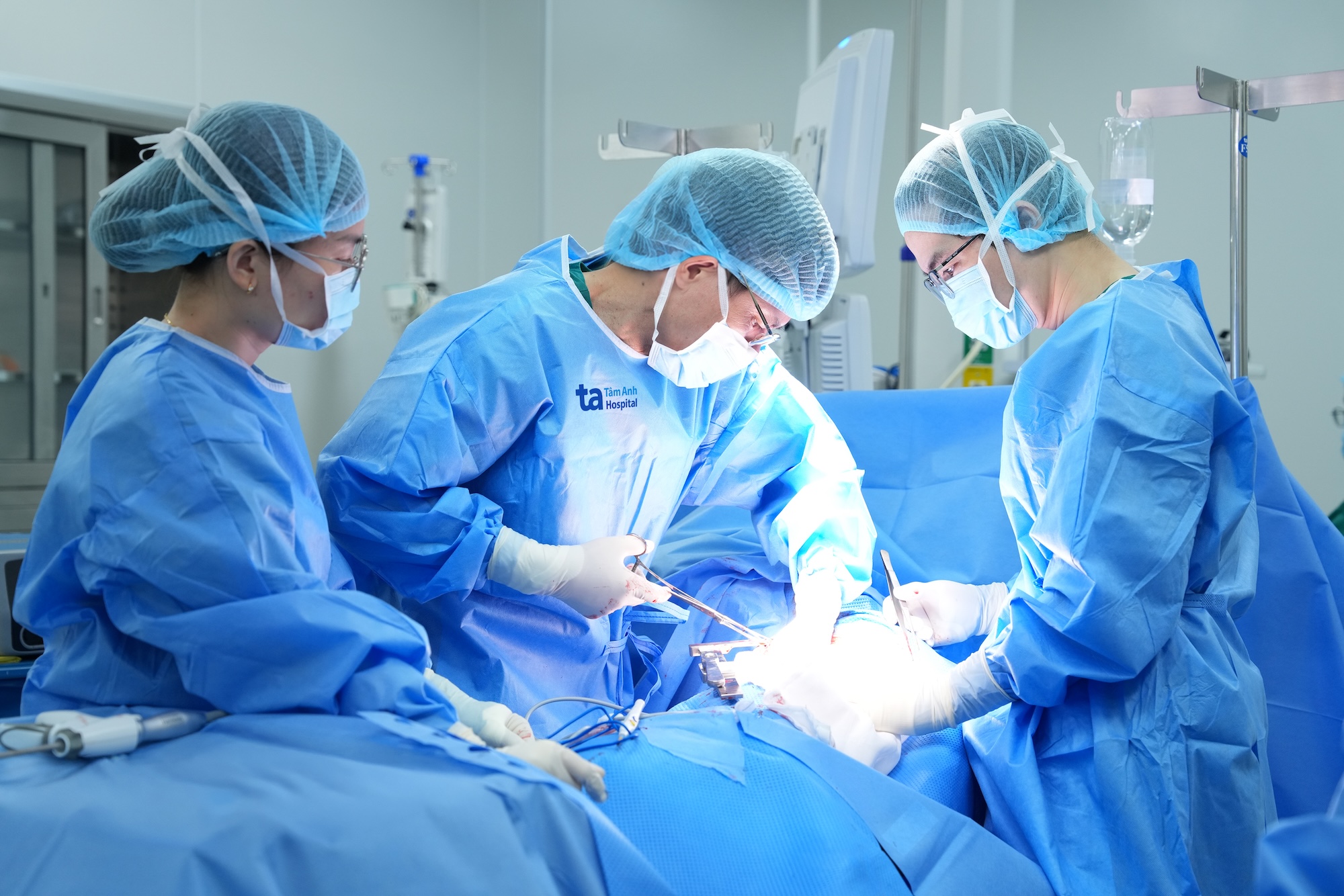 |
Associate Professor Vinh (center) with the surgical team operating on the patient. *Photo: Hospital provided* |
Due to the tumor's malignant nature and the lung collapse it caused, the team had to remove the left upper lung lobe, combined with the removal of part of the invaded pericardium. This was done to eliminate any remaining malignant cells and prevent recurrence.
The surgery lasted 8 hours, double the duration of typical thoracic surgeries, which usually last about 3-4 hours. Post-surgery, the patient made a stable recovery, experiencing minimal incision pain. He was able to sit up and walk gently, and was discharged after 5 days, eligible for adjuvant chemo-radiotherapy.
According to Globocan 2022, Vietnam recorded approximately 24.400 new cases and nearly 22.600 deaths due to lung cancer. In its early stages, the disease often presents with no clear symptoms, making it difficult to detect through routine examinations.
Several factors increase the risk of lung cancer, including smoking, alcohol consumption, exposure to toxic chemicals, and genetics. Associate Professor Vinh recommends that older individuals, current or former smokers, heavy drinkers, and those working in dusty environments should undergo annual health check-ups and screenings as advised by a doctor. When persistent abnormal symptoms such as coughing, shortness of breath, chest tightness, or vomiting blood appear, patients should seek consultation with a specialist in thoracic surgery or respiratory medicine for diagnosis and timely treatment.
Bao Anh
* The patient's name has been changed
| Readers can submit questions about cancer here for doctors to answer |