After a stroke, patients may experience sadness, quietness, reduced communication, difficulty concentrating, or decreased interest in daily activities. These could be symptoms of post-stroke depression, but they may also relate to other conditions.
Damage to brain regions associated with language and comprehension can make it difficult for patients to find words, express themselves, or understand speech. Communication challenges or the inability to communicate as before can make patients hesitant to speak, leading them to withdraw and interact less with others. These symptoms are sometimes confused with depression.
Both depression and language disorders can impact post-stroke recovery. When patients communicate less, show reduced attention, lack cooperation, or do not actively participate in physical therapy and rehabilitation, their potential for improving motor skills, language, and other functions can be affected.
If your mother shows signs of sadness, quietness, reduced communication, difficulty concentrating, or limited cooperation during her recovery after a stroke, you should take her to a neurologist for an assessment of her language, cognitive, emotional, and behavioral abilities.
Doctors can use specialized assessment tools to examine language function and depression rating scales designed for post-stroke patients. The results help differentiate symptoms related to emotional disorders from those caused by brain functional damage, guiding the selection of appropriate treatment.
If post-stroke depression or functional disorders are identified, patients typically receive medication combined with psychotherapy and other rehabilitation methods, depending on their condition. Repetitive transcranial magnetic stimulation (rTMS) may be considered for suitable patients. This non-invasive method uses magnetic pulses to stimulate specific brain regions, helping regulate nerve cell activity, improve some depression symptoms, and support post-stroke recovery.
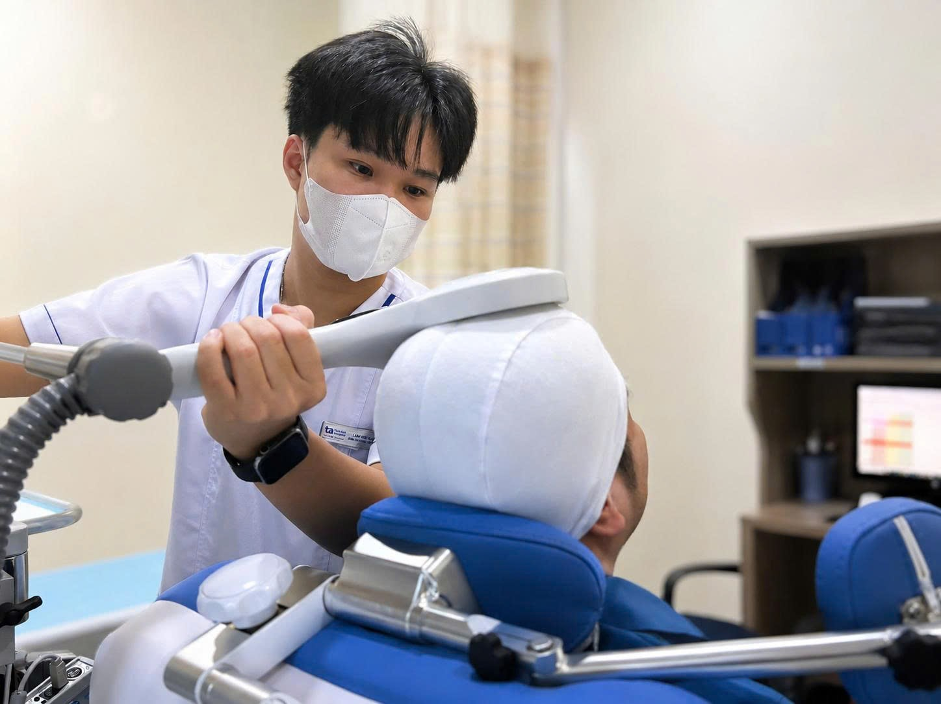 |
A patient undergoing transcranial magnetic stimulation treatment. Illustration: Tam Anh General Hospital |
A patient undergoing transcranial magnetic stimulation treatment. Illustration: Tam Anh General Hospital
Additionally, hyperbaric oxygen therapy can support functional rehabilitation in some post-stroke patients once their condition is stable. This method is combined with physical therapy and other rehabilitation approaches as prescribed by a doctor.
Correctly identifying the cause and early intervention for emotional, language, and cognitive disorders facilitate a smoother recovery process.
Doctor Nguyen Phuong Trang
Head of Transcranial Magnetic Stimulation Unit
Neuroscience Center
Tam Anh General Hospital, TP HCM
| Readers can submit questions about neurological conditions here for doctors to answer. |