Eng English
China 中国人

Eng English
China 中国人
  • News
  • World
  • Business
  • Entertainment
  • Sports
  • Law
  • Education
  • Health
  • Lifestyle
  • Travel
  • Science
  • Digital
  • Automobiles
  • Trở lại Thể thao
  • Health
Thursday, 10/9/2026 | 08:45 GMT+7

Is delayed puberty a sign of illness?

My 16-year-old daughter has not yet had her period and is shorter than her peers, showing signs consistent with delayed puberty. Is delayed puberty caused by an illness, and when should we seek medical examination? (Thanh Ha, Hanoi)

For a 16-year-old girl who has not yet had her period and is also shorter than average, a comprehensive medical evaluation is recommended. This assessment should cover her growth, nutrition, endocrine system, and reproductive organs. While not all cases of delayed puberty indicate an illness, understanding the underlying cause is crucial for appropriate management.

Puberty is the stage when a child's body transitions to physical and reproductive maturity. This complex process occurs when the hypothalamic-pituitary-gonadal axis is activated, stimulating the ovaries in girls to produce sex hormones. As a result, children experience rapid growth in height, changes in physique, the appearance of secondary sexual characteristics, and the gradual completion of reproductive function.

Typically, girls begin puberty between the ages of 8 and 13, with the earliest sign often being breast development. Subsequently, children develop pubic and underarm hair, experience rapid growth, undergo changes in body shape, and begin menstruation. A child is considered to have delayed puberty if there is no sign of breast development after the age of 13 or if menstruation has not begun after the age of 15. Additionally, if initial signs of puberty appear but the progression is very slow – for example, if breast development does not advance after a few years or if a girl does not begin menstruation – an evaluation is also necessary.

Delayed puberty can lead to slower height development, impact reproductive capability, and negatively affect psychological well-being.

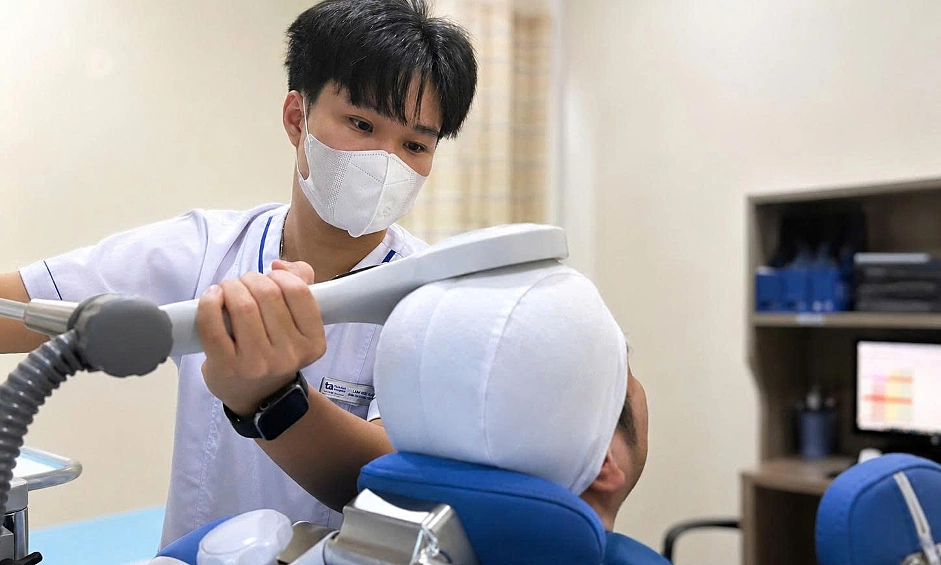
A doctor advises parents on the stages of puberty in children. Illustration: Tam Anh General Hospital

The causes of delayed puberty vary. One common reason is constitutional delay of puberty, where a child develops slower than peers but still has the potential for normal puberty and maturation. In such cases, the child will eventually enter puberty, and while height growth may be delayed, it can reach a level consistent with family genetics.

However, delayed puberty can also signal that the body lacks energy or has an illness affecting endocrine function. Children experiencing malnutrition, excessive dieting, eating disorders, intense physical training, or chronic stress may have delayed puberty because their bodies lack the necessary conditions to activate sexual maturation. Chronic conditions, such as gastrointestinal diseases causing malabsorption, kidney disease, heart disease, lung disease, poorly controlled diabetes, or thyroid disorders, can also be associated with delayed puberty.

Another group of causes involves the pituitary gland or hypothalamus, which regulate gonadal activity. If these organs do not secrete sufficient puberty-stimulating hormones, the ovaries do not receive signals to develop. This can lead to delayed puberty, often accompanied by slow height growth, fatigue, headaches, or blurred vision. In girls, specific issues like ovarian abnormalities, chromosomal disorders, premature ovarian failure, or structural abnormalities of the reproductive tract can also contribute to delayed puberty.

Treatment for delayed puberty depends entirely on the underlying cause. For constitutional delay, children may only require regular monitoring, ensuring adequate nutrition, sufficient sleep, appropriate physical activity, and psychological support. In some cases, doctors might consider short-term, low-dose hormone therapy to initiate puberty. If the cause is a chronic illness, thyroid disorder, or similar condition, the child will need specialized treatment and long-term follow-up.

Master of Science, Doctor Do Tien Son

Department of Pediatrics

Tam Anh General Hospital Hanoi

Readers can submit questions about endocrine diseases here for doctors to answer.
By VnExpress: https://vnexpress.net/day-thi-muon-co-phai-do-benh-5118620.html
Tags: nutrient deficiency delayed puberty obesity

News in the same category

Is quietness after a stroke a sign of depression?

Is quietness after a stroke a sign of depression?

My mother had a stroke, and after treatment, she often feels sad, speaks little, and avoids communication. Are these signs of post-stroke depression? (Tuyet Hoa, TP HCM)

Nearly 1,000 doctors and nurses seek career opportunities in Ho Chi Minh City

Nearly 1,000 doctors and nurses seek career opportunities in Ho Chi Minh City

Nearly 1,000 doctors and nurses attended the 4th Ho Chi Minh City Medical Job Fair at Long Dat Regional Medical Center on 10/9, marking a record number of applications received to date.

6-year-old girl diagnosed with 7 diopters of farsightedness

6-year-old girl diagnosed with 7 diopters of farsightedness

Thao, 6, experienced blurred vision, eye strain, and prolonged squinting, leading doctors to diagnose her with 7 diopters of farsightedness.

Young boy diagnosed with staphylococcal scalded skin syndrome

Young boy diagnosed with staphylococcal scalded skin syndrome

Three-year-old Vinh, presenting with full-body redness and small pustules around his mouth, neck, and armpits, was diagnosed by doctors with staphylococcal scalded skin syndrome.

Anxiety, insomnia from pressure to own 'house, car' before marriage

Anxiety, insomnia from pressure to own 'house, car' before marriage

Exhaustive work and excessive caffeine use to stay awake for multiple jobs, aiming to 'save money' for a house before marriage, lead to chronic mental health issues for many young people.

What happens when men conceal sexual dysfunction?

What happens when men conceal sexual dysfunction?

Long, 35, from Hanoi, asks: 'Lately, I've been experiencing premature ejaculation, decreasing sexual frequency, and difficulty reaching climax. Am I experiencing sexual dysfunction, and what are the consequences if left untreated?'

WHO warns of funding and healthcare worker shortages for Ebola response in Congo

WHO warns of funding and healthcare worker shortages for Ebola response in Congo

Amid the dangerous spread of the Democratic Republic of Congo's worst Ebola disaster, the World Health Organization (WHO) warns that the outbreak response is at risk of stalling due to a severe shortage of personnel and operational funds.

Collapsed during meal, survived thanks to 15 minutes of family CPR

Collapsed during meal, survived thanks to 15 minutes of family CPR

A 56-year-old man unexpectedly collapsed and suffered cardiac arrest while eating. His family performed continuous chest compressions for 15 minutes while awaiting emergency medical services, providing him a chance at survival after more than 50 minutes of resuscitation.

Why is monitoring children's height during puberty essential?

Why is monitoring children's height during puberty essential?

Puberty is a critical period when children experience rapid height growth and approach their adult height, making close monitoring vital for early detection of abnormal growth signs.

Signs of healthy hair follicles

Signs of healthy hair follicles

Naturally shiny hair, minimal breakage, strong roots, and a clean, healthy scalp indicate hair is well-nourished from the follicles.

Eng English
China 中国人
  • News
  • World
  • Business
  • Entertainment
  • Sports
  • Law
  • Education
  • Health
  • Lifestyle
  • Travel
  • Science
  • Digital
  • Automobiles
FPT Tower, 10 Pham Van Bach Street, Dich Vong Ward,
Cau Giay District, Hanoi, Vietnam
Email: contacts@vnportal.net
Tel: 028 7300 9999 - Ext 8556
Advertise with us: 090 293 9644
Register
© Copyright 2026 vnnow.net. All rights reserved.
Terms of use Privacy policy Cookies