Upon examination at Tam Anh General Hospital Hanoi, the child was alert and fever-free, with no oral mucosal or neurological involvement. Doctors observed dry skin with widespread redness, prominent peeling scales around the eyes and mouth, and red conjunctiva.
Dr. Nguyen Thi Phuong Thao, Deputy Head of Pediatrics, ordered a complete blood count, CRP, electrolyte panel, liver and kidney function tests, along with an ophthalmology consultation. The results confirmed the child's diagnosis of staphylococcal scalded skin syndrome.
The patient received intravenous antibiotics and oral antihistamines to alleviate itching. Simultaneously, the skin care team implemented intensive daily hygiene and moisturizer application. The child also followed a tailored nutrition plan. After 5 days of treatment, the child was alert, had healthy pink mucous membranes, showed no signs of dehydration, and the affected skin areas healed completely without any inflammation. The child was subsequently discharged.
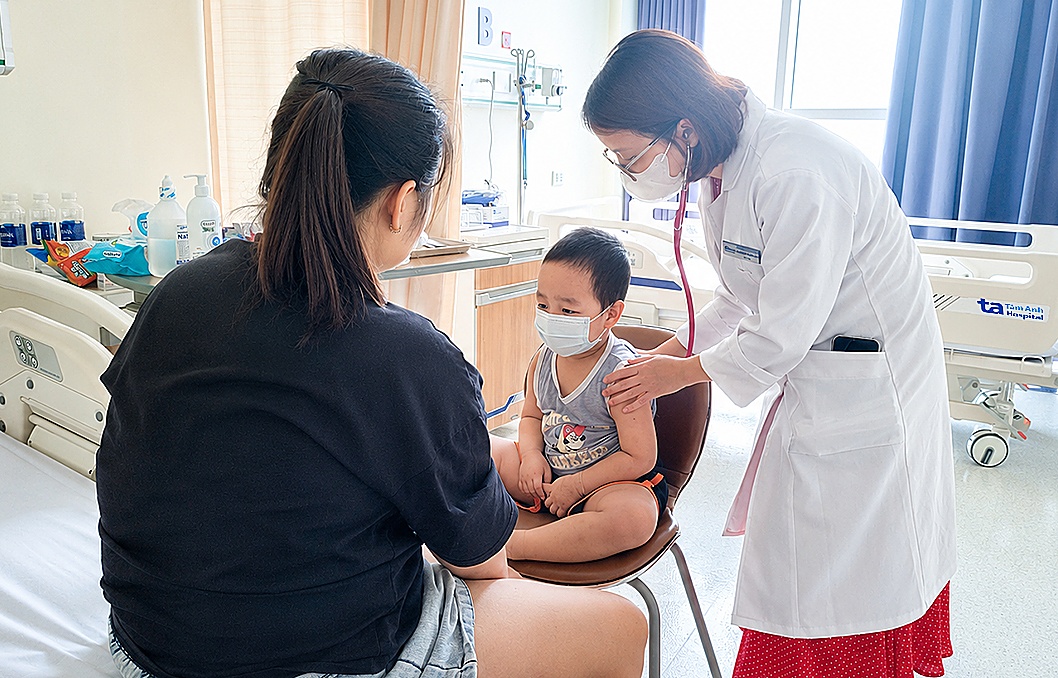 |
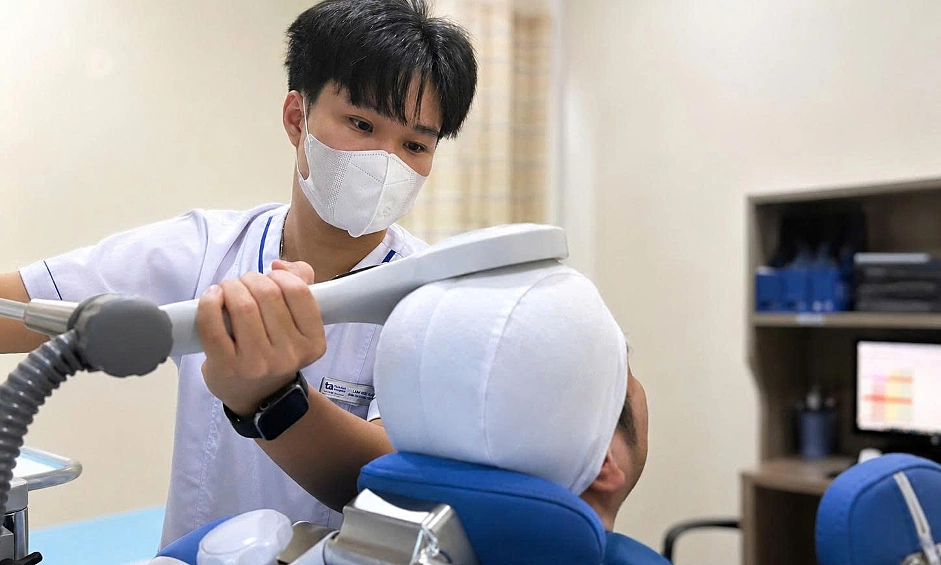
Doctor Thao examining Vinh. Photo: Tam Anh General Hospital |
Staphylococcal scalded skin syndrome (SSSS) is an acute skin infection triggered by toxins produced by *Staphylococcus aureus* bacteria. These bacteria commonly reside in the nose, throat, or on the skin without causing symptoms. However, if the skin's protective barrier is compromised by scratches, insect bites, eczema, dermatitis, or impetigo, or if a child develops rhinitis, pharyngitis, conjunctivitis, or otitis, *Staphylococcus aureus* can invade and establish an initial infection.
Dr. Thao elaborated that in Vinh's instance, the skin pustules likely served as entry points for the bacteria. The bacteria then release exfoliative toxins A and B, which circulate via the bloodstream throughout the body. These toxins disrupt the proteins responsible for binding epidermal cells, causing the outermost skin layer to separate from the underlying skin. This leads to characteristic redness, blistering, and peeling in patches, resembling a burn.
SSSS predominantly affects infants and children under 5 years old, primarily due to their immature immune systems and developing kidney function. The incubation period typically ranges from 1 to 10 days. Initial symptoms may include fever, fatigue, skin pain or burning, swollen eyes, or the appearance of pustules around the mouth, neck, armpits, and groin. Without timely treatment, the condition can progress to severe dehydration, electrolyte imbalances, superinfections, sepsis, and even pose a life-threatening risk.
Dr. Thao recommends parents seek prompt medical attention if a child exhibits a rapidly spreading rash, skin pain, blistering, or unusual peeling, particularly around the eyes, mouth, or neck. Parents are cautioned against self-administering topical corticosteroids or antibiotics without a doctor's prescription. Essential preventive measures include maintaining good skin hygiene, ensuring proper wound care, and preventing children from swimming if they have open wounds.
Trinh Mai
| Readers can submit questions about children's diseases here to receive answers from doctors. |