Thao, a 6-year-old girl, presented with persistent blurred vision, eye strain, and frequent squinting. Dr. Doan Thi Phuong Nhi, Specialist in Ophthalmology I at the High-Tech Eye Center, Tam Anh General Clinic, District 7, diagnosed her with severe hyperopia. Initially, her uncorrected vision was 7/10 in the right eye and 9/10 in the left eye. Recognizing the child's strong natural accommodation, the doctor administered cycloplegic eye drops to obtain accurate refractive measurements. After 45 minutes, Thao's vision was only 4/10 in each eye, with the right eye measuring 6,5 diopters farsighted and the left eye 7 diopters farsighted — a significant level for a young child.
Hyperopia, a common refractive error, causes blurred vision at close distances but clearer vision farther away. According to Dr. Nhi, while it can affect all ages and is often linked to natural aging in adults over 40, in children, the main causes are incomplete eyeball development, a short axial length, or genetic factors.
 |
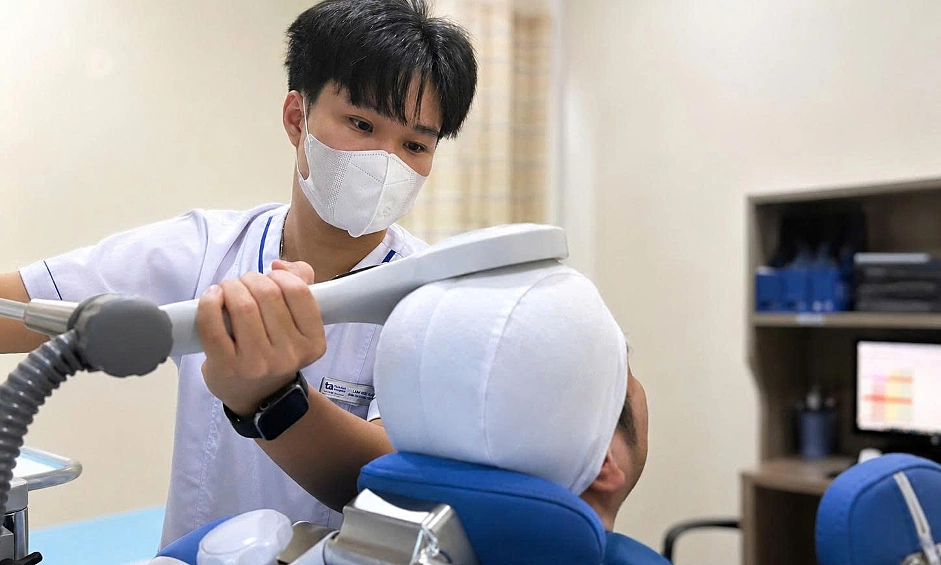
Thao's eyes are examined with an automated refractometer. *Photo: Tam Anh General Hospital* |
An in-depth examination revealed Thao's axial length was only about 18 mm, shorter than the normal range for children (21-23 mm). This anatomical difference causes images to focus behind the retina, forcing her eyes to constantly accommodate to see clearly. This constant effort led to her reported eye strain and blurred vision, especially when focusing on nearby objects.
Dr. Nhi explained that hyperopia under 2 diopters in young children can be physiological and may improve over time. However, levels above 2 diopters, particularly high ones, are considered pathological and require early intervention. A key reason for Thao's prolonged condition was that she had not undergone cycloplegic refraction. In young children, strong accommodative ability can mask the true extent of hyperopia, leading to inaccurate measurements and incorrect eyeglass prescriptions.
Following accurate measurement and an appropriate eyeglass prescription, Thao's vision improved significantly. After one week, she achieved 10/10 vision with glasses and no longer experienced eye strain or squinting. Despite this improvement, close monitoring is essential to prevent amblyopia, a condition of reduced vision caused by abnormal eye development.
Detecting hyperopia in children is often challenging because they cannot accurately describe their symptoms. Parents should observe for signs such as frequent eye rubbing, head tilting when looking, quick fatigue when reading, or complaints of headaches and dizziness.
Regular eye examinations are vital for early detection and correction of refractive errors. Children should be checked every 6-12 months, especially during periods of visual development. Dr. Nhi advises that if hyperopia in children is not detected and corrected properly, it can negatively affect their learning, daily activities, and long-term vision.
Ngoc Kim Tham
*Character's name has been changed
| Readers can submit questions about ophthalmological conditions here for doctors to answer. |