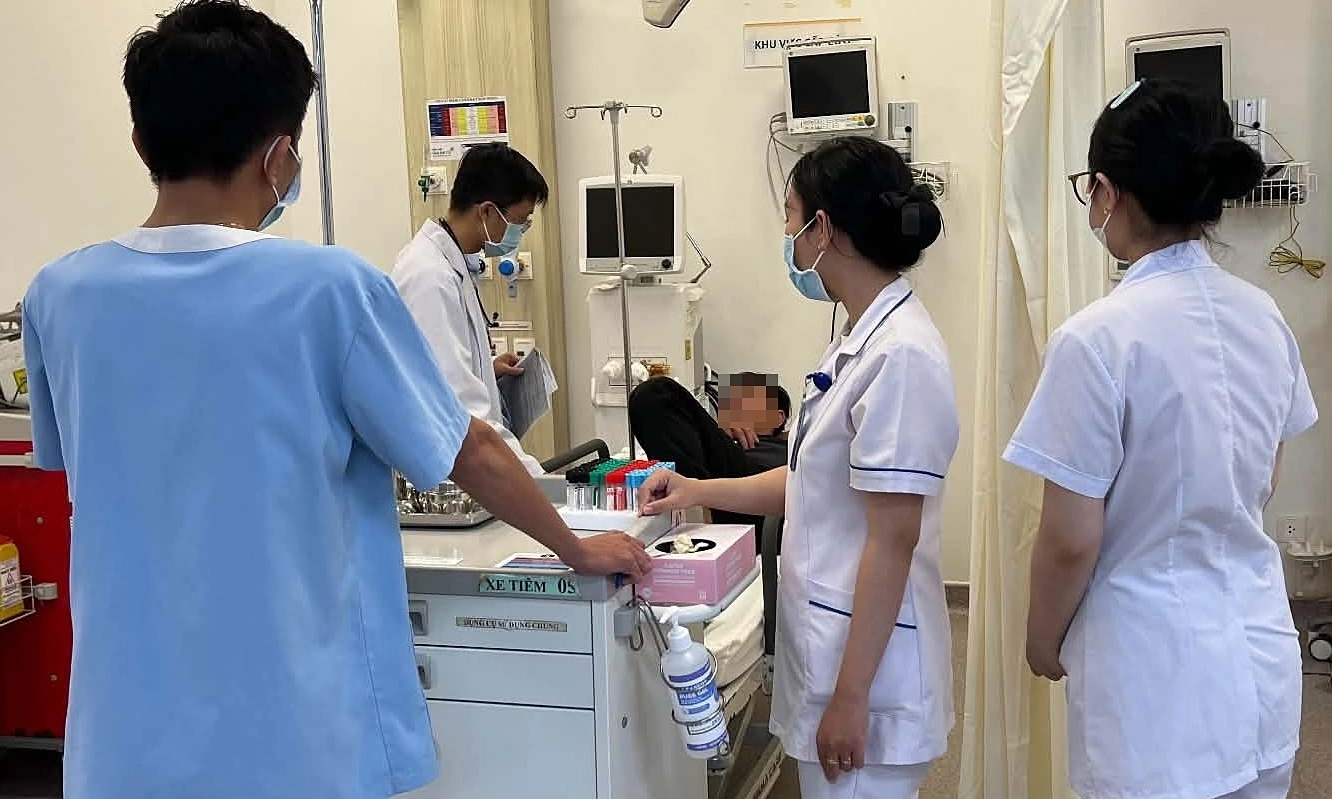
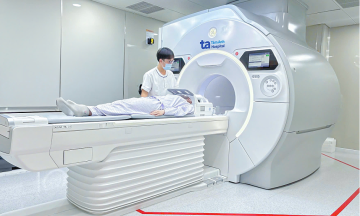
Ngan's examination at Tam Anh General Hospital, Ho Chi Minh City, revealed severe pulmonary hypertension. Her systolic pulmonary artery pressure (PAPs) was 129 mmHg (normal 15-30 mmHg), and her mean pulmonary artery pressure (PAPm) was 93 mmHg (normal approximately 8-20 mmHg). She also had dilated main and branch pulmonary arteries, accompanied by New York Heart Association (NYHA) class two heart failure. An abdominal ultrasound further detected two ovarian tumors, each approximately 6x7 cm.
Ngan, whose health was delicate, had been diagnosed with severe pulmonary hypertension and received medical treatment since she was 14 years old. Doctor Le Thanh Hung, Deputy Head of the Obstetrics and Gynecology Department, explained that for a healthy person, ovarian tumor removal is a low-risk intervention. However, for Ngan, even minor fluctuations in blood pressure, blood oxygen, or fluid volume during anesthesia could severely worsen her heart failure, potentially leading to cardiac arrest on the operating table as deoxygenated blood was shunted back into the left side of her heart.
A multidisciplinary team consultation determined that the surgery could not be delayed. The tumors posed a risk of continued growth, torsion, or rupture, which would be life-threatening. Three weeks before the operation, the cardiology team, led by Doctor Pham Phong Luan from the Cardiovascular Center, provided intensive treatment to Ngan. This aimed to control her pulmonary hypertension and improve cardiopulmonary function. Two days before the surgery, Ngan was admitted to the hospital for a comprehensive overall assessment.
Doctor Luu Kinh Khuong, Head of the Anesthesia - Resuscitation Department, noted that anesthetizing Ngan carried a risk of hypotension, which could cause a reversal of blood flow through the communication between the two heart chambers (reverse shunt), potentially leading to cardiac arrest. Patients with her condition are also susceptible to worsening pulmonary hypertension, which can cause acute right heart failure and difficulty weaning from mechanical ventilation after surgery.
Doctor Khuong opted for a low-dose spinal anesthesia combined with an epidural. This approach aimed to minimize adverse effects on Ngan’s cardiopulmonary system.
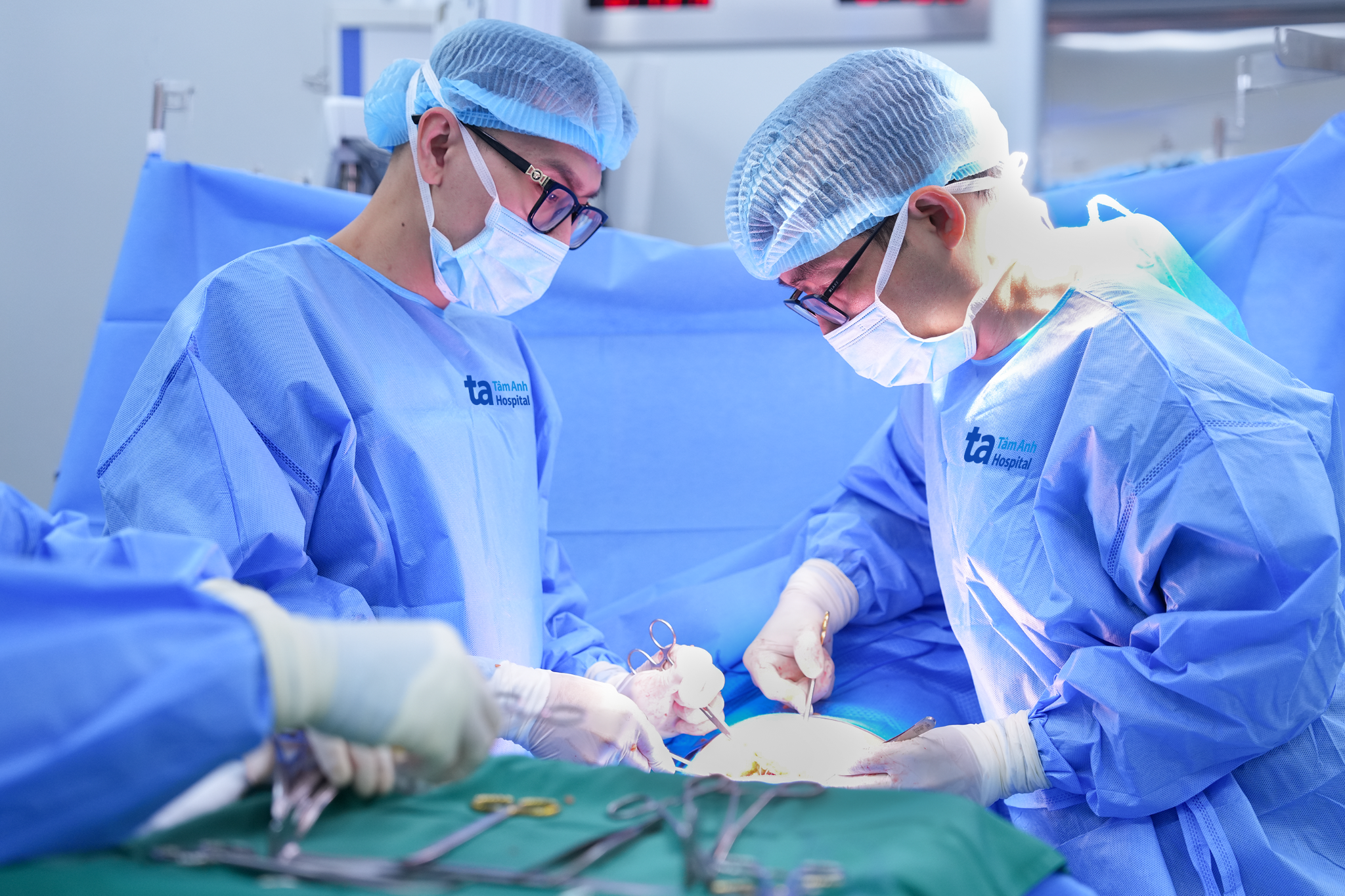 |
Doctor Hung (right) and the surgical team performing ovarian surgery on the patient. *Photo: Tam Anh General Hospital* |
Doctor Thanh Hung and his surgical team successfully removed the right ovary, which contained the 6x7x7 cm tumors. They managed to preserve the left ovary, maintaining Ngan's reproductive function. During the first 24 hours post-surgery, the patient, suffering from heart failure on a background of pulmonary hypertension, was closely monitored. The team meticulously tracked her blood pressure, heart rate, blood oxygen levels, and fluid balance. Multimodal pain relief was administered to ensure effective pain management. Ngan's health gradually stabilized, and she began walking, eventually being discharged after one week.
Pathology results confirmed that Ngan had an ovarian teratoma. This condition is primarily observed in women of reproductive age, particularly those between 20 and 30 years old. Approximately 9 cases per 100,000 women are reported annually, according to Doctor Hung. If not surgically removed early, this type of ovarian tumor can grow rapidly, causing pain, torsion, and potential rupture.
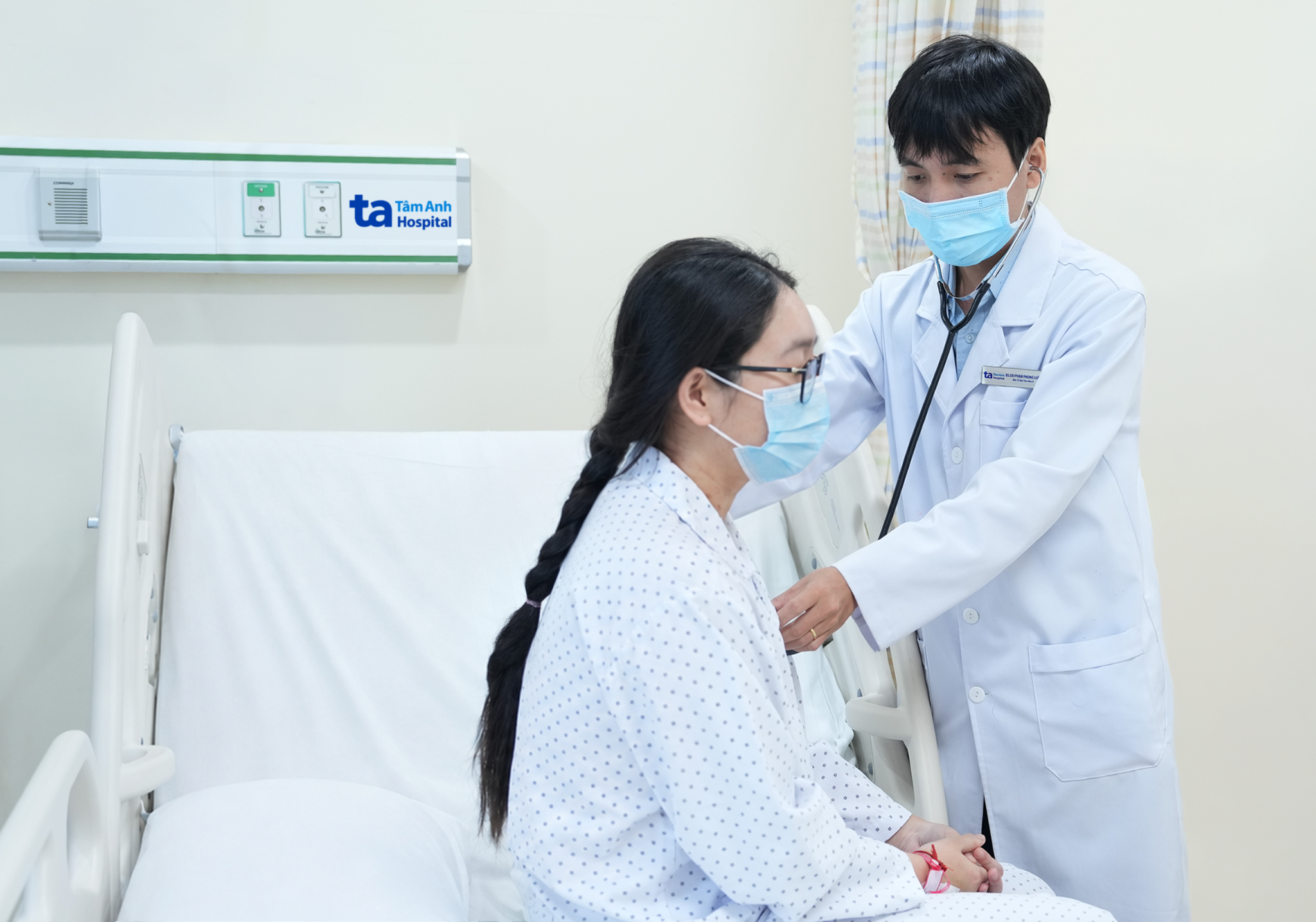 |
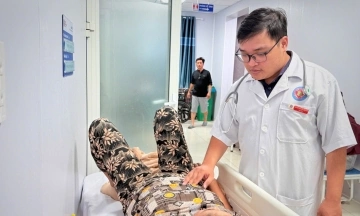
Doctor Luan examining Ngan before her discharge. *Photo: Tam Anh General Hospital* |
Doctors advise patients with pulmonary hypertension to undergo regular check-ups, typically every three to six months, once their condition is stable. If symptoms such as shortness of breath, reduced exercise capacity, leg swelling, chest pain, or fainting occur, patients should seek immediate medical attention.
By Tue Diem
*Patient's name has been changed.
| Readers can submit questions about obstetrics and gynecology here for doctors to answer. |