Dr. Nguyen Tran Thao Nguyen, a Specialist Doctor Level 1, speaking at the Anh Tu Clinic's annual scientific conference on 19/7, highlighted that polycystic ovary syndrome (PCOS) often progresses subtly. Many women experience only weight gain or skin changes, leading them to delay medical consultation until the condition has advanced, resulting in complications such as infertility.
In clinical practice, dermatologists are often the first to suspect PCOS. Clinics frequently see young women, aged 18-20, who are slightly overweight and present with significant inflammatory acne on their faces. Research indicates that 19-37% of women with PCOS experience acne, and about 60% develop hirsutism, characterized by male-pattern hair growth. Many also exhibit acanthosis nigricans (dark, thickened skin) or skin tags on their neck or armpits, leading them to dermatology clinics before seeking gynecological care.
The cause of PCOS is complex, but it primarily involves hormonal imbalance, leading to increased androgen production by the ovaries. This hormone not only disrupts ovulation but also triggers various skin manifestations and metabolic disorders.
Acne caused by PCOS has distinct characteristics: numerous inflammatory lesions concentrated on the chin, around the mouth, jawline, neck, or upper back, and it frequently recurs despite treatment. Patients may also notice a mustache, thicker hair on the chin, around the navel, or on the areola. Some individuals experience thinning hair at the crown, accompanied by abdominal obesity, acanthosis nigricans, or stretch marks.
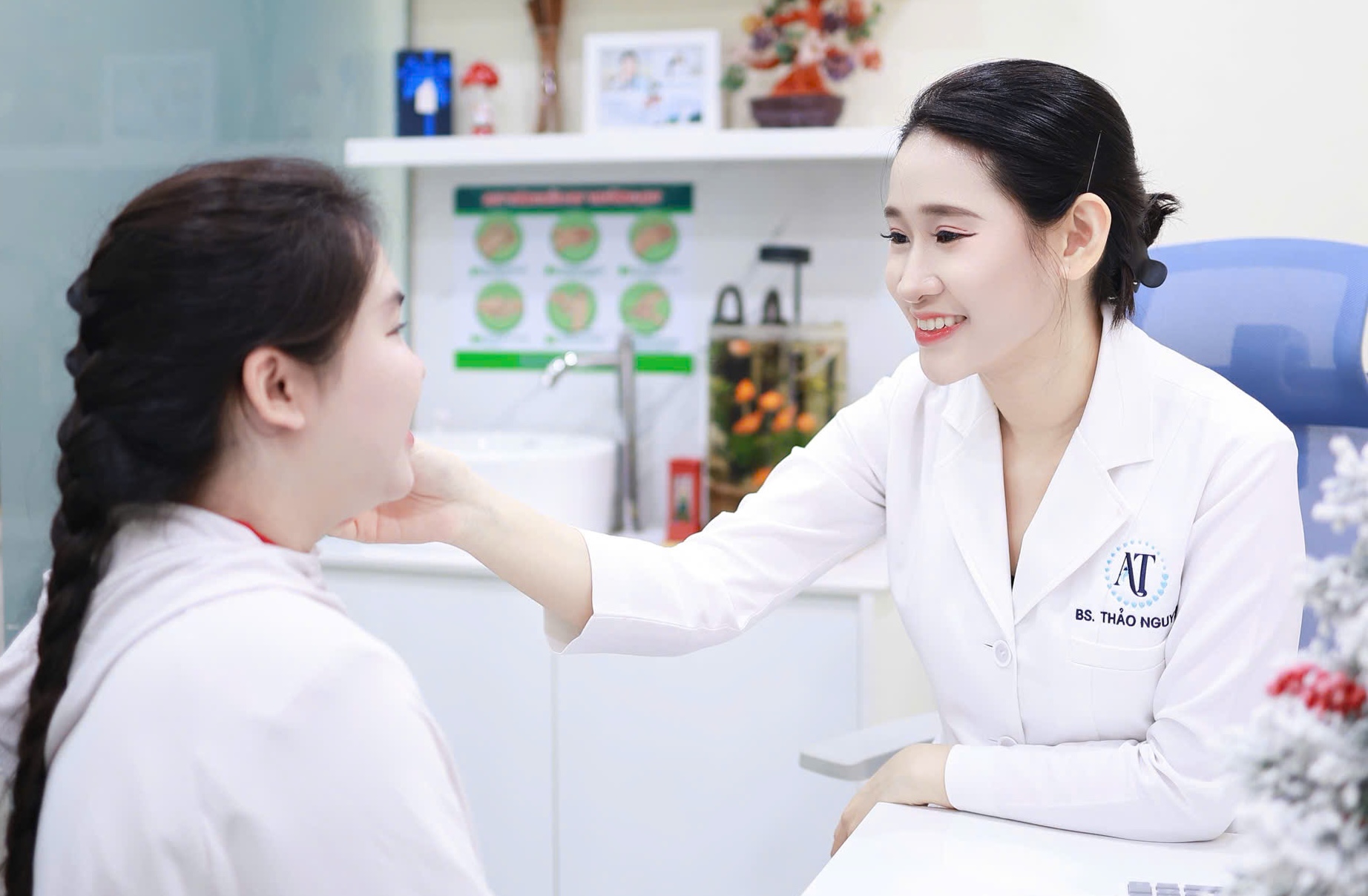 |
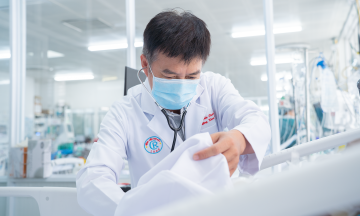
Dr. Thao Nguyen examining a patient. Photo: Anh Tu
Dr. Nguyen noted that PCOS does not always present with a full range of symptoms. Some individuals may have regular periods but still have the condition, while others might have normal ovarian ultrasounds or hormone test results. Therefore, relying on just one diagnostic criterion can easily lead to a missed diagnosis.
Young women should consider more than just dermatological issues if inflammatory acne persists on their chin, jawline, or neck, especially if it recurs after multiple treatments. When this condition is accompanied by hirsutism, irregular periods, abdominal obesity, or darkened skin in the neck or armpit areas, individuals should seek a specialist examination to screen for PCOS. The risk is higher if a mother or sister has a history of PCOS or diabetes, or if acne typically flares with the menstrual cycle.
According to Dr. Nguyen, treating acne associated with PCOS requires addressing the underlying hormonal causes, not merely using conventional acne medications. For cases where acne is suspected to be due to androgen excess, doctors may consider anti-androgen medications like spironolactone, even if the patient does not yet meet all diagnostic criteria for PCOS. This approach aims to reduce acne, minimize scarring, and prevent disease progression. However, medication must be prescribed by a physician after a thorough case-by-case evaluation.
Regardless of the treatment method, lifestyle modifications remain fundamental. Patients need to maintain a healthy weight, exercise regularly, and adopt a healthy diet to improve insulin resistance, thereby enhancing treatment effectiveness and reducing the risk of long-term complications.
Le Phuong