Doctor Dang Thi Mai Khue, from the Department of General Internal Medicine at Tam Anh General Hospital TP HCM, reported that Lien's CT scan showed scattered consolidation in the lower right lung lobe, thickened bronchial walls, dilated bronchi containing fluid, and several lung cavities (hollow spaces formed in damaged lung tissue), raising suspicion of pulmonary tuberculosis. Her younger brother had previously been treated for pulmonary tuberculosis.
The doctor ordered an AFB sputum test, which detects bacteria that retain color when sputum samples are stained and viewed under a microscope. The positive AFB result, combined with her symptoms and lung imaging, confirmed Lien's diagnosis of pulmonary tuberculosis.
 |
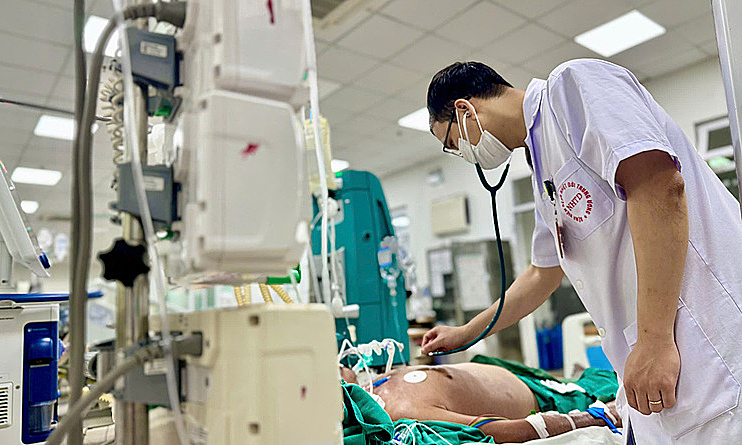
Doctor Khue examines the patient during a follow-up visit. Photo: Tam Anh General Hospital |
Lien was prescribed anti-tuberculosis medication, and her amount of hemoptysis, fetal movements, and fetal heart rate were monitored. After nearly a week, her hemoptysis decreased and then stopped. The fetus was healthy, and her vital signs were stable. She continued outpatient tuberculosis treatment and scheduled follow-ups.
Individuals with pulmonary tuberculosis often experience symptoms like weight loss, afternoon fever, and persistent coughing. However, Lien did not exhibit these symptoms; she only coughed up blood two times, each time approximately 10 ml, before being admitted to the hospital. Hemoptysis is not always caused by pulmonary tuberculosis. It can also be related to various other respiratory conditions. If someone experiences prolonged coughing, phlegm, low-grade afternoon fever, night sweats, fatigue, or weight loss, they should seek early medical attention.
Doctor Khue noted that not all women planning pregnancy require tuberculosis screening. However, those at high risk should consult with a doctor before conceiving.
For pregnant women, tuberculosis treatment requires coordination between respiratory and obstetrics specialists. Patients should not discontinue medication on their own due to concerns about affecting the fetus, as active tuberculosis, if left untreated, can pose risks to both the pregnant woman and the fetus. Recommended tuberculosis treatment regimens during pregnancy are chosen based on safety considerations for both mother and baby. Families should also be guided on infection prevention measures if the patient has contagious pulmonary tuberculosis.
Nhat Thanh
*Patient's name has been changed.
| Readers can submit questions about respiratory illnesses here for doctors to answer. |