Vocal cord polyps are benign growths on the vocal cords, which can vary in size and have a stalk or not. Voice disorders are often the initial symptom of laryngeal polyps. This occurs because the two vocal cords cannot close completely, leading to uneven vibrations that cause hoarseness and changes in voice.
The degree of voice disturbance depends on the polyp's size. Larger polyps create a wider glottal gap during phonation, resulting in more severe hoarseness and shortness of breath when speaking.
Polyps form on the vocal cords when the local mucous membrane experiences prolonged irritation and damage, leading to swelling and hemorrhage within the lamina propria. This connective tissue structure, located between the surface epithelium and the muscle layer, plays a role in creating vibrations and mucosal wave oscillations. Over time, these lesions do not heal but progress into polyp masses.
Several factors increase the risk of vocal cord polyp formation, including chronic laryngitis, frequent loud and continuous speaking, smoking, alcohol consumption, and gastroesophageal reflux disease.
 |
Doctor Hang performs a throat endoscopy on a patient. Illustration: Tam Anh General Hospital |
Vocal cord polyps are benign and rarely develop into malignant tumors, but they do not disappear on their own. Large laryngeal polyps can cause breathing difficulties for patients.
Depending on the condition, vocal cord polyps may be managed with medical treatment, combined with limiting extensive speaking and adhering to follow-up appointments. If medical treatment does not improve the condition, causes voice loss, difficulty swallowing, or breathing issues, or if the polyp is large, doctors will consider surgical removal.
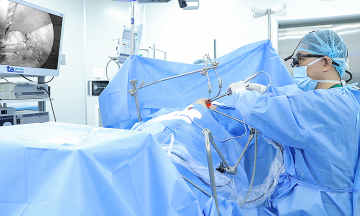
Currently, vocal cord polyp removal surgery is performed using a laryngeal microsurgery endoscopy system with a Karl Storz system. This allows doctors to clearly observe the lesion, precisely dissect it, minimize invasiveness, and achieve local hemostasis. The procedure takes approximately 30 minutes.
To prevent vocal cord polyps, individuals should limit loud and continuous speaking. If one's profession requires frequent speaking, it is advisable to rest the voice for 5-10 minutes and drink sufficient water to soothe the larynx. Avoiding smoking, limiting coffee and alcohol, thoroughly treating gastroesophageal reflux disease (if present), and performing daily nasal and throat hygiene with physiological saline also contribute to polyp prevention.
Master, Doctor, Level II Specialist Tran Thi Thuy Hang
Head of Ear, Nose, and Throat Department
Ear, Nose, and Throat Center
Tam Anh General Hospital TP HCM
| Readers can ask questions about ear, nose, and throat conditions here for doctors to answer. |