Eng English
China 中国人

Eng English
China 中国人
  • News
  • World
  • Business
  • Entertainment
  • Sports
  • Law
  • Education
  • Health
  • Lifestyle
  • Travel
  • Science
  • Digital
  • Automobiles
  • Trở lại Thể thao
  • Health
Tuesday, 2/6/2026 | 10:02 GMT+7

Robot removes rectal cancer tumor from 92-year-old woman

Kim, 92, who had rectal cancer, underwent robotic surgery to remove the tumor.

A colonoscopy at Tam Anh General Hospital, Ho Chi Minh City, revealed an infiltrative ulcerated lesion in Kim's rectum, measuring 15 mm and occupying about one-third of the rectal lumen's circumference. A biopsy confirmed moderately differentiated rectal adenocarcinoma, stage two, with no distant metastasis.

Doctor Do Minh Hung, Director of the Center for Endoscopy and Gastrointestinal Laparoscopic Surgery at Tam Anh General Hospital, Ho Chi Minh City, stated that Kim's cancer cells had deeply invaded the layers of the rectal wall. The optimal treatment involved robotic proctectomy to remove the tumor-containing segment, combined with lymphadenectomy. This approach aimed to completely eliminate cancer cells, reduce the risk of recurrence, and prevent tumor progression that could lead to bowel obstruction, bleeding, or perforation, potentially resulting in peritonitis.

According to Doctor Hung, Kim was elderly and frail, with multiple underlying health conditions, including heart failure, myocardial ischemia, chronic kidney failure, hypertension, and atrial fibrillation. She had a pacemaker implanted one year prior. Doctors were concerned that a prolonged major surgery could overtax her system, increasing the risk of myocardial infarction, intraoperative cardiac arrest, or extended postoperative respiratory failure.

To prepare for surgery, Kim underwent pleural fluid drainage to improve lung expansion and respiratory function. Doctors also checked her pacemaker's function, adjusted her anticoagulant medication, and discontinued it 5 days before surgery to minimize the risk of bleeding.
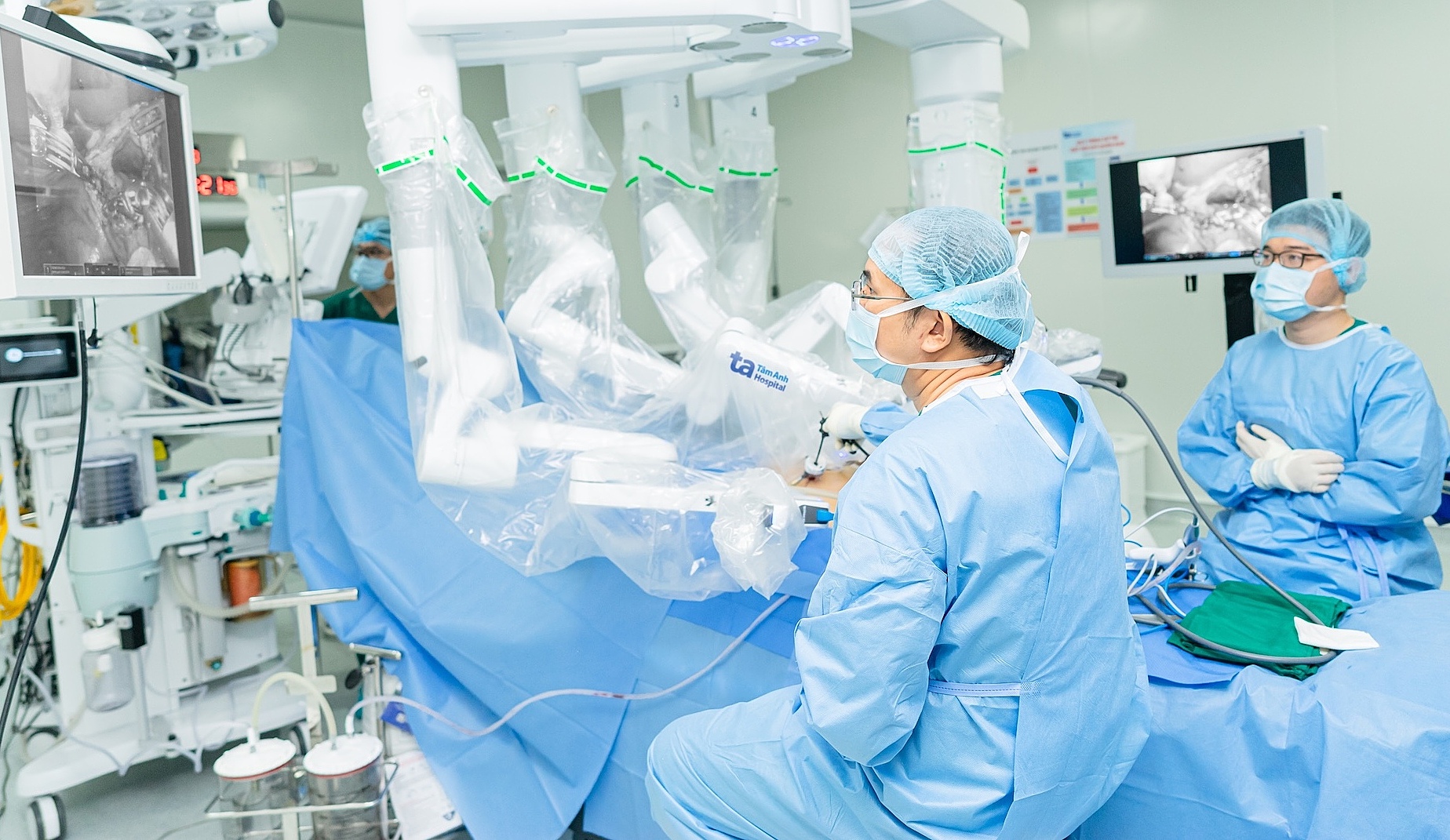
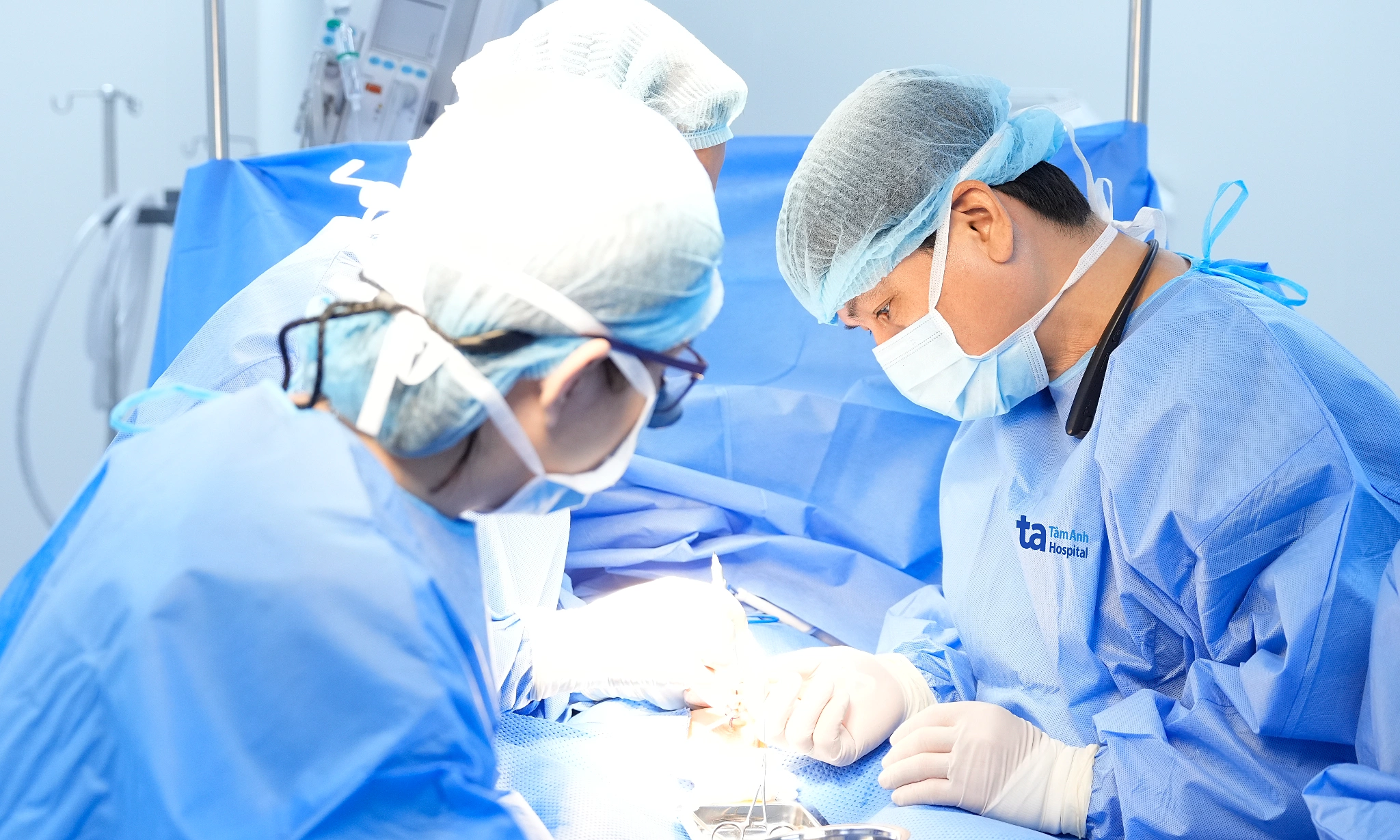
The robot performs tumor resection for Kim under the doctor's control. *Photo: Tam Anh General Hospital*

The surgeon, controlling the robotic system, opened the peritoneum, performed dissection, lymphadenectomy, and ligated the artery at its root. The robotic arms navigated deep into the narrow pelvis, dissecting the entire tumor and perirectal fat.

After resecting the rectum approximately 2 cm below the tumor, the surgeon made a small incision below the navel to extract the specimen. They then resected the colon approximately 20 cm above the tumor and reconnected the two ends of the bowel.

The human pelvis is typically narrow and deep, making traditional open or laparoscopic surgery challenging. However, the robot can rotate flexibly in confined spaces. Magnified 3D images help surgeons clearly visualize anatomical structures, preserve pelvic autonomic nerves, and minimize ureteral damage.
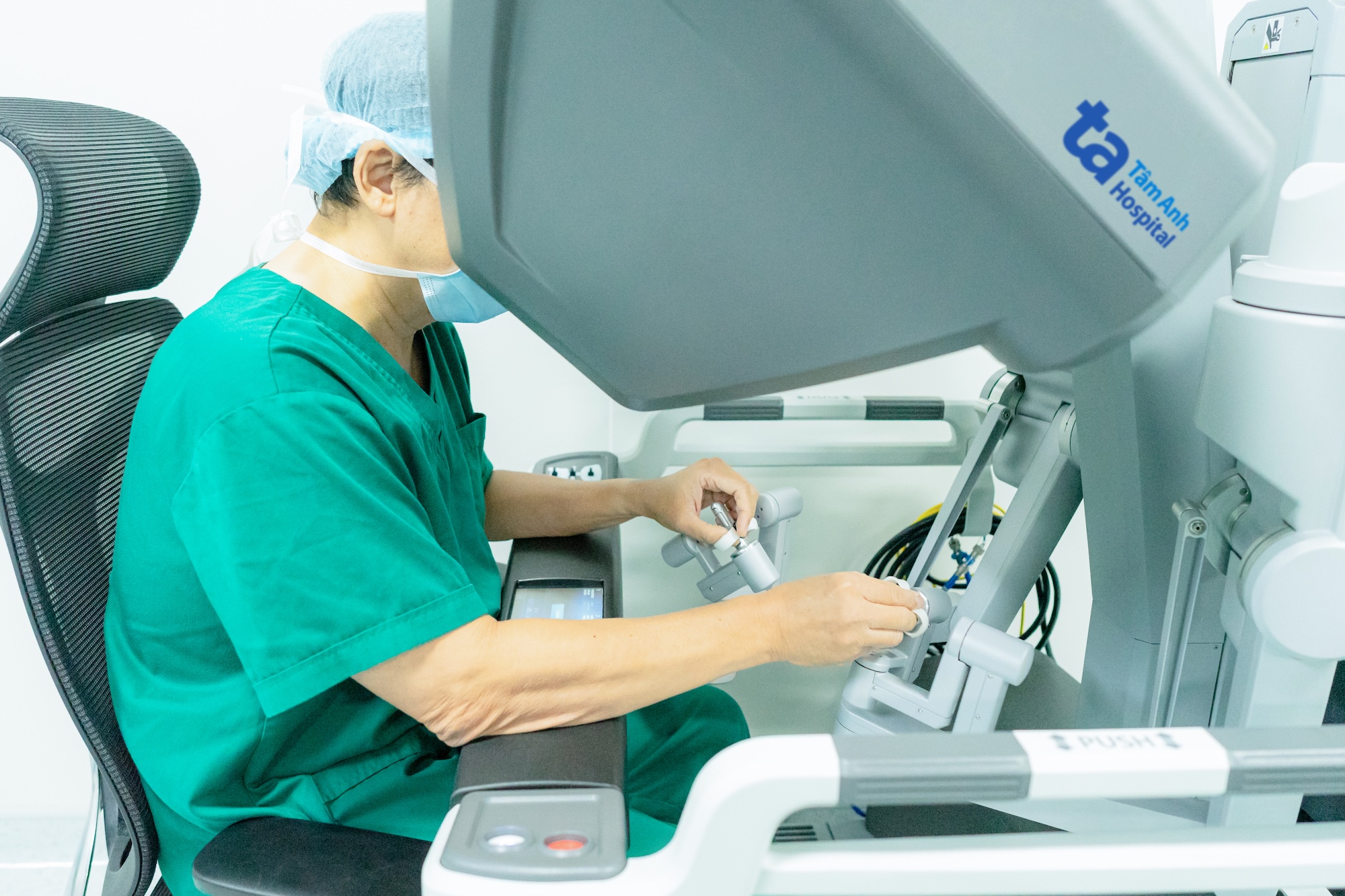
Doctor Hung operates the robot from the control console to remove a deep rectal tumor from Kim. *Photo: Tam Anh General Hospital*

Two days after surgery, Kim's health recovered significantly. She could sit up, engage in light activity, consume liquid food, and was discharged without postoperative complications. Pathological results showed cancer cells had invaded the muscle layer but had not metastasized to the lymph nodes. A total of 10 resected lymph nodes were all negative. Both resection margins were clear of cancer cells. The disease was classified as stage 2A, requiring no additional treatment.

Colorectal cancer is common in Vietnam, with a high number of new cases and fatalities. The disease is often detected at a late stage due to vague symptoms, typically when the tumor has invaded or metastasized to the liver, lungs, and other organs, making treatment difficult.

According to Doctor Hung, rectal cancer can be cured in over 90% of cases if detected early. He recommends that individuals aged 45 and older, or those with a family history of polyps or colorectal cancer, undergo regular health check-ups and screenings as advised by a doctor. Early detection and removal of precancerous polyps significantly reduce the risk of progression to invasive cancer.

Quyen Phan

*Patient's name has been changed

By VnExpress: https://vnexpress.net/robot-cat-u-ung-thu-truc-trang-cu-ba-92-tuoi-5080853.html
Tags: rectal cancer robotic surgery cancer

News in the same category

Proposal to develop mobile application to rescue abused children

Proposal to develop mobile application to rescue abused children

Deputy Minister Nguyen Tri Thuc proposed developing a mobile application similar to the 111 national hotline, enabling abused and exploited children to quickly send distress signals for help.

Vietnam issues recall for two Australian functional foods over glass fragment risk

Vietnam issues recall for two Australian functional foods over glass fragment risk

The Food Safety Authority, under the Ministry of Health, has mandated the cessation of circulation for two Nature's Own functional food products, currently under recall in Australia due to the potential presence of glass fragments in their bottles.

Three dietary approaches to reduce harmful cholesterol

Three dietary approaches to reduce harmful cholesterol

Adopting a diet rich in soluble fiber, limiting unhealthy fats, and cutting down on sugary foods and beverages can significantly help in lowering ldl cholesterol.

Mistaken for asthma, a 77-year-old's persistent symptoms reveal invasive lung fungus

Mistaken for asthma, a 77-year-old's persistent symptoms reveal invasive lung fungus

Mr. Duan, 77, experienced prolonged shortness of breath, coughing, and hoarseness; when his bronchial asthma treatment showed no improvement, doctors diagnosed invasive pulmonary aspergillosis.

Human skin 'printed' in Vietnamese laboratory

Human skin 'printed' in Vietnamese laboratory

A research group from the University of Science, Vietnam National University Ho Chi Minh City, has made initial progress in developing human skin tissue using 3D bioprinting technology, opening up prospects for regenerative biomedical and therapeutic applications in Vietnam.

How hormonal imbalances lead to abdominal fat accumulation

How hormonal imbalances lead to abdominal fat accumulation

Hormonal imbalances can cause the body to accumulate fat around the abdomen, increasing visceral fat and the risk of many chronic diseases.

6 food combinations to enhance nutrient absorption

6 food combinations to enhance nutrient absorption

Combining yogurt with bananas, tomatoes with olive oil, and turmeric with black pepper can help the body absorb nutrients more effectively.

Doctor explains the concept 'five years to age one year'

Doctor explains the concept 'five years to age one year'

Not only can individuals live longer, but they can also maintain a biological age younger than their chronological age, potentially aging "one year every five years" with proper health and lifestyle management.

16 years of nocturnal enuresis

16 years of nocturnal enuresis

Nhi, 16, who suffered from a bladder control disorder, has now been successfully treated by doctors with medication combined with lifestyle adjustments.

Common mistakes in arthritis treatment

Common mistakes in arthritis treatment

Arbitrarily stopping or changing medication, limiting physical activity, or using hot oils to treat arthritis can worsen the condition.

Eng English
China 中国人
  • News
  • World
  • Business
  • Entertainment
  • Sports
  • Law
  • Education
  • Health
  • Lifestyle
  • Travel
  • Science
  • Digital
  • Automobiles
FPT Tower, 10 Pham Van Bach Street, Dich Vong Ward,
Cau Giay District, Hanoi, Vietnam
Email: contacts@vnportal.net
Tel: 028 7300 9999 - Ext 8556
Advertise with us: 090 293 9644
Register
© Copyright 2026 vnnow.net. All rights reserved.
Terms of use Privacy policy Cookies