Doctor Nguyen Ngoc Tiep, a specialist in orthopedic trauma at Tam Anh General Hospital Hanoi, stated that the patient's right elbow had a 20-degree valgus deformity, limiting its range of motion. This condition caused pain and joint stiffness during sports or heavy labor.
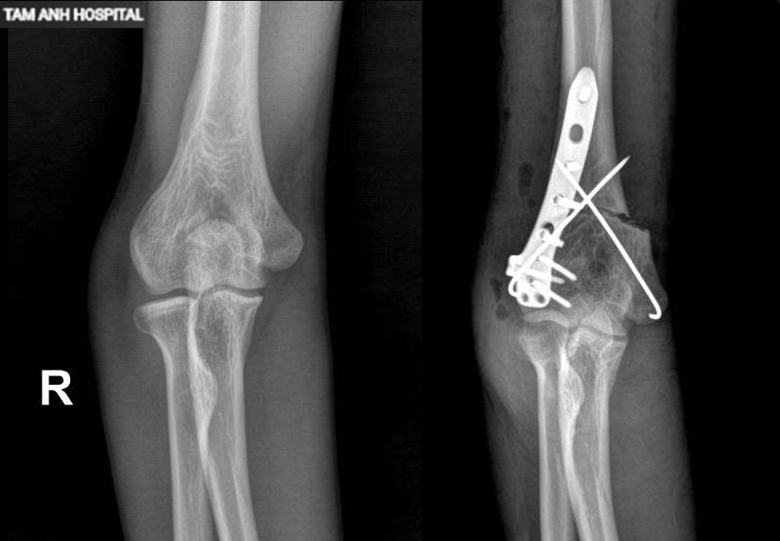 |
An's crooked elbow (left) was surgically realigned (right). Photo: Tam Anh General Hospital |
Doctor Tiep explained that axial deviation is a common complication following conservative treatment for humerus fractures, particularly supracondylar fractures in children. If a fracture is not properly realigned during casting or traditional treatment, it can result in malunion. Before puberty, rapid growth and imbalanced development of elbow tendons and muscles can further exacerbate the deformity.
Initially, the condition primarily affects aesthetics and self-confidence in children, without impacting movement. However, years later, patients may develop complications such as joint stiffness and pain during strenuous activity. Some individuals experience ulnar nerve paralysis 10-20 years post-fracture, resulting in progressive arm weakness and an inability to extend their fingers.
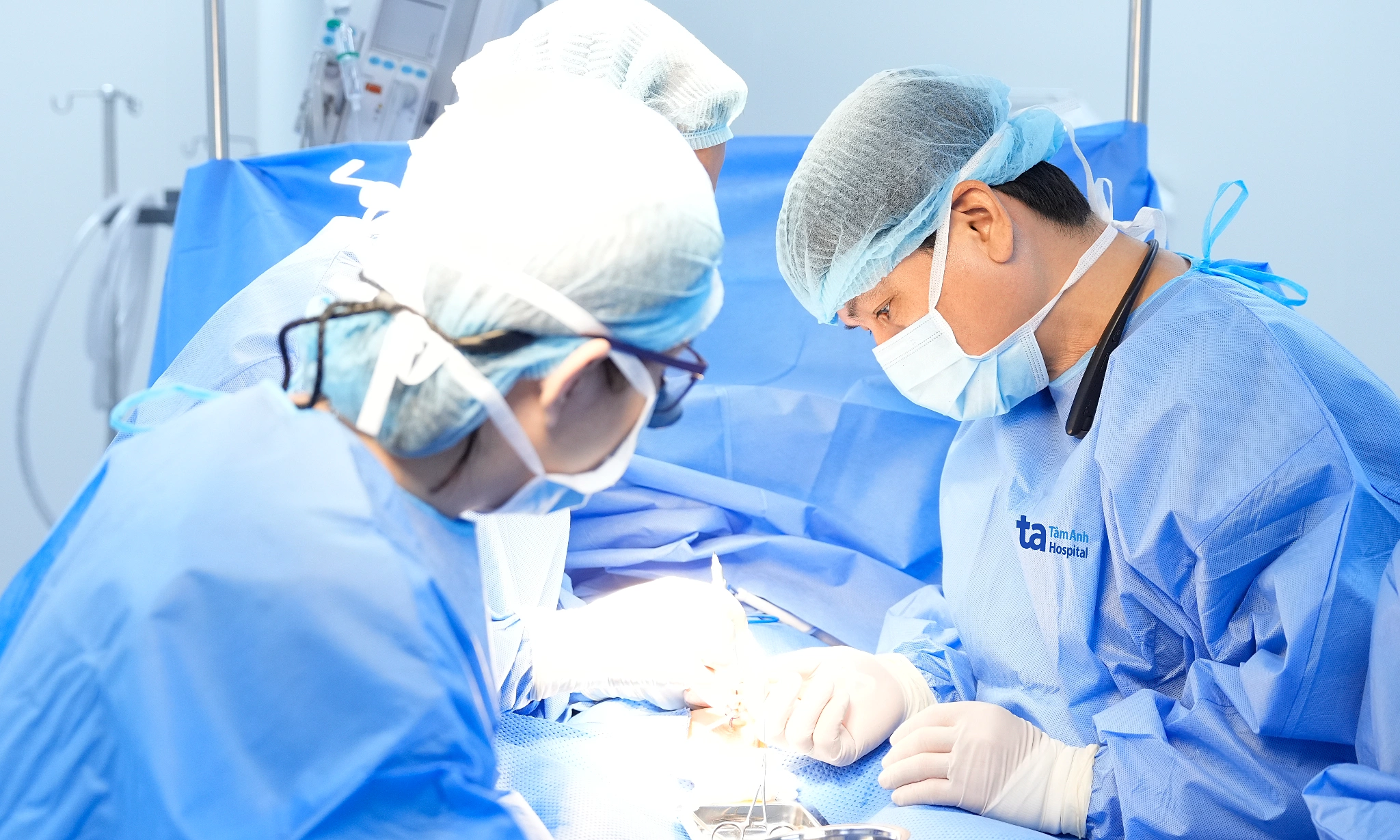
An underwent osteotomy and axial correction surgery to treat the elbow deformity. Using an intraoperative continuous X-ray system (C-arm), surgeons precisely cut the distal humerus in an arc shape, rotating the axis outward by approximately 10 degrees. The bone was then fixed with plates and screws. This approach optimized the procedure by reducing bone removal and increasing the arc-shaped contact area, which promotes faster bone healing.
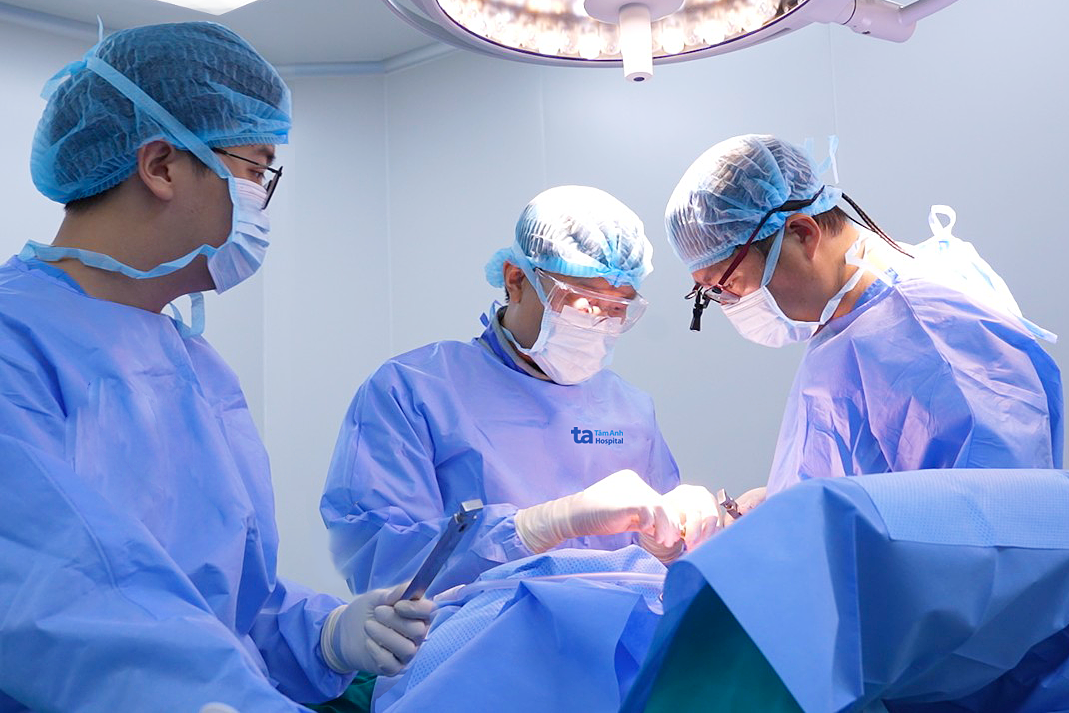 |
Doctor Tiep (center) performs surgery on An. Photo: Tam Anh General Hospital |
Immediately after surgery, An noticed his right arm was straight, mirroring his left. Postoperative X-rays confirmed the elbow axis had returned to a neutral position. Doctor Tiep prescribed multimodal pain management and physical therapy, including electrotherapy and high-power laser, to reduce swelling.
Consequently, on the first day, An began rehabilitation exercises, including passive elbow flexion and extension with machine and physical therapist assistance. This early intervention aimed to rebalance the elbow muscles, which had become slack internally and tense externally after 16 years of deformity.
An was discharged after three days and will continue a 3-6 week exercise regimen to regain full elbow range of motion. Doctor Tiep anticipates that with proper bone healing, An will fully recover within 3-6 months.
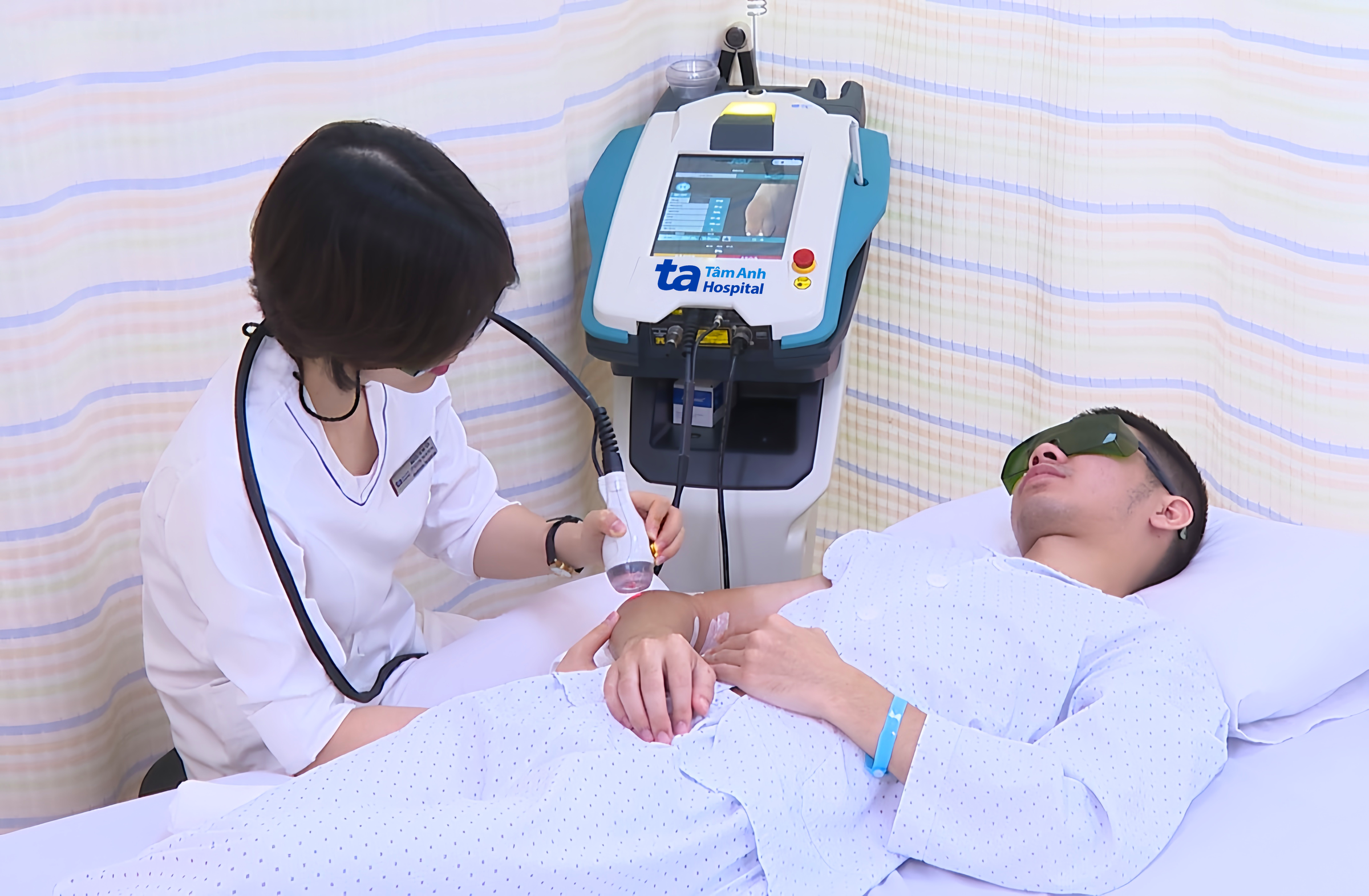 |
A physical therapist provides postoperative treatment for An. Photo: Tam Anh General Hospital |
Doctor Tiep advises parents to seek hospital care for accurate diagnosis and treatment if children experience injury, severe pain, swelling, or bruising, as these may indicate a fracture. He warns against attempting self-correction at home or visiting unqualified treatment facilities, which can lead to dangerous complications.
Following fracture treatment with a cast, children require scheduled follow-up appointments and repeat X-rays. If axial deviation is detected, immediate surgical intervention is recommended. Children's bones are still soft, with thick periosteum and high elasticity, allowing for minimally invasive axial correction surgery that does not require complex splinting and yields good results.
Conversely, allowing an axially deviated bone to persist past puberty can hinder normal development, reduce self-confidence, and cause psychological distress. In adulthood, bones become harder and more brittle, the periosteum thins, and the bone loses its ability to self-correct. This makes osteotomy for axial correction more complex, invasive, and necessitates a longer recovery.
Thanh Long