Huy, residing in America, had been experiencing a dull ache in his lower back for a week, taking pain relievers. In mid-January, upon his arrival in Vietnam, he suddenly developed severe abdominal pain and was admitted to Tam Anh General Hospital, TP HCM. Doctor Nguyen Tan Cuong, deputy head of the Urology Department at the Urology - Nephrology - Andrology Center, stated that Huy had a 15 mm stone in the proximal left ureter, causing grade one hydronephrosis in his left kidney. Another stone, approximately 12 mm, was located in the lower renal calyx. Doctors diagnosed the lodged ureteral stone, leading to acute obstruction, as the cause of Huy's renal colic.
According to Doctor Cuong, ureteral stones measuring 1 cm or larger are difficult to treat medically, requiring early surgical intervention to prevent kidney damage complications. Since Huy had a ureteral stone and another stone on the same kidney, doctors opted for retrograde intrarenal surgery using a flexible ureteroscope, which is incision-free, has fewer complications, and offers a faster recovery compared to percutaneous nephrolithotomy.
Doctor Cuong and his team utilized a flexible, micro-ureteroscope, with a diameter of 7.5F (2.5 mm), which was easily advanced into the ureter. The scope's tip can bend nearly 270 degrees, allowing access to stones in difficult-to-reach positions within the renal calyx without the need for prior JJ stent placement to dilate the ureter, saving both time and treatment costs.
Doctors activated laser energy to break the stones into tiny fragments, 1-2 mm in size, which were then easily passed through the urinary tract. Following lithotripsy, a JJ stent was placed from the kidney to the bladder to protect the ureter, reduce the risk of obstruction, and promote better recovery. Huy's renal colic subsided, and he was discharged the following day.
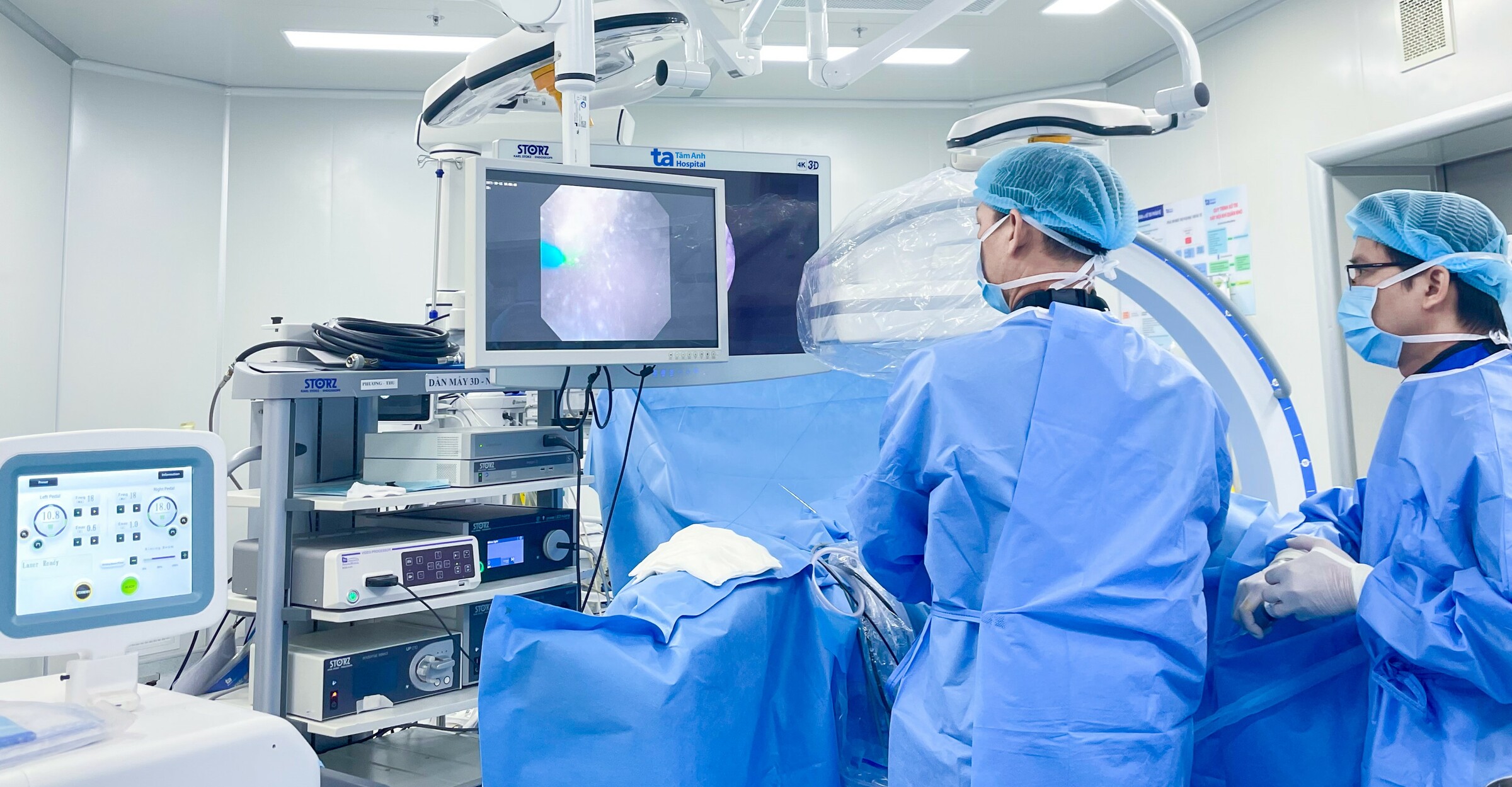 |
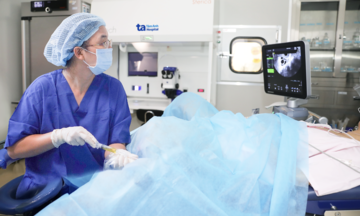
Doctor Cuong (left) and Doctor Phan Truong Nam, Specialist Level I, performed retrograde intrarenal surgery on Huy. Photo: Tam Anh General Hospital |
Kidney stones are common in men aged 30-55, forming from supersaturated salts and minerals that accumulate in the kidneys or urinary tract. Risk factors for kidney stones include: insufficient water intake, consuming foods rich in oxalate or salt, obesity, a family history of kidney stones, digestive disorders, diabetes, and gout.
According to Doctor Cuong, most kidney stones develop silently over a long period without symptoms. Stones are often only discovered when they grow large enough to cause complications or during routine health check-ups. When kidney stones move and become lodged in the ureter, they can obstruct urine flow, triggering renal colic, severe lower back pain that may be accompanied by nausea and hematuria (blood in urine). Fever and chills indicate infection, a common complication of urinary tract stones.
To prevent stone recurrence, patients should drink an average of 2-2,5 liters of water daily, or more depending on their physical condition and activity level, to help limit the crystallization of stone-forming substances. Maintain a balanced diet, reduce salt, limit oxalate and purine-rich foods, and increase intake of green vegetables and fruits. Additionally, maintain a healthy weight, exercise regularly, avoid prolonged urine retention, and adhere to regular follow-up appointments.
Ha Thanh