Contact lenses are increasingly popular due to their aesthetic appeal and ability to help control refractive errors in children. Unlike traditional glasses, these lenses sit directly on the cornea and move with the eyeball, offering expanded peripheral vision and a more natural image. Children also benefit from greater freedom during physical activities, reducing the risk of broken glasses or facial injuries.
These lenses can boost confidence for children who may feel self-conscious about wearing thick eyeglasses. In ophthalmology, specialized types, such as rigid gas permeable (RGP) lenses worn overnight (Ortho-K), are also used to help control and slow the progression of myopia in developing children.
Medically, there is no fixed minimum age for contact lens use; even young children, or infants with congenital eye conditions, may be prescribed contact lenses in certain situations. However, using contact lenses requires careful consideration. For children with common refractive errors, the deciding factor is not age but their ability to comply with instructions and maintain good hygiene.
A child can wear contact lenses when they demonstrate self-awareness, maintain good personal hygiene, follow instructions, and are capable of self-care. If a child is not ready, contact lens use can pose many risks. A significant risk is infection, corneal scratches, or ulcers if proper hygiene is not maintained. Children often rub their eyes with dirty hands, creating an environment where bacteria, fungi, or parasites can enter and cause disease.
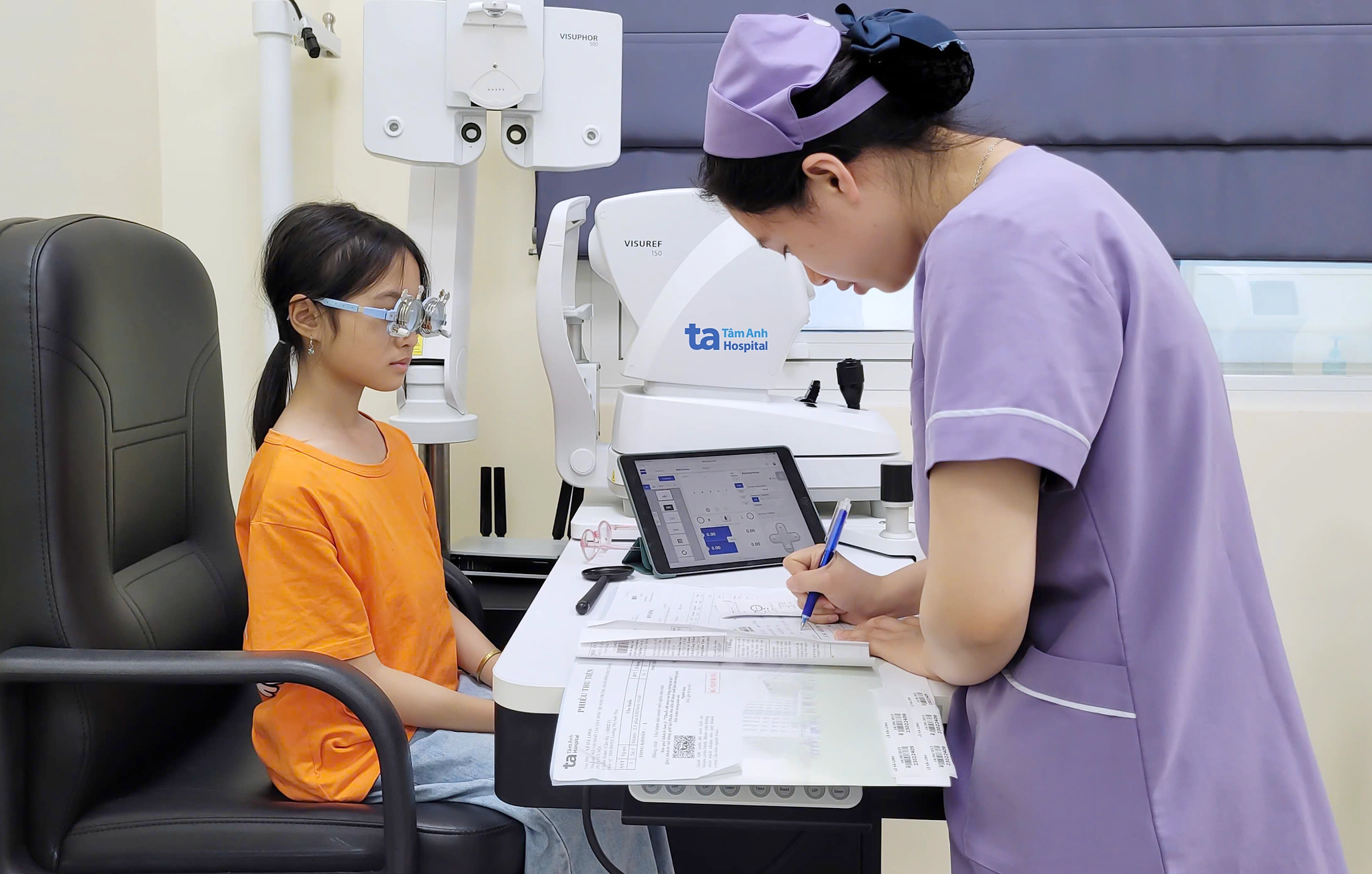 |
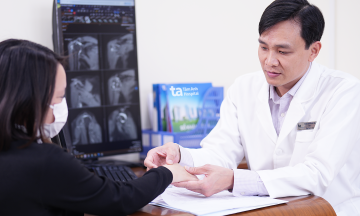
A medical professional records a girl's myopia measurement after an eye exam. Illustration: Tam Anh General Hospital |
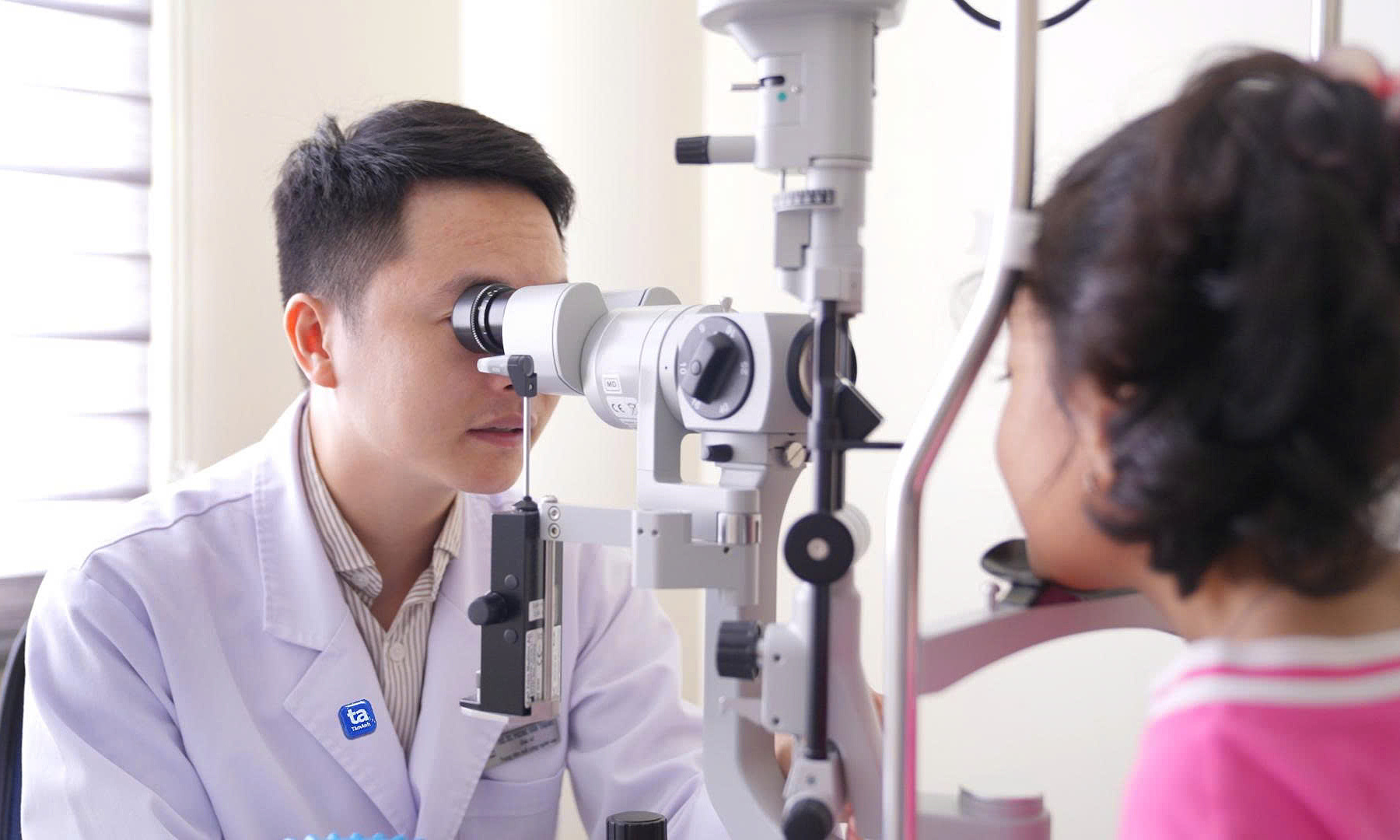
Your 8-year-old child, with 3 diopters of myopia, can consider using contact lenses if medically indicated and closely monitored. However, to determine which type of lens is suitable, the family should take the child to an eye specialist for a comprehensive examination and assessment. The doctor will measure refractive error, evaluate the cornea, assess tear film, and recommend lenses appropriate for the child's eye structure and daily activities.
If prescribed contact lenses, children must strictly adhere to safety protocols: wash hands thoroughly before handling, clean lenses with specialized solution, avoid wearing them while swimming or bathing or if eyes are inflamed, do not wear them overnight unless specifically instructed, and replace lenses on schedule. Should symptoms such as red eyes, discomfort, light sensitivity, excessive discharge, or decreased vision occur, the child must remove the lenses and seek prompt eye examination.
Master, Doctor Le Thanh Huyen
High-tech Eye Unit
Tam Anh Cau Giay General Clinic
Readers can submit questions about ophthalmological conditions here for doctors to provide answers.