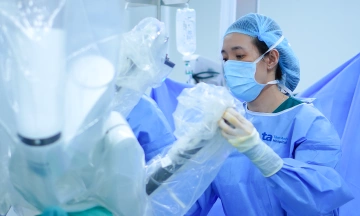
An X-ray at Tam Anh General Hospital Hanoi revealed Quang had a left pneumothorax, characterized by reduced left lung volume and a mediastinal shift to the right. Air in the pleural cavity compressed his lung and displaced the mediastinum, putting pressure on his heart and major blood vessels. If left untreated, this condition can lead to respiratory and circulatory failure.
Dr. Nguyen Thac Dung, from the Respiratory Department, noted that Quang's body mass index (BMI) was around 16, which is considered grade two underweight, nearly 8 kg below the normal range (18,5-24,9). He was a non-smoker with no history of lung disease or trauma.
"This is a case of primary spontaneous pneumothorax, which occurs in individuals without pre-existing lung conditions," Dr. Dung explained. "It is commonly observed in young people aged 15-34, and tall, thin males are also at risk."
Pneumothorax is categorized into two types: primary spontaneous and secondary spontaneous. Secondary spontaneous pneumothorax typically develops in individuals with underlying lung conditions such as chronic obstructive pulmonary disease (COPD) or pulmonary tuberculosis.
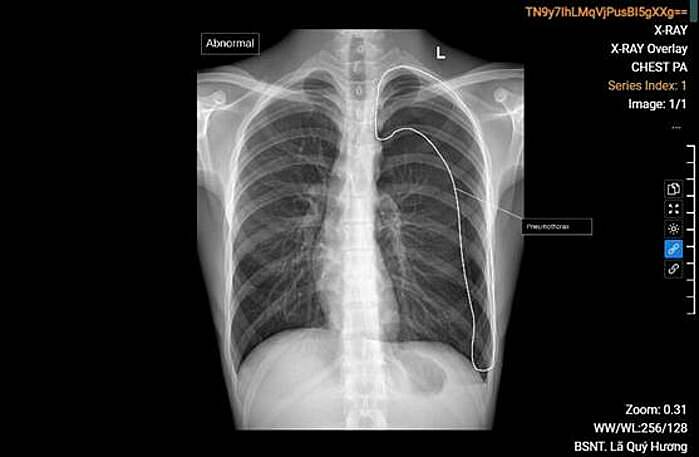 |
An X-ray image showing the patient's pneumothorax. *Photo: Tam Anh General Hospital* |
The patient underwent chest tube insertion to release air from the pleural cavity. This minimally invasive technique involves a small incision, resulting in less pain, reduced scarring, and faster recovery. A post-procedure chest X-ray showed that Quang's left lung had begun to re-expand, with only a collapsed area remaining around the chest tube insertion site and minimal subcutaneous air in the chest wall.
After five days of treatment, which included continuous suction via the chest tube, both lungs had fully re-expanded, and the pneumothorax was resolved. Quang was subsequently discharged.
 |
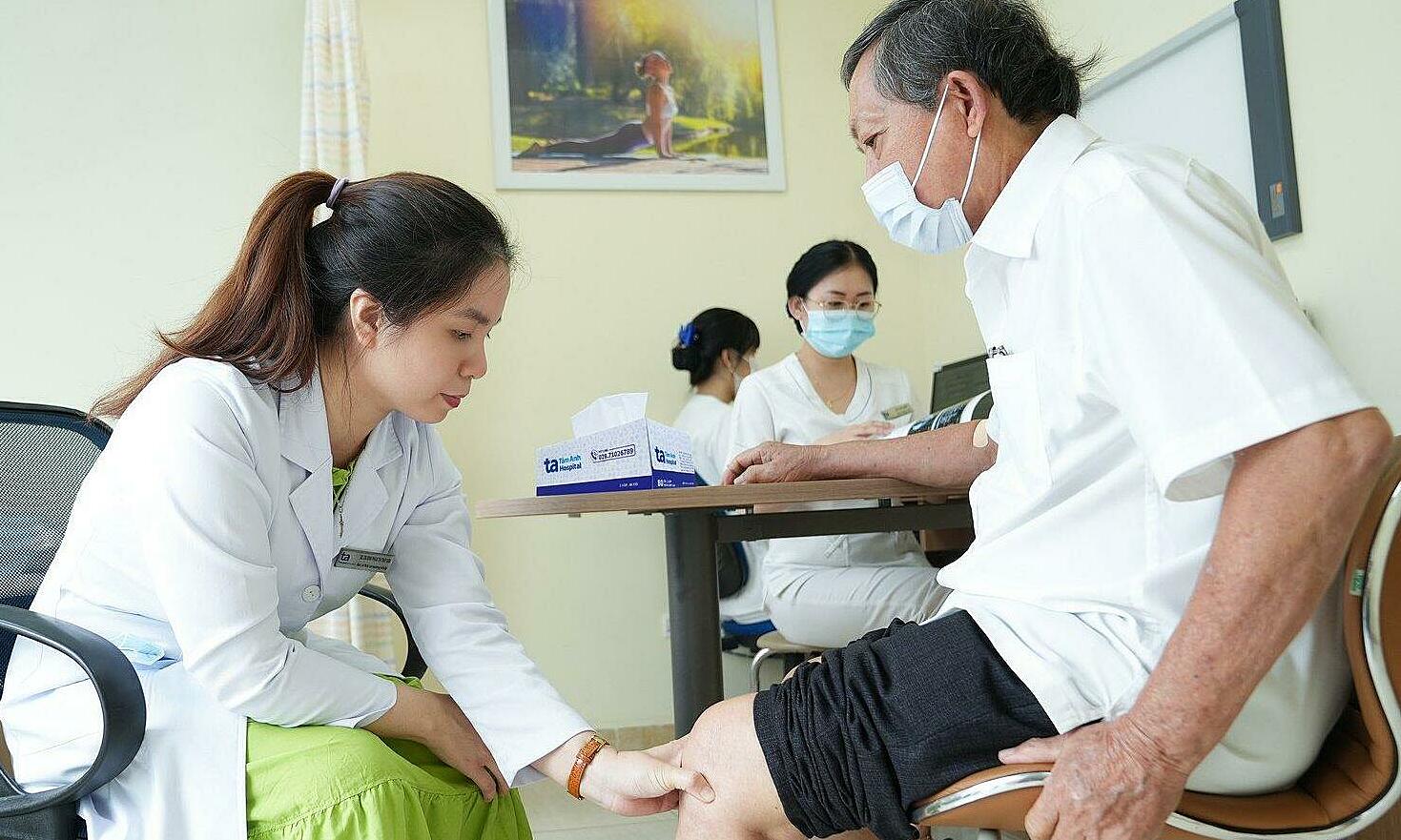
Dr. Dung consults with the patient. *Photo: Tam Anh General Hospital* |
Dr. Dung advises young individuals, especially tall and thin males, not to disregard symptoms such as sudden chest pain that intensifies with deep breaths, pain radiating to the shoulder or back, or even mild shortness of breath. These could be early indicators of primary spontaneous pneumothorax.
Individuals with a history of pneumothorax must attend follow-up appointments, adhere to treatment guidelines, and avoid activities that alter intrathoracic pressure, such as deep diving or flying, unless approved by a doctor. It is crucial to abstain from smoking and limit exposure to secondhand smoke to minimize the risk of recurrence.
Hoang Duong
| Readers can submit questions about respiratory diseases here for a doctor's response. |