The patient occasionally experienced blurry vision while reading and was sensitive to bright lights. During a free community health check-up program in TP HCM, she visited Gia Dinh People's Hospital facility 2. There, a specialized eye examination using a biomicroscope revealed sparkling, multi-colored spots within the lens of her left eye.
On 3/9, Dr. Tran Cong Danh, Master of Science, explained that the patient has Christmas tree cataract, a rare form of the condition. These tiny, needle-shaped crystals within the eye's lens reflect light, forming colorful streaks similar to decorative lights on a Christmas tree. The colors can shift depending on the angle of light from the biomicroscope.
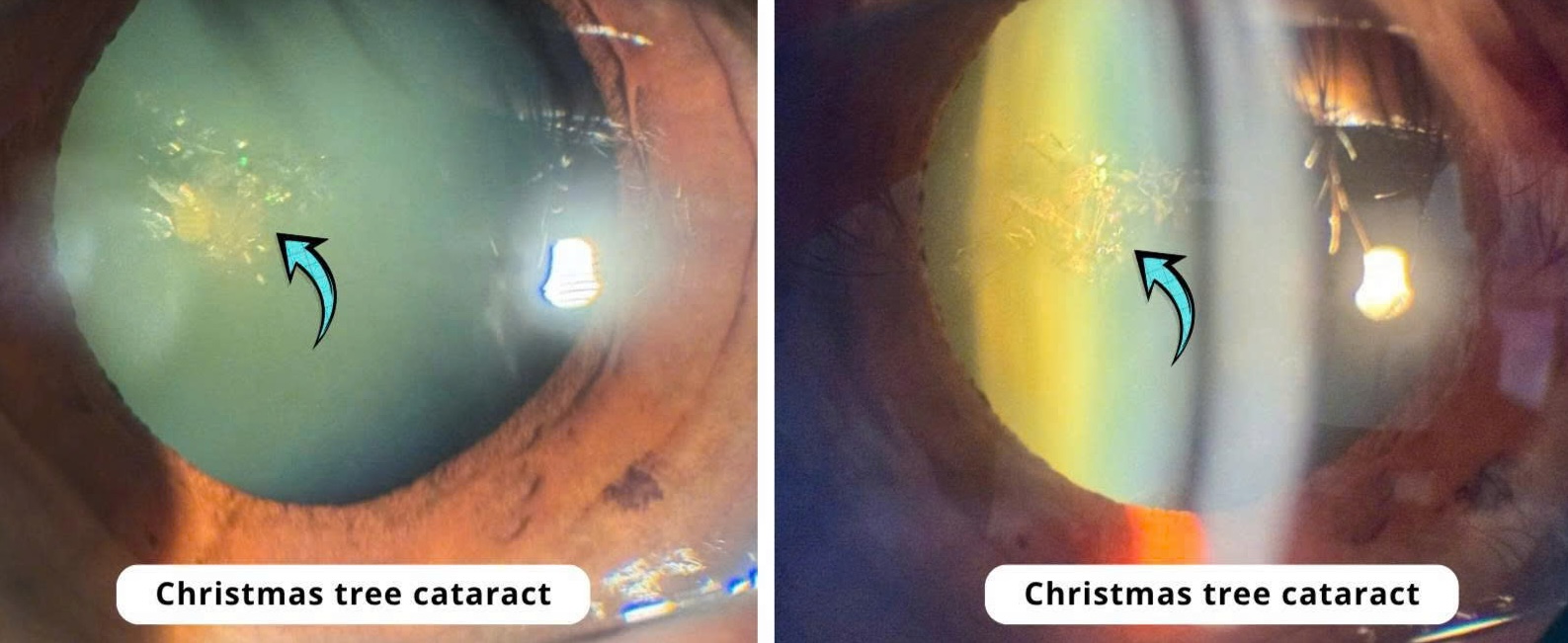 |
Sparkling, multi-colored, Christmas tree-shaped blurry spots within the patient's eye lens. Photo: Hospital provided. |
Her right eye showed no abnormalities. Further examinations also did not detect any additional eye conditions or related systemic issues.
According to Dr. Danh, Christmas tree cataract is often associated with the aging process of the eye's lens. The exact mechanism of its formation remains unclear, though some cases may involve changes in lens proteins or myotonic dystrophy.
This condition typically does not cause noticeable symptoms in its early stages. As it progresses, patients may experience blurry vision, glare, light sensitivity, or difficulty seeing at night. In this patient's case, her vision remains good and has not significantly impacted her daily activities, so no treatment is currently required. She will only undergo monitoring and regular follow-up appointments.
Similar to other forms of cataract, intervention is only necessary when the opacification reduces vision and affects the quality of life. When that occurs, artificial lens replacement surgery is the standard treatment method.
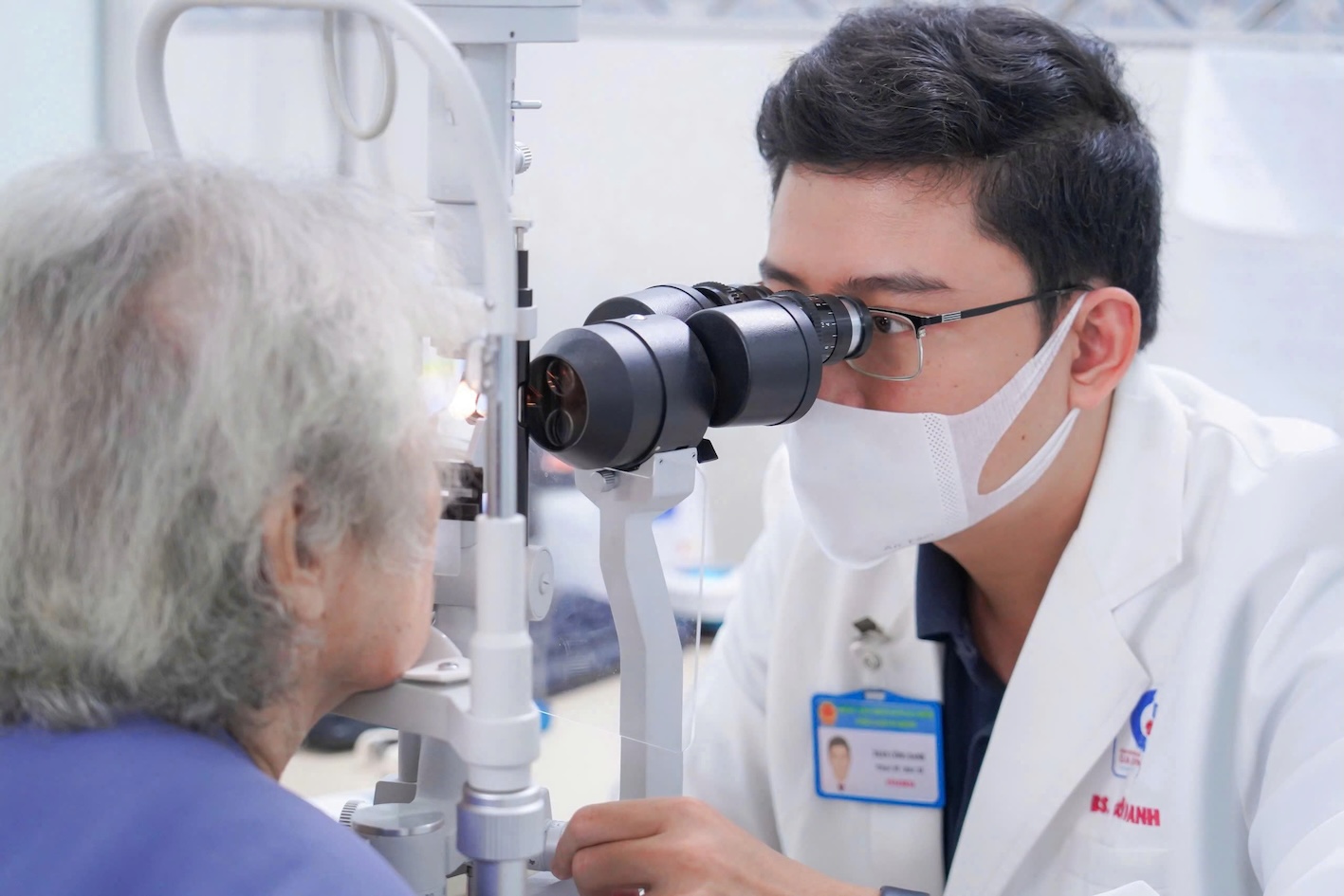 |
A doctor examining a patient's eye. Photo: Hospital provided. |
Doctors advise individuals aged 50 and above to undergo regular eye examinations, even in the absence of symptoms. These check-ups aid in the early detection of cataracts, glaucoma, retinal diseases, and other rare abnormalities, facilitating appropriate monitoring and treatment plans.
Le Phuong