In the final days of a holiday break, many families try to wake their children earlier, but children often oversleep, become irritable, or feel sluggish throughout the morning. This typically results from sleep and wake times shifting later over several weeks, not necessarily from laziness or a lack of discipline.
The body possesses an internal clock that regulates the sleep-wake cycle. When children become accustomed to staying up late and waking up late, this clock shifts accordingly. Suddenly demanding that children go to bed early does not guarantee immediate sleep; the next morning, they must wake up without sufficient rest, leading to increased fatigue.
Prioritize wake-up times
According to the American Academy of Sleep Medicine (AASM), children aged 6 to 12 should sleep 9 to 12 hours daily, while adolescents aged 13 to 18 need 8 to 10 hours. Adequate and consistent sleep is linked to better attention, learning, memory, and emotional regulation. During adolescence, the circadian rhythm also tends to shift later, causing many teenagers to feel sleepy later and find it harder to wake up early.
If only a few days remain before school starts, parents should set a consistent wake-up time close to the school schedule. Then, gradually shift bedtime earlier by 15 to 30 minutes each evening. In the morning, open the curtains, expose children to natural light, and encourage light physical activity. Daylight helps the body recognize it is time to be alert, aiding in readjusting the sleep-wake cycle.
Children should not oversleep until noon. If overly sleepy, older students can take a short nap in the early afternoon, avoiding long naps or napping too close to bedtime. For young children who still require naps for their age, families should maintain a consistent nap time and avoid extending it beyond the usual duration.
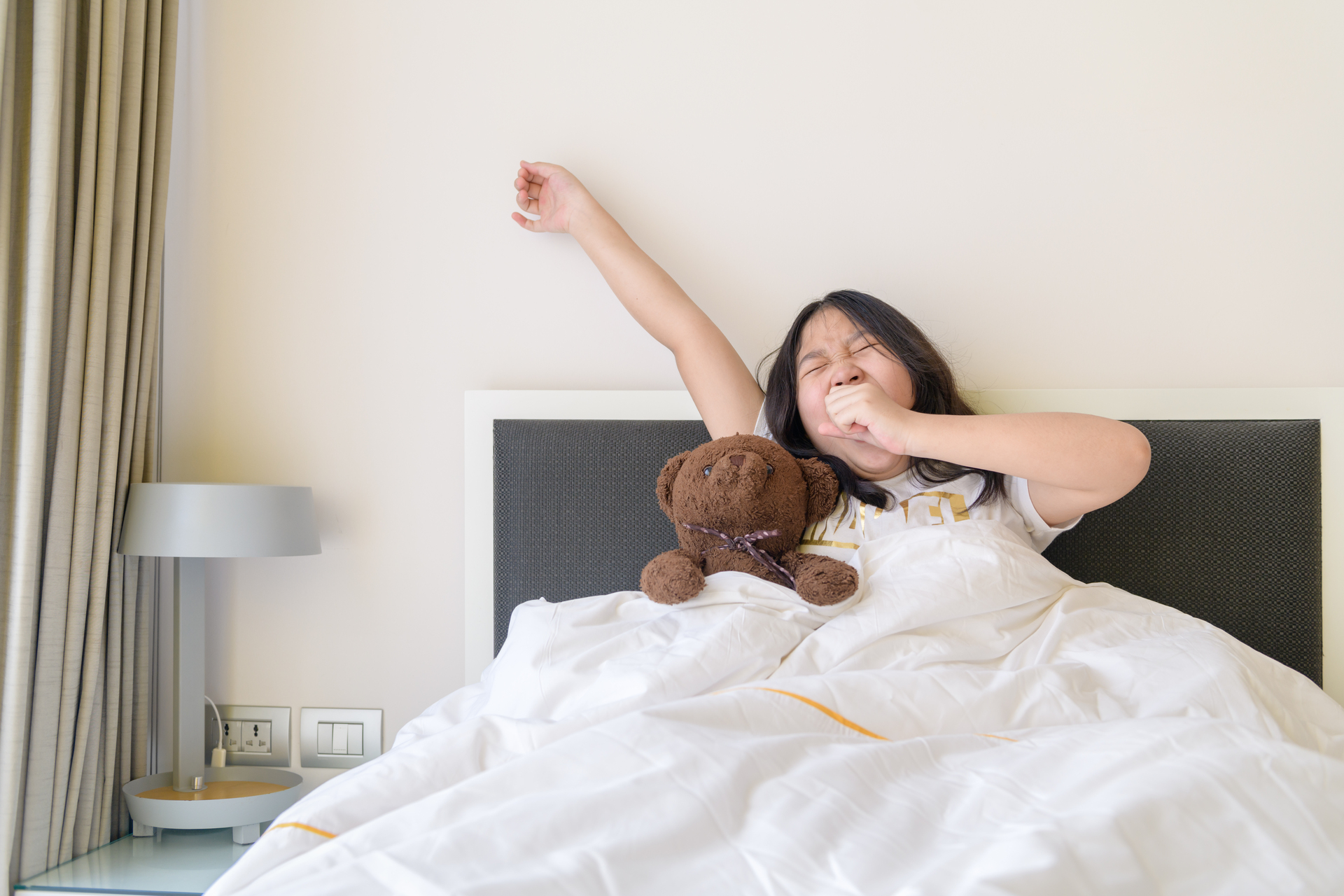 |
Children find it hard to wake up in the morning after getting used to sleeping late during the holidays. *Vecteezy*
Relax before bedtime
About one hour before bedtime, children should stop using phones, tablets, video games, and videos. The American Academy of Pediatrics advises removing screens from the bedroom, dimming the lights in the evening, and maintaining a familiar sequence of activities to help children relax.
Families can have children bathe, brush their teeth, read a physical book, or listen to soft music in the same order each evening. Clothes, school bags, and school supplies should be prepared in advance to avoid rushing to find items close to bedtime. The bedroom needs to be quiet, well-ventilated, and softly lit.
Parents should avoid scolding or making children lie in bed too early when they are not yet sleepy. The pressure to "sleep immediately" can increase stress for children. Parents can remind children to breathe slowly, have a short conversation about their worries, and then maintain a consistent lights-out time.
Strong tea, coffee, energy drinks, and some milk teas containing caffeine can make it difficult for children to sleep, especially when consumed in the late afternoon or evening. An overly heavy dinner or eating too close to bedtime can also cause discomfort. During the day, children should engage in physical activity but avoid high-intensity exercise right before bed.
Wake up gently and avoid stimulants
Parents should wake children gently, open curtains, have them wash their faces, drink water, and eat breakfast. Breakfast can combine carbohydrates with protein-rich foods like eggs, milk, yogurt, or beans to provide energy. Do not use coffee or energy drinks to force children to be alert.
If children slept little the night before school starts, families should still maintain a relatively consistent wake-up time, avoiding letting them oversleep too late the next day. Routines usually take a few days to one or two weeks to stabilize; maintaining consistency, avoiding major changes between school days and weekends, is important.
Health check
Difficulty waking early due to late nights often improves with routine adjustments. However, parents should take children for a medical check-up if the situation persists for about two weeks despite sufficient sleep, or if children experience: excessive daytime sleepiness, falling asleep in class, loud snoring, occasional pauses in breathing or gasping during sleep, morning headaches, reduced concentration, or significant emotional changes.
If children have a fever, severe cough, sore throat, vomiting, diarrhea, or a rash before school starts, parents should not try to send them to school. Families need to monitor, allow children to rest, and contact a medical facility if symptoms are severe, prolonged, or unusual signs appear.
The beginning of the school year is also an opportune time for parents to review vaccination records. Schools gather many people, so respiratory and contact-transmitted diseases can spread quickly. Depending on age, vaccination history, and current recommendations, children may need to complete or receive booster shots for: influenza, measles-mumps-rubella, chickenpox, diphtheria-pertussis-tetanus, and other appropriate vaccines.
At VNVC, parents can bring their records or provide the child's vaccination history to review for missing, due, or booster doses. Specific recommendations depend on age, health status, vaccination history, and medical staff guidance.
By Van Ha