Ms. Hue had a C-section scar defect after the birth of her first child. This anomaly can occur in women who have undergone a C-section and, depending on its severity, can be associated with abnormal bleeding, fluid retention in the uterine cavity, or impact the ability to conceive.
She underwent two unsuccessful intrauterine insemination (IUI) cycles and, after surgical removal of the scar defect, two failed in vitro fertilization (IVF) embryo transfers. At the Assisted Reproductive Technology Center, Tam Anh Hanoi General Hospital (IVF Tam Anh Hanoi), Doctor of First-Degree Specialization Phan Ngoc Quy noted Ms. Hue had reduced ovarian reserve, with an anti-Müllerian hormone (AMH) level of 0,9 ng/mL.
Doctor Quy prescribed a combination of oral medication and low-dose injections for 10 days, utilizing the remaining responsive follicles to retrieve good quality oocytes. As a result, Ms. Hue had 7 mature oocytes, which led to the successful fertilization and culture of two day 3 embryos and three day 5 embryos of good quality.
However, having embryos does not guarantee a successful pregnancy. Ms. Hue's subsequent two embryo transfers both resulted in early pregnancy arrest, prompting doctors to re-evaluate her uterine cavity and endometrium.
The assessment revealed Ms. Hue suffered from chronic endometritis, a potential cause for failed embryo implantation or recurrent biochemical pregnancies. Chronic endometritis often presents with no obvious external symptoms and is typically only detected through hysteroscopy, endometrial biopsy, and histopathological examination.
Ms. Hue received antibiotic treatment for her endometrial inflammation. During the endometrial preparation process, doctors discovered fluid in the uterine cavity and from the old C-section scar, which was then drained and the scar area washed. Thanks to these interventions, Ms. Hue's subsequent embryo transfer was successful. Her pregnancy progressed smoothly, and she gave birth to a baby girl weighing 2,8 kg in July.
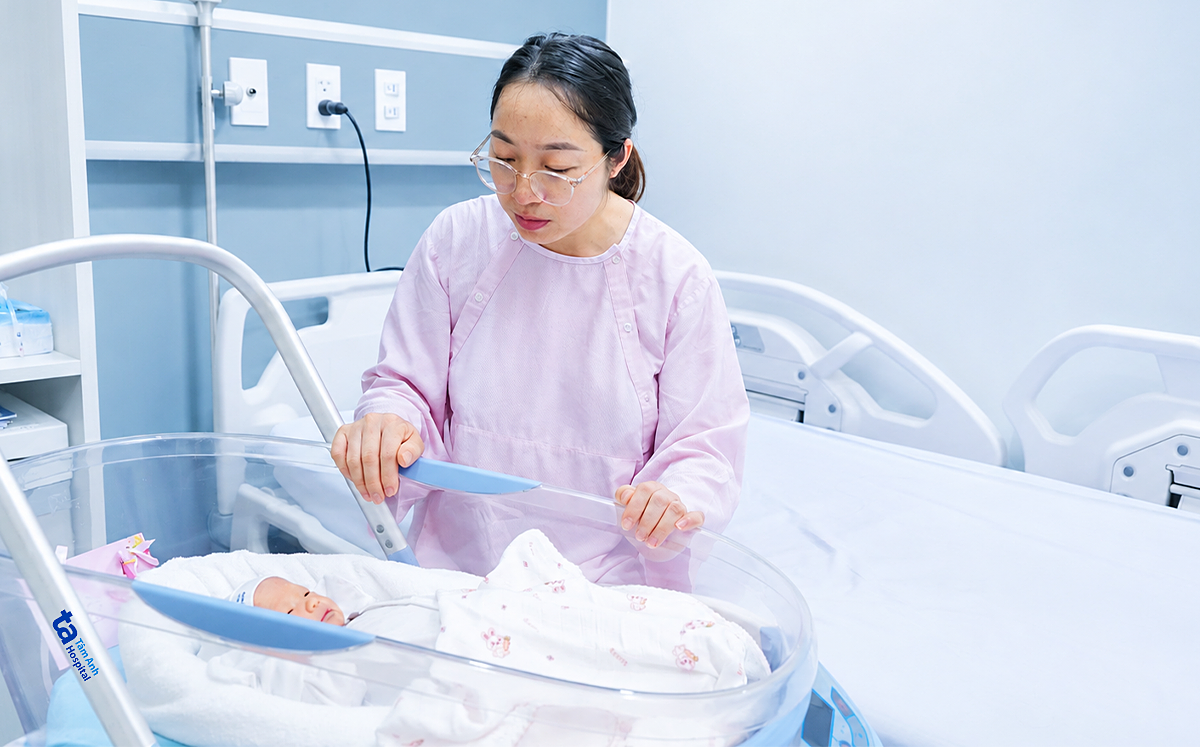 |
Ms. Hue with her newborn daughter. Photo: Tam Anh General Hospital |
Doctor Quy stated that the majority of patients treated at IVF Tam Anh Hanoi experience infertility due to multiple concurrent or sequential adverse factors. Therefore, after several failed IUI or IVF cycles, patients should not simply repeat the same protocol but require a comprehensive re-evaluation. Depending on the individual case, doctors may check ovarian reserve, uterine cavity, endometrium, fallopian tubes, hormone levels, and other relevant factors.
Women who have had a C-section, desire more children but experience delayed conception, have abnormal bleeding after menstruation, a history of ectopic pregnancy, multiple failed embryo transfers, or recurrent biochemical pregnancies should seek consultation with a fertility specialist. Based on the cause, doctors will personalize treatment to avoid prolonged delays and diminished chances of conception as reproductive age advances.
Van Anh