Twelve-year-old Taimoor stood in the lengthy queue outside Nasirabad's only ice factory just as the sun rose. Still in his school uniform, he clutched a scratched plastic bucket.
He called buying ice his most important task of the day. "If I don't bring ice home, how can anyone endure this heat?" he asked. "How can anyone drink water as hot as if it were boiling?"
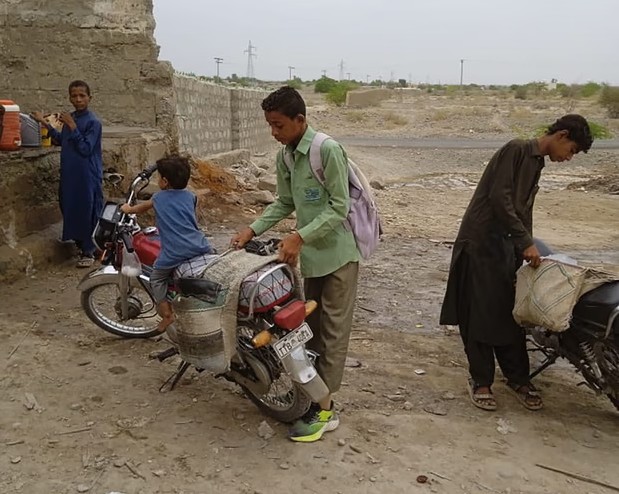 |
Taimoor takes ice home for his mother before going to school. Photo: Changeez Nazir
In this arid valley region, the morning task of bringing ice home determines a family's survival before outdoor temperatures soar to 50 degrees Celsius. Taimoor’s mother is pregnant with her third child after two miscarriages due to heatstroke. She dares not venture outside now, as excessive hyperthermia could cut off the oxygen supply to the fetus.
Receiving a small ice block from the vendor, Taimoor hurried home before heading to school, using the melting ice water to soothe his burning skin.
Nasirabad, nestled between mountain ranges and date palm groves, is located in Kech district, Balochistan province, about 40 km from Turbat. In may, the Pakistan Meteorological Department ranked Turbat among areas experiencing temperatures from 46 to 50 degrees Celsius. The World Meteorological Organization states that Asia is warming nearly twice as fast as the global average, and the 11-year streak leading up to 2025 set records for the hottest temperatures ever recorded.
The University of Notre Dame's 2024 climate adaptation index placed Pakistan in 147th position, indicating high vulnerability to natural disasters and weak response capacity.
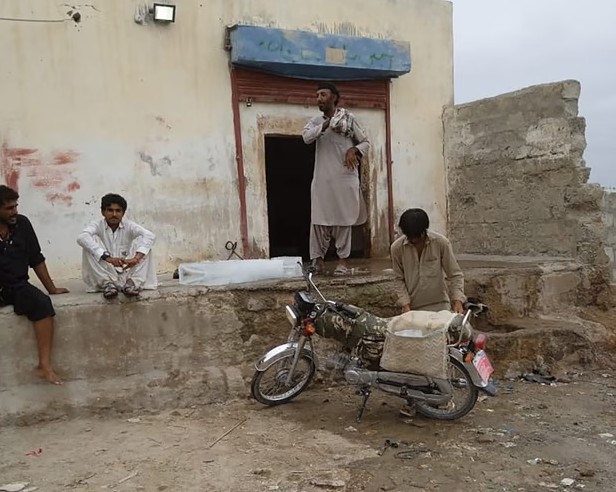 |
Mohammad Haider’s ice factory sells out quickly as residents struggle against the heat. Photo: Changeez Nazir
The root of the problem lies with electricity. Nasirabad residents report having power for only about three hours daily, and the voltage is too weak for refrigerators to operate steadily. Families who can afford solar panels use electricity to run fans and refrigerators during the day. For the majority of residents, the only way to cope with the heat is through ice blocks obtained or purchased each morning. The intense heat in Nasirabad is transforming this town into one of the hotspots most directly affected by global warming.
Mohammad Haider, owner of the town's only ice factory, took over the facility his late father established in 1992. At seven o'clock in the morning, workers pull up the metal roller door. Two hours later, 400 blocks of ice frozen overnight are sold out. Nearly all of this ice goes into families' drinking water containers. Many people queue only to leave empty-handed.
"I feel very sad when I see people unable to buy ice because it's sold out," Haider said. "They have to endure another long day drinking warm water."
Latecomers buy ice from those who purchased extra, with prices doubling from 40 rupees to 80 rupees. No one has inspected the water source used to make these ice blocks, and the hot season always leads to intestinal illnesses that cause faster dehydration.
The burden falls on those with the fewest options. Raj Bibi, a 66-year-old widow, pours water into several bottles each morning and carries them to a neighbor's house to store in their solar-powered refrigerator. In the evening, she returns to collect them, hoping the water remains cool enough to drink overnight. She cannot afford to buy ice or install solar power.
"The entire day passes in a stifling and oppressive atmosphere," she said. "There is no electricity to run a fan, and I have no money to install solar panels."
Public health warnings consistently advise residents to stay indoors in cool environments and drink enough water. This advice becomes a luxury in a land where shelter requires significant money. Only a few households can afford expensive solar panels with battery storage systems. Poorer households drag mats to open ground to sleep overnight, enduring the dry, scorching winds from the canyons.
Climate change action programs from both central and local governments remain administrative paperwork. Nasirabad residents are forced to rely on a fragile survival network: borrowing space to store ice, enduring erratic electricity, and relying on each small ice block from Haider's factory.
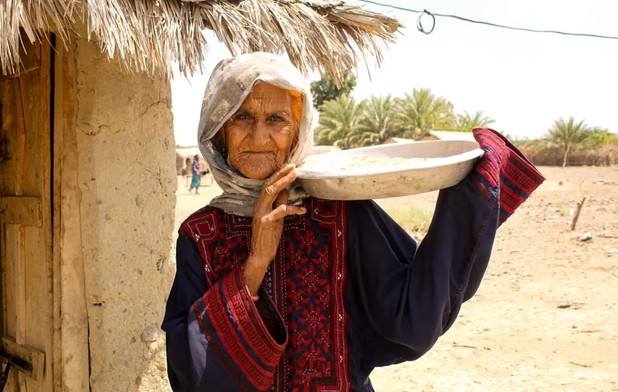 |
Raj Bibi, 66, has to take water to her neighbor's house for refrigeration. Photo: Hazaran Rahim Dad
Standing in the scorching midday sun, young Taimoor carefully shares each melting piece of ice with his mother, understanding that without it, all life in their mud-brick house could collapse before nature's inferno.
Binh Minh (According to The Guardian)