An endoscopy at Tam Anh General Hospital, Ho Chi Minh City, revealed a large palatal bone tumor, approximately 3x4 cm, in a 45-year-old patient named Nam. This hard, bony growth, known as torus palatinus, is located along the midline of the hard palate. Doctor Tran Thi Thuy Hang, Head of the Ear, Nose, and Throat Department at the ENT Center, explained that a large palatal bone tumor can cause chronic irritation as the tongue repeatedly rubs against it during speech, chewing, and swallowing. This irritation leads to tongue inflammation, a burning sensation, and discomfort when eating and communicating.
Most palatal bone tumors are benign and slow-growing. If they do not cause symptoms, they are typically monitored with regular check-ups and do not require intervention. However, surgery may be recommended if the tumor becomes large enough to affect chewing, speech, or obstruct the fitting of dentures.
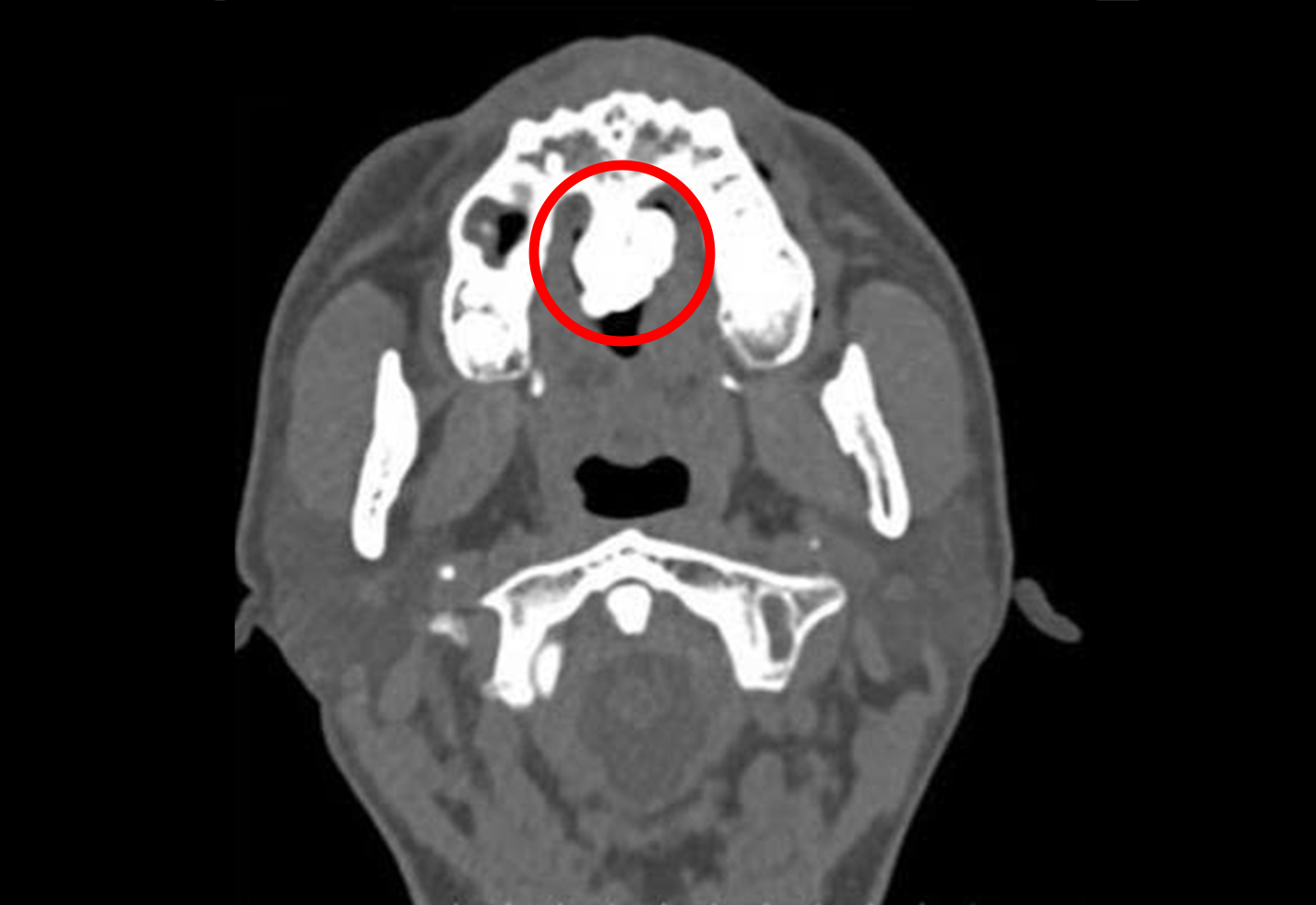 |
CT image of Nam's palatal bone tumor. Photo: Tam Anh General Hospital |
Nam initially received medical treatment and was monitored. However, when his symptoms did not improve after a period, Doctor Hang recommended surgery. Using an endoscope and a specialized drill, Doctor Hang precisely removed the bone tumor without damaging healthy tissue. A pathological examination confirmed the tumor was benign bone tissue, showing no signs of malignancy.
 |
Doctor Hang (right) performs endoscopic drilling to remove Nam's palatal bone tumor. Photo: Hospital provided |
Following the surgery, Nam recovered well and was discharged one day later. During his follow-up appointment, the surgical wound had healed properly, he could eat normally, and his tongue inflammation had resolved.
Torus palatinus is a benign condition and does not have the potential to develop into cancer. In contrast, malignant tumors in the palatal region typically present with distinct symptoms such as non-healing ulcers, bleeding, or rapid growth in size.
Doctor Hang advises that individuals experiencing persistent non-healing ulcers, unusual bleeding, or a rapidly growing lump in the palatal area should seek medical examination for timely diagnosis and treatment.
Uyen Trinh
*The patient's name has been changed.
| Readers can submit questions about ear, nose, and throat conditions here for doctors to answer. |