Intelligence develops from the early years of life.
The brain undergoes rapid development in early childhood. Children absorb information through observation, listening, speaking, movement, play, and social interaction. These experiences contribute to the formation and refinement of cognitive skills.
Cognitive abilities evolve through different developmental stages. Therefore, parents should not rely on a single indicator, such as early reading, extensive talking, or quick memorization, to assess intelligence. Instead, they should monitor a child's progress and compare it against age-appropriate developmental milestones.
Intelligent children do not necessarily excel at everything.
According to The Times of India, each child possesses unique cognitive strengths. Some children excel with numbers or language, while others demonstrate strengths in memory, music, observation, or problem-solving. Consequently, school grades only reflect a portion of a child's capabilities. A child struggling in certain subjects does not mean they are less intelligent.
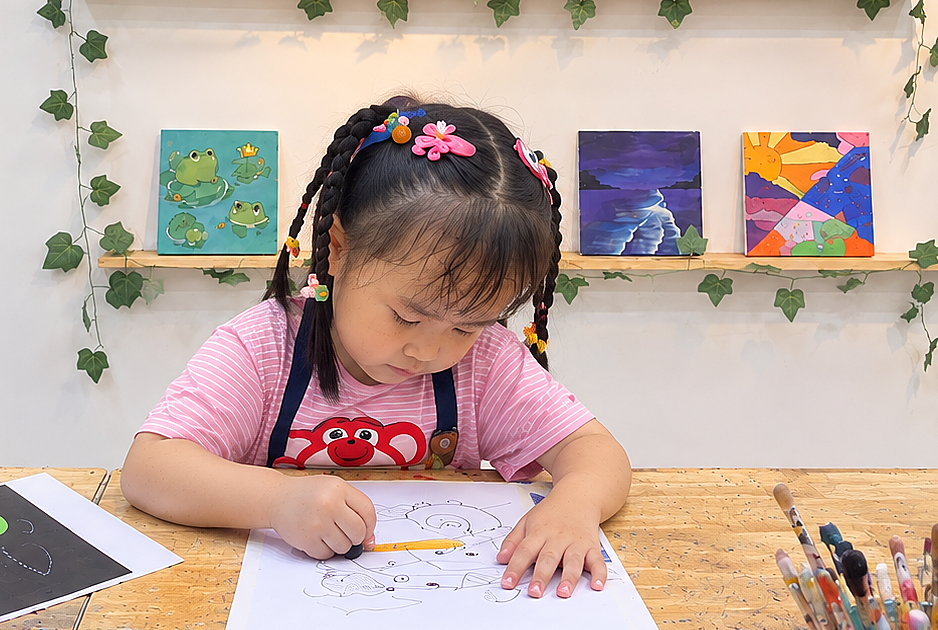 |
Drawing helps children develop observation, critical thinking, and creativity. Photo: Kim Uyen |
Curiosity and questioning foster critical thinking.
As they grow, children frequently ask questions about the world around them. Constantly asking "why" and investigating how things work indicates a child's active exploration and absorption of information.
When faced with a new task, children may observe, try one approach, realize it is unsuitable, and then switch to another solution. These experiences provide opportunities for children to hone their reasoning, problem-solving, and adaptability skills.
Intelligence is influenced by many factors.
Genetics play a role in cognitive development, but environment and experiences also significantly impact this process. Nutrition, sleep, health, physical activity, parental interaction, and learning opportunities all contribute to creating conditions for a child's development.
Children who engage in regular conversations have more opportunities to use language. Activities like exploratory play, puzzles, or age-appropriate problem-solving also help children develop critical thinking skills. Conversely, insufficient sleep, inadequate nutrition, or a lack of interactive environment can hinder learning abilities.
Do not overpressure children with excessive studying to boost intelligence.
Starting early education or increasing study time does not necessarily lead to better intelligence development. Young children require time for play, physical activity, rest, and social interaction. Instead of pressuring children with frequent assignments, parents can engage with them through reading books, conversing, doing puzzles, drawing, building models, or solving simple real-life situations.
If a child does not meet age-appropriate developmental milestones, loses previously acquired skills, or experiences significant difficulties in communication, learning, and daily activities, parents should seek medical evaluation. Early detection of developmental issues provides children with the opportunity for appropriate assessment and intervention.
Le Nguyen (Compiled)
| Readers can submit questions about childhood illnesses here for a doctor's response. |