Master of Science, Doctor Le Minh Hung, from the Urology - Andrology Department at Tam Anh General Hospital in Hanoi, diagnosed Hien with right kidney pyonephrosis caused by a lower one-third ureteral stone. This diagnosis followed ultrasound results showing a dilated right ureter and hydronephrosis of the right renal pelvis and calyces. A stone was present in the ureter near the bladder, with a small amount of thin fluid under the right kidney capsule. Laboratory tests further revealed a blood procalcitonin level of 11,2 ng/mL (normal range 0,05-0,1 ng/mL), indicating a severe infection, along with sepsis caused by Enterobacter cloacae bacteria.
Doctor Hung explained that the ureter is a small tube transporting urine from the kidney to the bladder. In Hien's case, although the stone was not large, it was lodged near the bladder, preventing urine from the right kidney from draining. This accumulation of urine above the blockage created a breeding ground for bacteria, leading to pus formation in the renal pelvis and calyces system, as well as a urinary tract infection and sepsis. The patient required urinary decompression and infection control to prevent septic shock and kidney failure.
Hien received antibiotics and underwent JJ stent placement to create a pathway for urine to drain from the kidney to the bladder. After 10 days, with the infection under control, Doctor Hung performed a retrograde ureteroscopy with laser lithotripsy to break up the stone.
During a follow-up appointment two weeks later, Hien no longer had a fever or painful urination. Imaging confirmed the absence of ureteral stones, and Doctor Hung removed the JJ stent via cystoscopy.
 |
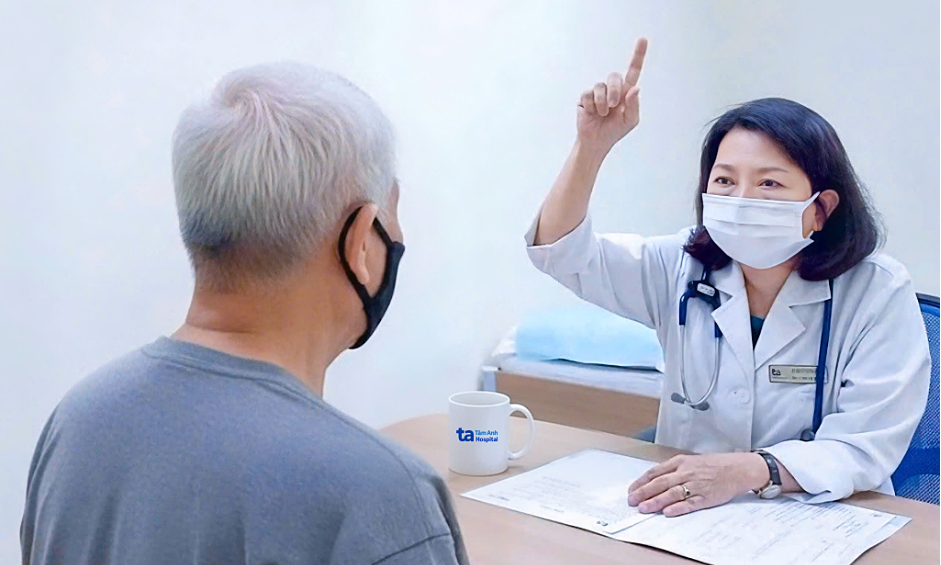
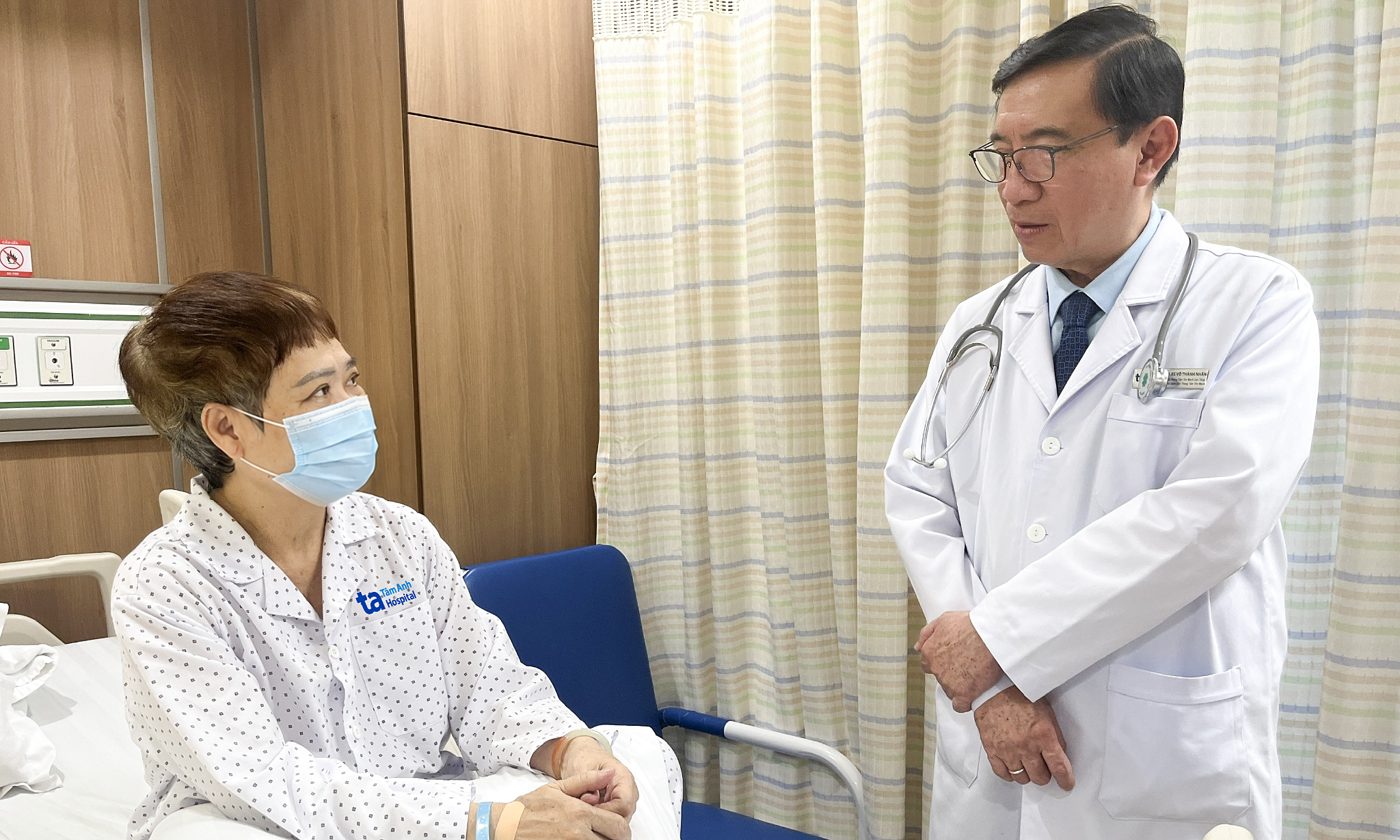
Doctor Hung re-examines Hien after lithotripsy. *Photo: Tam Anh General Hospital* |
Urinary stones form when minerals and salts in urine crystallize, creating hard masses in the kidneys or urinary tract. Even small stones can cause severe complications if they become lodged in a narrow area, leading to urine retention and infection. Individuals experiencing lower back pain accompanied by fever, chills, nausea, fatigue, reduced urination, cloudy urine, or rapidly intensifying pain should seek early medical attention. Self-medicating with pain relievers or antibiotics at home is not advised.
Doctors recommend drinking enough water, not holding urine, and undergoing regular check-ups if there is a history of kidney or ureteral stones. Depending on the stone's location, size, degree of obstruction, and the patient's infection status, doctors will prescribe appropriate treatment: monitoring, medication, JJ stent placement, lithotripsy, or surgery.
Van Anh