Hospital-acquired pneumonia (HAP) is a lung infection developing at least 48 hours after hospital admission. Patients typically show no signs of infection or are not in an incubation period prior to this timeframe.
Hospital-acquired pneumonia is a common type of healthcare-associated infection, especially among patients with prolonged inpatient stays, critically ill individuals in intensive care units (ICUs), the elderly, and those with multiple underlying health conditions. The primary causes are bacteria prevalent in hospital environments. Many bacterial strains are now resistant to various antibiotics, which increases the risk of severe illness, extends treatment duration, and raises healthcare costs.
 |
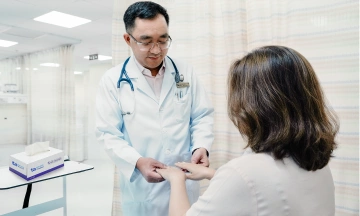
Doctor Mai Manh Tam examines a patient after a course of pneumonia treatment. Illustration: Tam Anh General Hospital
Patients with hospital-acquired pneumonia typically present with symptoms like fever, cough, shortness of breath, or new or altered purulent sputum. Diagnostic imaging, such as chest X-rays or computed tomography (CT) scans, often reveals new lung lesions, including infiltrates or consolidation.
Symptoms in elderly patients are often atypical and less distinct. In many instances, unexplained altered consciousness or changes in mental status can indicate hospital-acquired pneumonia, necessitating prompt evaluation and diagnosis by a doctor.
Treatment for hospital-acquired pneumonia typically begins with empirical antibiotic therapy targeting likely bacterial pathogens. After 48 to 72 hours, patients undergo re-evaluation based on their clinical progression, microbiological results, and antibiogram, if available. The antibiotic regimen is then optimized, prioritizing the narrowest effective spectrum to enhance treatment efficacy and minimize adverse effects.
Antibiotic treatment usually lasts about 7 days for cases not caused by multidrug-resistant bacteria and responding well to initial therapy. However, treatment duration can vary based on disease severity, the causative agent, and the patient's individual response.
Hospital-acquired pneumonia is a common healthcare-associated infection and a leading cause of mortality among hospital-acquired infections. The condition can lead to severe complications, including acute respiratory failure, sepsis, septic shock, and multi-organ failure.
Early detection and appropriate antibiotic treatment can effectively manage many cases of hospital-acquired pneumonia. Patient prognosis depends on several factors: age, overall health, coexisting underlying conditions, disease severity, the causative agent, bacterial antibiotic resistance, and the timing of treatment initiation.
Patients and their families must strictly adhere to the prescribed treatment regimen, avoiding self-discontinuation or changes in medication without medical guidance. During treatment, close monitoring for unusual signs is crucial: prolonged fever, increased shortness of breath, severe fatigue, altered consciousness, or drowsiness, to ensure timely intervention.
Beyond medication, comprehensive care includes ensuring adequate nutrition, maintaining respiratory hygiene, effectively managing underlying conditions, and supporting early patient mobilization when health permits. Strong collaboration among patients, families, and medical staff significantly enhances treatment efficacy and reduces complication risks.
BSCKII Mai Manh Tam
Deputy Head of Respiratory Department
Tam Anh General Hospital, Ha Noi