Eng English
China 中国人

Eng English
China 中国人
  • News
  • World
  • Business
  • Entertainment
  • Sports
  • Law
  • Education
  • Health
  • Lifestyle
  • Travel
  • Science
  • Digital
  • Automobiles
  • Trở lại Thể thao
  • Health
Wednesday, 19/8/2026 | 11:48 GMT+7

Why bunions form?

Bunions can result from inappropriate footwear, medical conditions, or genetics; while not dangerous, they cause pain and affect daily life.

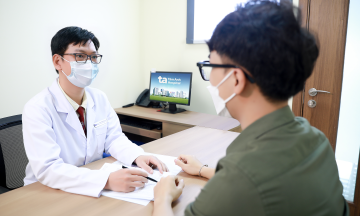
Master, Doctor Tran Ngoc Chon, with the Department of Orthopedic Trauma at Tam Anh General Hospital TP HCM, defines a bunion as a condition where the big toe angles towards the other toes on the same foot, causing the joint bone at its base to protrude. This condition often affects individuals who regularly wear high heels, pointed-toe shoes, or shoes that are too small. Ill-fitting footwear compresses the toes and shifts the body's weight onto the big toe joint. Despite their size, these joints endure significant pressure, which over time leads to damage, pain, and toe deformity.

Bunions can also stem from poorly managed inflammatory joint diseases, including osteoarthritis, rheumatoid arthritis, and gout. These conditions degrade joint structures and harm components such as articular cartilage, ligaments, and synovial membranes. They can also foster bone spur formation, leading to inflammation, pain, stiffness, and deformity of the big toe joint.

Individuals with a family history of foot bone structural issues, loose ligaments, or flat feet face a higher risk of developing bunions. These congenital abnormalities lay the groundwork for toe axis misalignment.

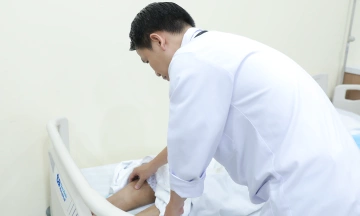
Doctor Ngoc Chon explains some joint conditions that can cause bunions. Photo: Tam Anh General Hospital

Untreated bunions can lead to several complications. The most common is bursitis, which causes pain, redness, swelling, and walking difficulty. This complication arises when the protruding big toe joint is compressed and rubs against footwear during movement. Prolonged joint misalignment can foster bone spur formation, leading to joint stiffness and chronic pain. The displaced big toe can also crowd and deform other toes, particularly the adjacent one.

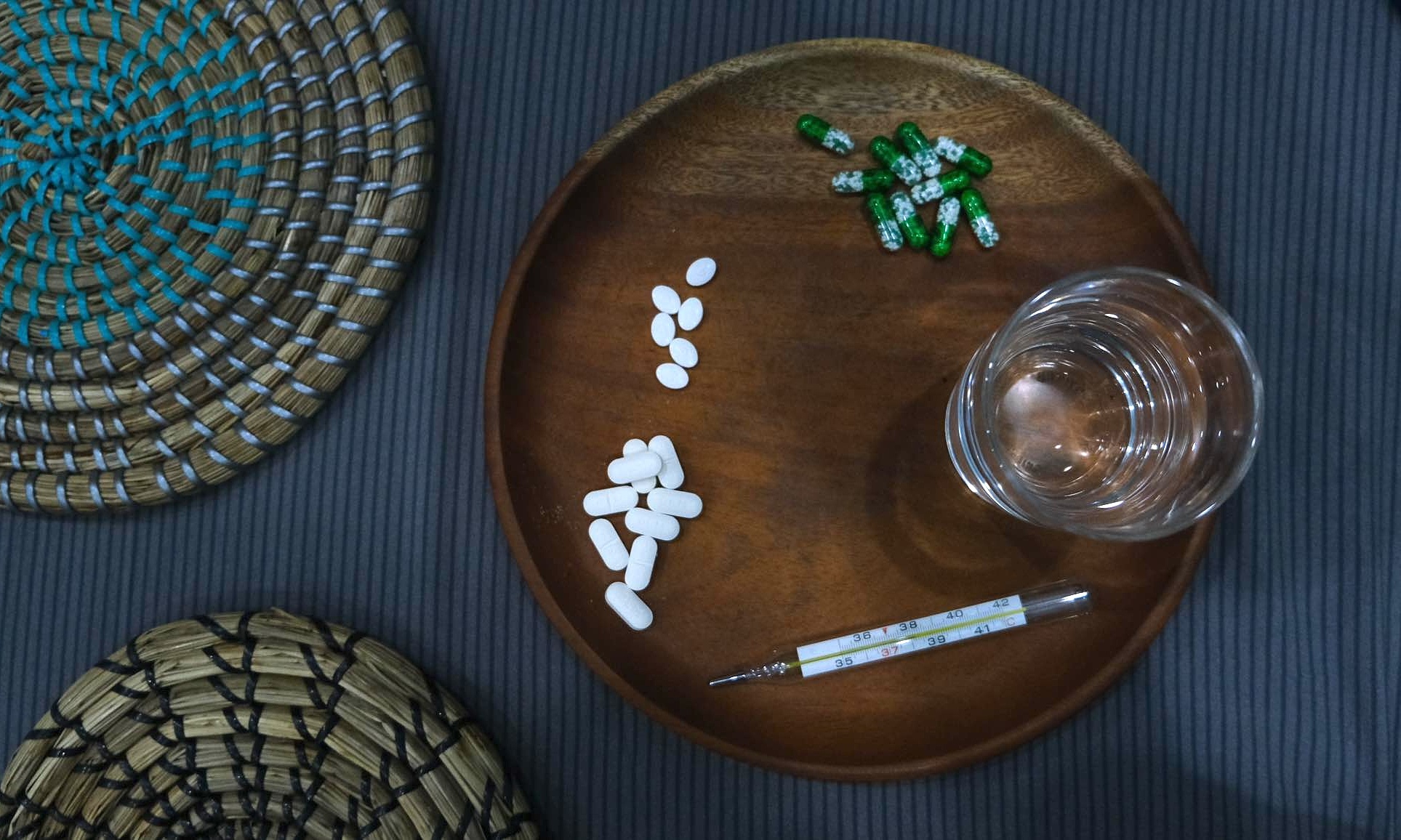
Mild bunions can be treated with pain relievers, anti-inflammatory medications, or cold compresses to reduce swelling and pain. If necessary, patients may wear a big toe splint to realign the toe. This method reduces tension on tendons and muscles, increases big toe flexibility, alleviates pressure on other toes, lessens pain, and supports the entire foot during movement.

For more severe cases, doctors may consider corrective osteotomy surgery to reposition the big toe bone to its natural alignment, correcting the deformity. Post-surgery, patients can walk comfortably and improve mobility.
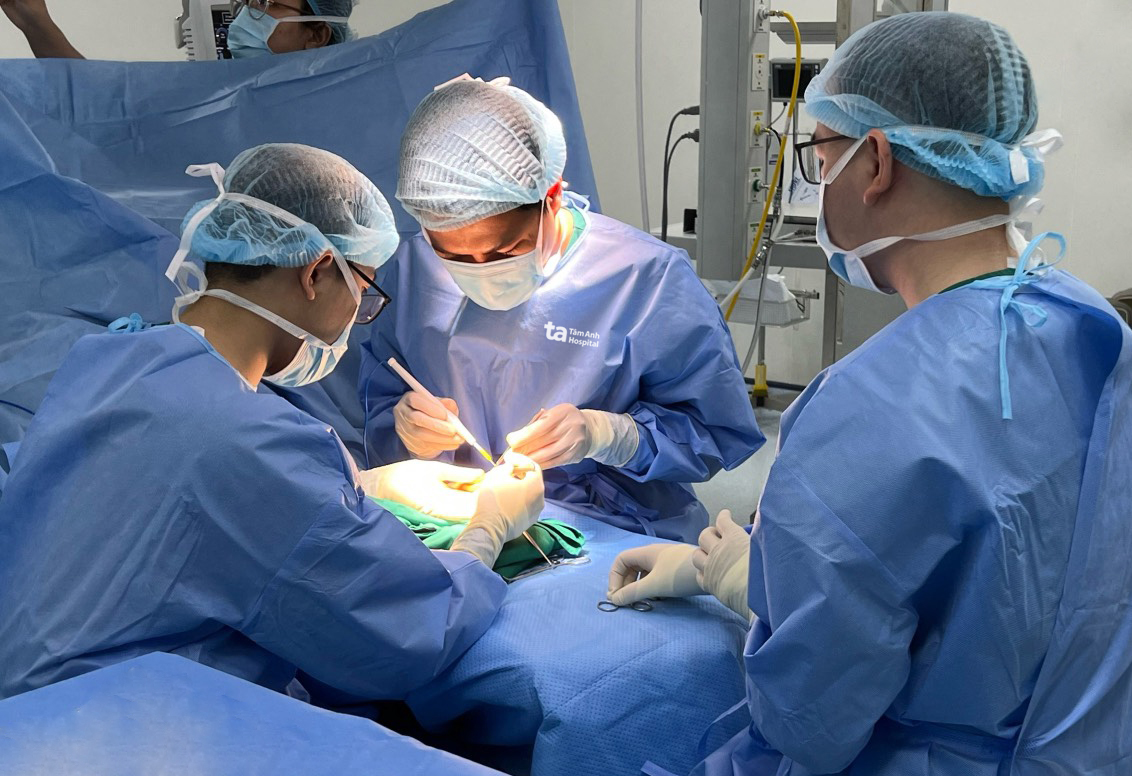
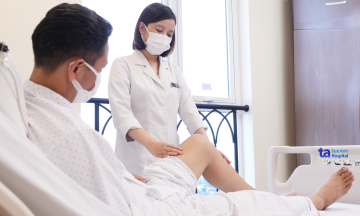
Doctor Chon (center) performs toe correction surgery for a patient. Photo: Tam Anh General Hospital

According to Doctor Chon, bunions are not a dangerous condition but can cause pain and impact daily activities. Patients should proactively prevent them by wearing appropriate footwear and using shoe inserts or anti-friction pads if needed. Seek medical attention immediately upon noticing unusual symptoms or warning signs of bunions to ensure timely treatment and prevent mobility issues.

Phi Hong

By VnExpress: https://vnexpress.net/vi-sao-veo-ngon-chan-cai-5110764.html
Tags: arthritis musculoskeletal bunion

News in the same category

Why frequent constipation occurs during travel

Why frequent constipation occurs during travel

Every time I travel, I experience constipation. Why does this happen, and how can it be prevented? (Lien, Ho Chi Minh City)

Flesh-eating bacteria attacks man's brain

Flesh-eating bacteria attacks man's brain

A 54-year-old man experienced a high fever and headache, only seeking emergency hospital care after suffering seizures and losing consciousness. He was diagnosed with Whitmore bacteria, commonly known as "flesh-eating bacteria."

Does strabismus surgery for children require general anesthesia?

Does strabismus surgery for children require general anesthesia?

My child, who is about to start first grade, has congenital strabismus in both eyes. How should the child be treated, and if surgery is needed, will it involve general or local anesthesia? (Thuy, Vinh Long)

Can a patient with a knee replacement undergo an MRI of the spine?

Can a patient with a knee replacement undergo an MRI of the spine?

A 60-year-old patient, who underwent left knee replacement over one year ago, is experiencing back pain radiating down the leg and asks if a lumbar spine MRI is possible. (Thanh Hai, Hanoi)

7 ways to maintain gut health during the holidays

7 ways to maintain gut health during the holidays

Eating moderately, staying hydrated, increasing vegetables and fiber, limiting alcohol, maintaining physical activity, and prioritizing food safety can help your digestive system function optimally during the holiday season.

Six trans-tympanic injections help man improve hearing

Six trans-tympanic injections help man improve hearing

A 52-year-old man, suffering from dizziness and tinnitus for three years, had his hearing improved after doctors administered six trans-tympanic dexamethasone injections.

Typical signs of sleep apnea

Typical signs of sleep apnea

Loud snoring, waking up in the middle of the night, daytime sleepiness, and headaches after waking are common but easily overlooked symptoms of sleep apnea.

Mistakes that prolong bronchitis cough

Mistakes that prolong bronchitis cough

Self-medicating with cough suppressants, inadequate hydration, overexertion, or neglecting humidity levels can irritate airways, leading to a persistent cough.

4 skincare habits to avoid during erratic weather

4 skincare habits to avoid during erratic weather

Leaving sweat on the skin for too long, over-cleansing, skipping sunscreen, or constantly changing cosmetics can make skin prone to irritation, clogged pores, and a weakened protective barrier.

Three holiday habits increase stroke risk

Three holiday habits increase stroke risk

Excessive alcohol consumption, late nights, and forgetting to take medication for underlying conditions during holidays can cause blood pressure fluctuations and heart rhythm disturbances, potentially increasing stroke risk.

Eng English
China 中国人
  • News
  • World
  • Business
  • Entertainment
  • Sports
  • Law
  • Education
  • Health
  • Lifestyle
  • Travel
  • Science
  • Digital
  • Automobiles
FPT Tower, 10 Pham Van Bach Street, Dich Vong Ward,
Cau Giay District, Hanoi, Vietnam
Email: contacts@vnportal.net
Tel: 028 7300 9999 - Ext 8556
Advertise with us: 090 293 9644
Register
© Copyright 2026 vnnow.net. All rights reserved.
Terms of use Privacy policy Cookies