Parents across Vietnam are prioritizing early human papillomavirus (HPV) vaccination for their children, often before their 15th birthday, driven by the desire to maximize protection and reduce costs. This proactive approach aligns with medical recommendations highlighting the optimal age for vaccination.
Doctor Le Thi Gam, Medical Manager at VNVC Vaccination System, explained that vaccinating children against HPV between ages 9 and 15 offers numerous benefits beyond cost savings. This period is considered the golden age for vaccination, as the body's immune response is strongest, leading to the creation of long-lasting protective antibodies. The vaccine offers high efficacy, reducing the risk of HPV infection, cervical cancer, anal cancer, oropharyngeal cancer, and genital warts by over 90%. Early vaccination proactively protects children before potential exposure, providing greater peace of mind as they enter adulthood.
"Early vaccination is not only more effective but also a long-term investment in the health of the younger generation," Doctor Gam emphasized.
A resident of Nha Be commune, TP HCM, Thuy Tien, shared her experience. She had consulted doctors and researched HPV extensively since last year, intending to vaccinate her daughter for a long time. However, due to her daughter's school commitments and her own work schedule, she kept postponing it. Her daughter is currently in 9th grade and approaching her 15th birthday.
"I was startled when I realized my daughter's age; we almost missed the ideal window," Tien said. "Before age 15, only two doses are needed, but from age 15 onwards, three doses are required." She added that this regimen saved her family over 2 million dong. Tien also expressed her strong fear of cervical cancer, noting that she is past the eligible age for vaccination. Consequently, she undergoes regular gynecological examinations and screening tests as recommended.
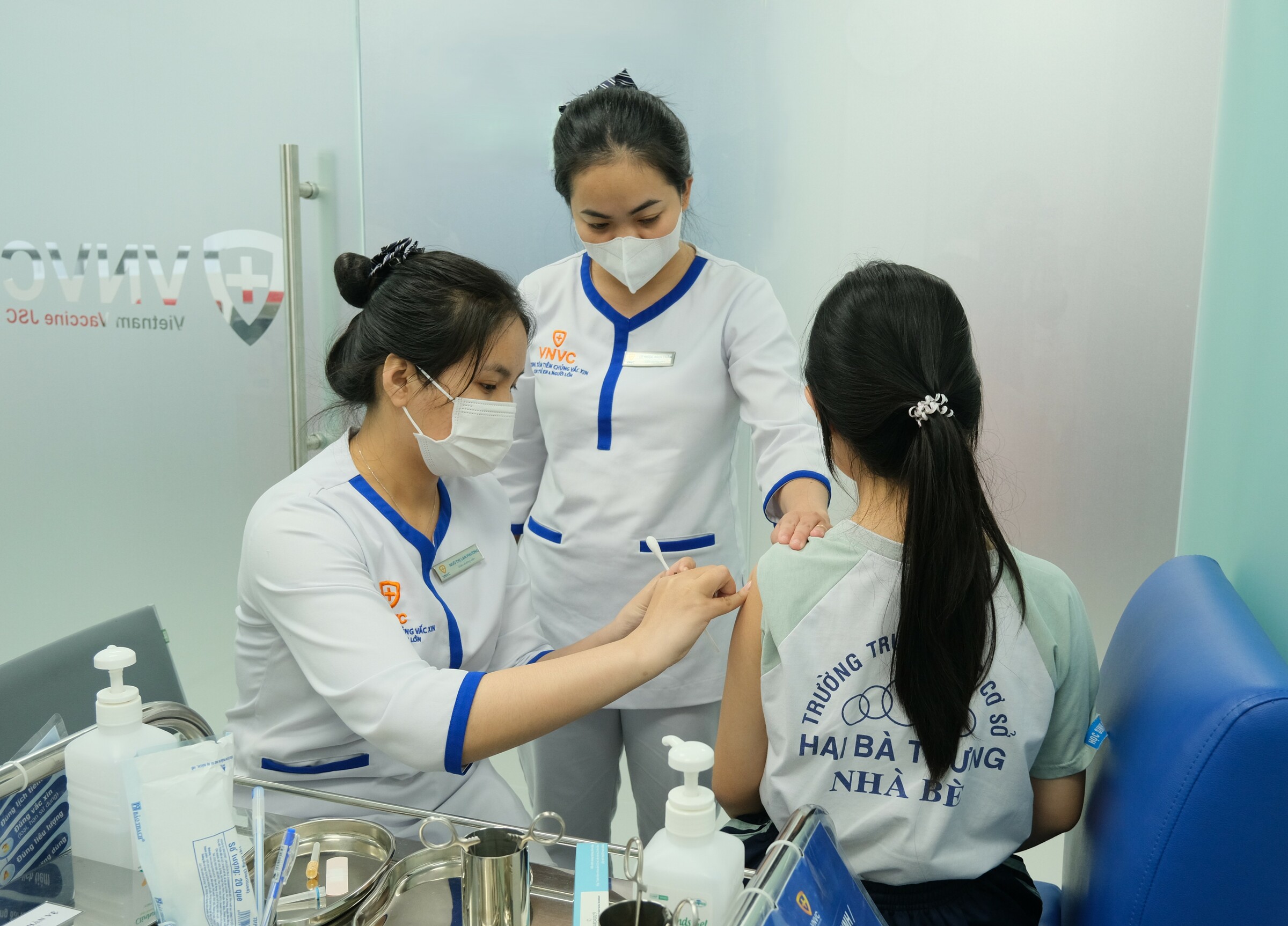 |
Tien took her daughter out of school to get the hpv vaccine as she approached her 15th birthday at VNVC. Photo: Khanh Hoa
Similarly, Hoan, 45, from Tan Hung, TP HCM, brought her son, who is over 14 years old, to VNVC Sunrise City for a 9-type hpv vaccine and a seasonal flu booster. She previously thought the vaccine was only for females, but after her research, she learned that males also need to be vaccinated to prevent the disease. "After today's dose, my son will receive the second dose 6 months later, which will be close to his 15th birthday," Hoan stated.
Vietnam currently offers two types of HPV vaccines. One vaccine protects against 4 HPV strains and is recommended for females aged 9-26. The other protects against 9 HPV strains and is suitable for both males and females aged 9-45. The vaccination schedule typically involves two to three doses, depending on the recipient's age.
 |
Vaccination helps young people stay healthier and prevents diseases caused by HPV. Photo: Vecteezy
Parents should choose a reputable medical facility for their child's vaccination, ensuring that doctors are available to monitor and manage any post-vaccination reactions. Adhering to the doctor-advised vaccination schedule is also crucial. Before the injection, families should ensure the child eats and rests adequately, avoiding fasting. After vaccination, children should be observed at the vaccination site for at least 30 minutes to promptly detect any unusual reactions. If monitoring at home, parents should seek immediate medical attention if the child develops a high fever above 39 degrees Celsius that does not respond to medication, experiences difficulty breathing, a full-body rash, or any other abnormal symptoms.
HPV, or human papillomavirus, is a common virus. Over 200 HPV serotypes have been identified, with about 40 types known to infect mucosal epithelia, causing diseases in the genital organs, mouth, throat, nose, and other areas.
Globocan 2022 statistics indicate that Vietnam recorded approximately 6,200 HPV-related cancer cases. Among these, over 4,600 were new cervical cancer cases, and more than 2,500 deaths occurred, positioning it as the 10th deadliest cancer in the country.
HPV infection is globally prevalent, with rates among sexually active individuals reaching 84,6% in females and 91,3% in males. Transmission primarily occurs through unprotected sexual contact, direct skin-to-skin contact with infected areas, sharing personal items, or, less commonly, from mother to child.
TP HCM Dermatology Hospital reported that over 50% of individuals diagnosed with sexually transmitted diseases are aged 15-25, despite this age group comprising only 25% of the sexually active population. Concurrently, the number of patients under 18 has steadily increased in recent years. Annually, hundreds of children require surgical intervention for treatment, with genital warts accounting for the highest proportion, exceeding 50% of these cases.
Hoang Duong