Dr. Luong Trinh Sieu, Head of the Department of Gastroenterology and Hepatology at Beidou Health Management Hospital in Taiwan, recently shared the case of a young man with a habit of drinking bubble tea almost every day. He also enjoyed sweets and late-night eating. During a health check-up, his liver enzyme (GPT/ALT) level surged to 120, many times higher than the normal threshold of 17. The patient was diagnosed with severe fatty liver and signs of fibrosis had begun to appear.
Faced with this health crisis, the young man committed to abandoning three detrimental eating habits, while strictly adhering to a nutritious diet and exercise regimen. After just five months, his weight dropped from 91 kg to 78 kg. Not only did he regain a slender physique, but his fatty liver condition also disappeared, liver enzyme levels returned to safe limits, and even the dangerous liver fibrosis was successfully reversed.
Fatty liver is more than just fat accumulation in the liver; it signals a weakening of the body's entire metabolic system. According to Dr. Luong Trinh Sieu, with a prevalence of one in three Taiwanese individuals affected, fatty liver is diagnosed when fat constitutes more than 5% of the liver's weight. Although it often progresses silently with no obvious symptoms, it indicates underlying metabolic abnormalities.
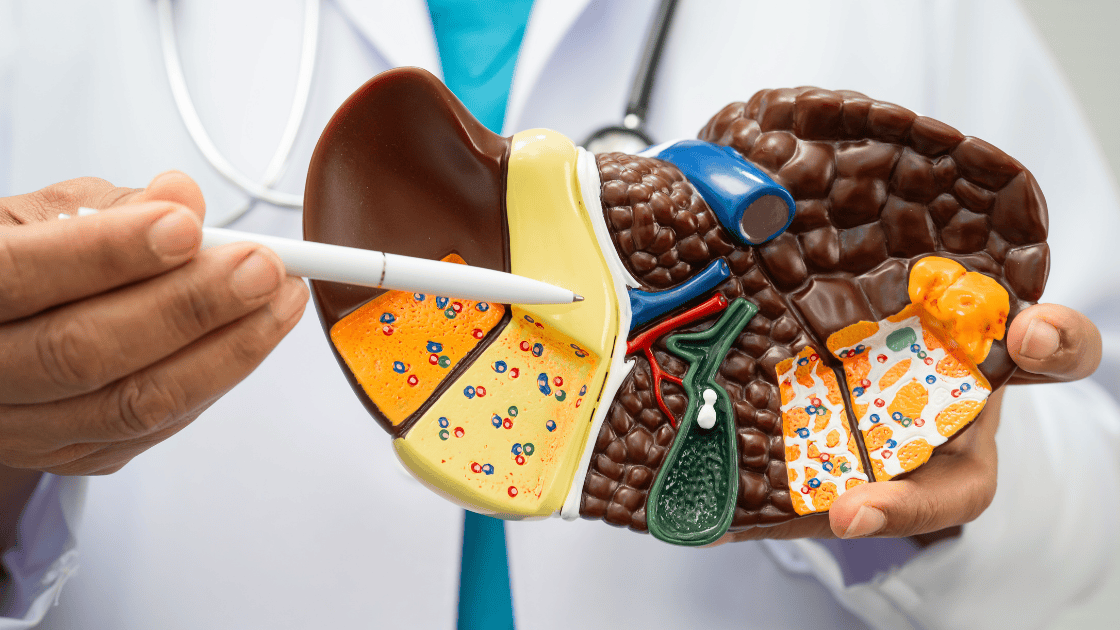 |
Illustration: Liverawareness |
Previously, the medical community typically divided fatty liver into two groups: alcohol-related and non-alcohol-related. However, since 2020, the World Liver Research Association officially renamed this condition to "metabolic dysfunction-associated fatty liver disease", highlighting its inseparable link with metabolic syndrome. High-risk individuals often include those who are overweight with a body mass index (BMI) of 23 or higher, individuals with type 2 diabetes, or those with two or more metabolic abnormalities such as elevated triglycerides, low good cholesterol (HDL), prediabetes, or high C-reactive protein (CRP) levels.
During routine health check-ups, many people mistakenly believe that normal liver enzyme levels indicate good health. However, Dr. Luong emphasizes that early-stage fatty liver often progresses silently and can remain hidden even when blood tests show stable indicators. If ignored, the disease can advance through three dangerous stages: from liver fibrosis to cirrhosis and ultimately liver cancer. More concerning, due to accompanying metabolic disorders, patients with fatty liver have a much higher risk of death from cardiovascular diseases like stroke or heart attack than from liver cancer.
Addressing the question of why many vegetarians who avoid fried foods and alcohol still develop the disease, Dr. Luong points out that the main culprits are sugary drinks and refined carbohydrates. Fructose, particularly abundant in bubble tea, fruit juices, and sweets, is almost entirely metabolized by the liver into triglycerides, which are then stored as fat. Therefore, even without consuming dietary fats, excessive sugar intake can lead to severe fat accumulation in the liver.
Currently, medicine has no specific cure to completely eliminate fatty liver, making weight loss the most effective treatment. Studies confirm that a 5% reduction in body weight can significantly improve fatty liver, and a 7% reduction can markedly alleviate inflammation or liver fibrosis. To protect liver health and promote recovery, individuals must adhere to three core principles: adjust their diet by minimizing sugar and refined carbohydrates, maintain a regular exercise routine to burn energy, and consistently control their weight.
Binh Minh (According to HK01)