Hanoi is currently undertaking a sustained campaign to restore urban order, improve environmental hygiene, and reclaim sidewalks for pedestrians. The city has approximately 1,100 streets with sidewalks; however, previously, most were encroached upon for business activities and parking.
Following this latest concentrated campaign, addressing urban violations and indiscriminate littering to restore urban aesthetics has become a daily task for local police in Hanoi's wards and communes.
Not only are roadside tea stalls and street vendors targeted, but erecting awnings, placing advertising signs, and parking vehicles are also subject to fines if they illegally encroach on sidewalks. According to the current Decree 168/2024, penalties for these actions range from a few hundred thousand dong to tens of millions of dong, depending on the nature, severity, and type of violation.
Individuals selling goods or other small items on roadways or sidewalks of streets where vending is prohibited face fines of 200,000-250,000 dong. This penalty also applies to actions such as illegal gatherings, lying or sitting on roadways obstructing traffic, playing football or badminton on roadways, or drying rice, straw, or hay on roadways.
Individuals who encroach on sidewalks or roadways for business purposes, such as operating markets, food and beverage services, displaying goods, repairing vehicles or machinery, washing cars, or placing or hanging signs, will be fined two to three million dong. Organizations face double this fine. Violators are also required to clear the area, restore it to its original state, and have their goods confiscated.
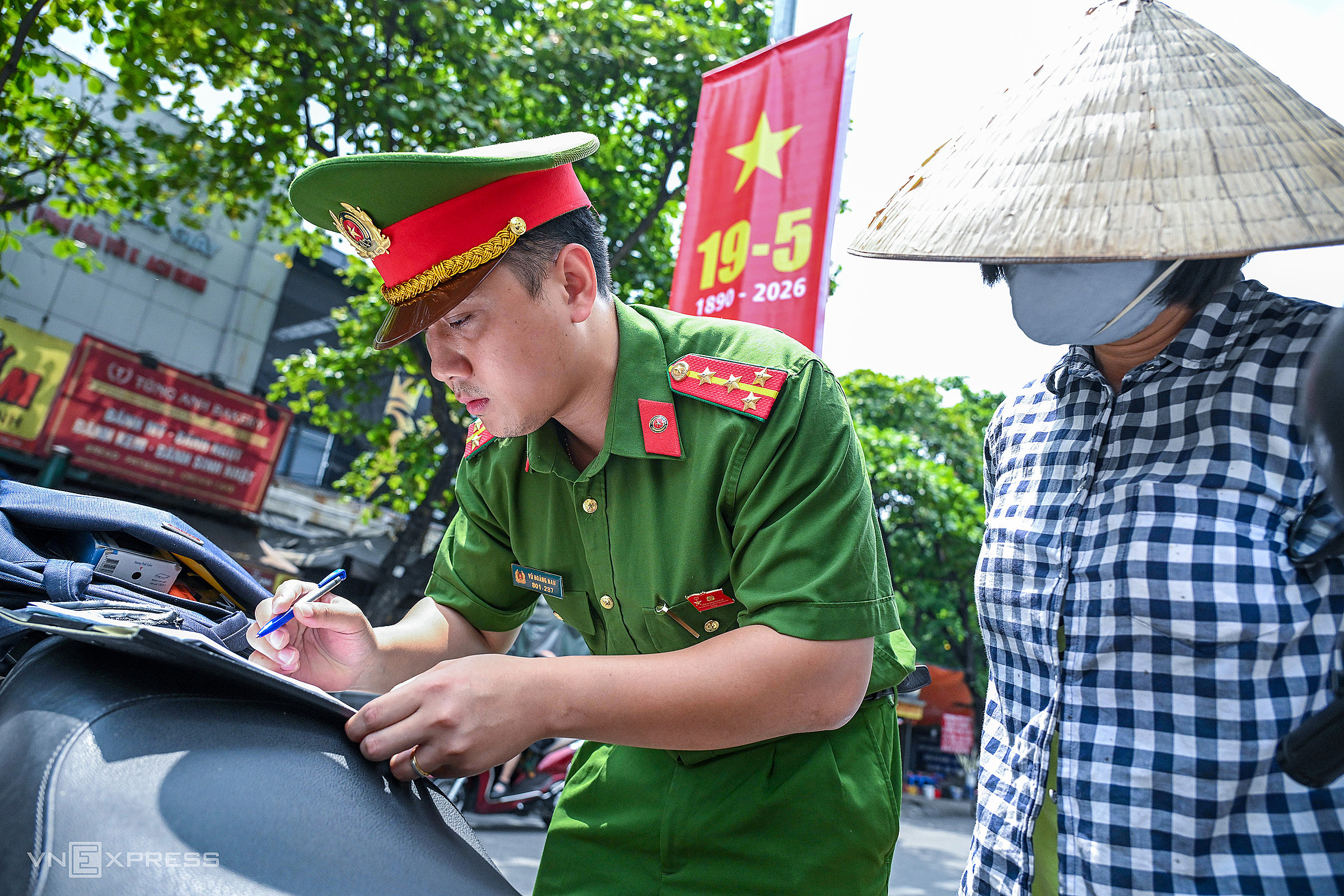 |
Police in Nghia Do ward, Hanoi, fine illegal street vendors. Photo: Giang Huy
Is parking on the sidewalk to buy goods subject to a fine?
Decree 168/2024/ND-CP stipulates that "any person who stops or parks a vehicle on the roadway causing traffic obstruction; parks a vehicle on the roadway or sidewalk illegally" will be fined. Drivers who stop an oto where "no stopping and parking" signs are present, or park where "no parking" or "no stopping and parking" signs are displayed, will be fined 600,000-800,000 dong or 600,000 dong to one million dong, respectively. The fine for moto is 400,000-600,000 dong.
More severely, individuals riding a moto on the sidewalk will be fined four to six million dong and lose two points on their driver's license. However, riding a moto onto the sidewalk to enter a home or office will not be penalized.
In addition to illegal parking on sidewalks, cyclists face fines of 100,000-200,000 dong, while oto drivers face fines of 800,000 dong to one million dong.
When is temporary use of sidewalks and roadways permitted?
Decree 168 allows for fines of 10 to 15 million dong for individuals (organizations face double the fine) who temporarily use roadways or sidewalks for other purposes (requiring a permit by regulation) without a permit, or with an expired permit, or if they fail to comply with the content specified in the permit.
Nevertheless, some "other purposes" are permitted for temporary use of roadways and sidewalks. Specifically, article 21 of Decree 165/2024 details the temporary use of roadways and sidewalks for other purposes, which include: serving political events, cultural activities, sports events; preventing, combating, and overcoming the consequences of natural disasters; rescue operations; fire prevention and control; search and rescue; epidemic prevention and control; construction work; collecting and storing waste or construction materials; organizing funerals or weddings; or parking vehicles when necessary.
The use of roadways and sidewalks for other purposes is only allowed when there is a traffic management plan in place that ensures no traffic congestion is caused on the section of roadway or sidewalk being used for such purposes.
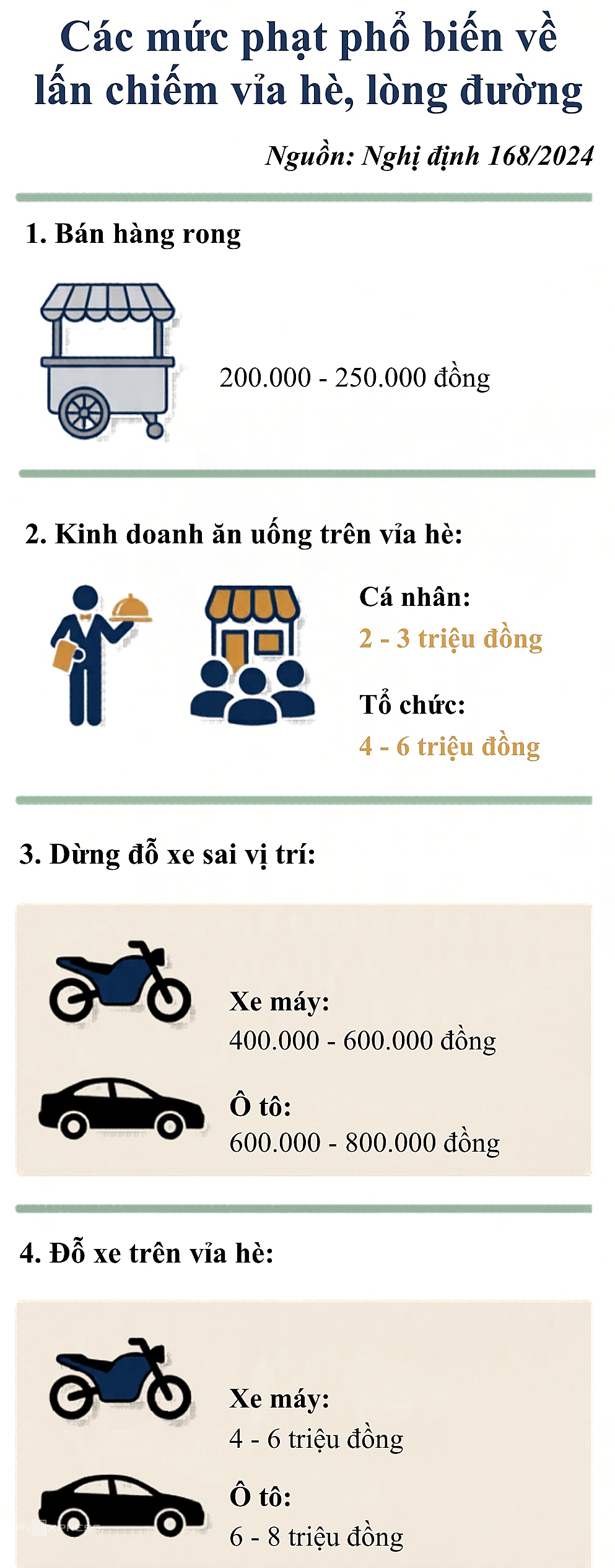 |
Common violations. Photo: Pham Du