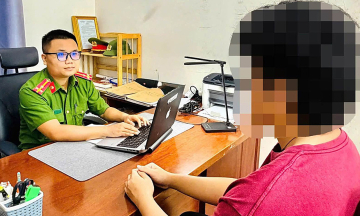
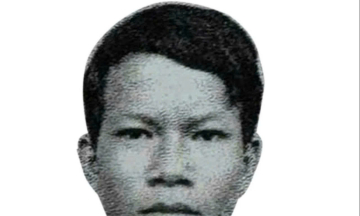
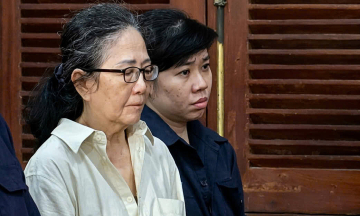
Duong Phuong Thao, 21, residing in Can Tho city, was recently detained by the Investigation Police Agency of Lai Chau Provincial Police for investigation into property fraud. Thao played a critical intermediary role in a transnational scam ring that Lai Chau Police recently dismantled in Bokeo province, Laos.
According to the police, the ringleader of this operation is a foreign national. Thao directly received orders and relayed instructions to the group of Vietnamese individuals working within the organization.
Currently, a total of 41 individuals have been charged with the same crime. Police initially determined that over the past two months, this ring defrauded victims in many provinces and cities of nearly 10 billion VND.
 |
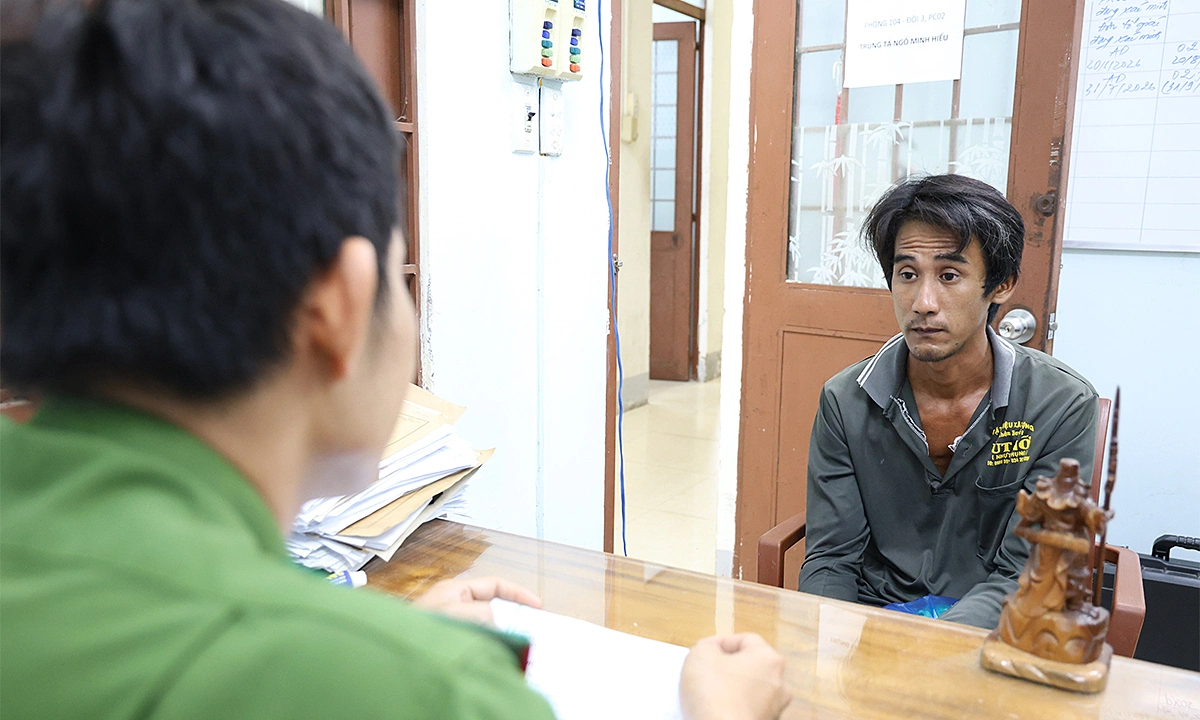
Police arrested 40 Vietnamese suspects in Laos. Photo: Police provided
Initial investigations revealed that starting from 4/2026, the group exploited the policy of tuition fee exemptions and health insurance support for primary, junior high, and high school students to devise their fraud scheme. Their targets were parents and students.
The group rented a house in Tonpheung commune, Bokeo province (Laos), installed computer systems and telecommunications equipment, and operated the scam ring under the guise of "insurance employees." Daily, they used a virtual call center to phone individuals based on lists of student and parent information they had acquired.
During these calls, the suspects instructed parents to update information on the VNeID application, link social security and health insurance accounts to their bank accounts. After gaining trust, they sent a fraudulent QR code, presenting it as a "profile code," and guided victims to scan it to complete the linking process.
In reality, this action allowed the suspects to gain access to or perform transactions on the victims' bank accounts. Once victims followed all instructions, money in their accounts was immediately stolen.
Following this case, the police advise citizens not to follow instructions to update VNeID, link health insurance, or bank accounts via phone or Zalo. Furthermore, people should absolutely avoid scanning QR codes, providing one-time passwords, sharing their screen, or allowing strangers to monitor actions on banking applications to prevent becoming victims of fraud.