On the afternoon of 7/5/2006, Payal, 22 years old, left her family's small home in Nithari village, on the outskirts of Noida city. She told her father, Nand Lal, that she was going to house D-5 in Sector-31 to meet a businessman who was recruiting staff. The appointment had been arranged after a phone call from Surinder Koli, a domestic helper at that residence.
Payal carried an old Nokia phone and a red wallet. However, by evening, her family had not seen her return.
The next morning, Nand Lal searched throughout Nithari, asking his daughter's friends and acquaintances, then went to house D-5. But Koli denied knowing Payal's whereabouts. The homeowner, businessman Moninder Singh Pandher, also claimed not to have met her.
A few days later, a three-wheeled vehicle driver told Nand Lal that he had driven Payal to house D-5 on the afternoon she disappeared. The father reported this to the police, but his claims were repeatedly dismissed, with officers suggesting Payal had run away. Nand Lal persisted, submitting complaints and writing to senior officials demanding an investigation.
From a disappearance to a series of murders
By 10/2006, the disappearance was finally taken seriously. Police discovered that Payal's phone was still in use after she vanished.
Call data showed that Koli had contacted Payal before her disappearance. Police tracked the phone signal, locating Payal's Nokia phone in Koli's possession. Her red wallet was also found under Koli's pillow in house D-5.
On 29/12/2006, police excavated the area behind house D-5 to search for Payal. Instead of one body, they found human bone fragments along with clothing and footwear mixed in a drain and a pile of trash.
Subsequent excavations continuously unearthed more skulls, leg bones, arm bones, and decomposing body parts.
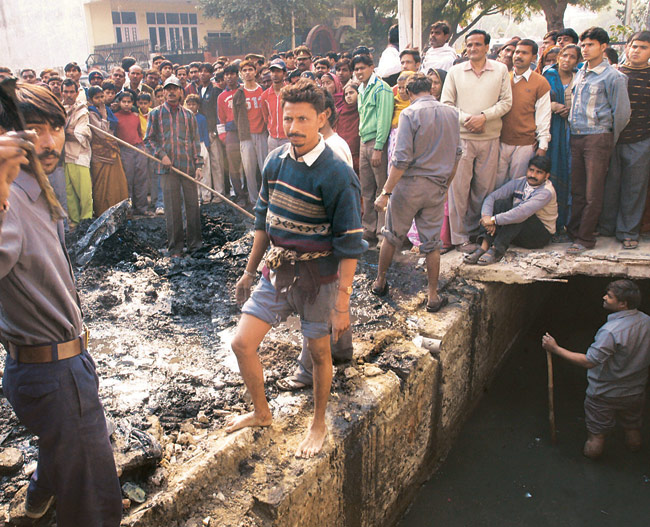 |
The drain outside Moninder Singh Pandher's house D-5 in Noida, where numerous human remains were found in 2006. Photo: Indiatoday |
Forensic examination later revealed that at least 19 sets of human remains had been found. Forensic doctors determined that many bodies had been dismembered before being disposed of.
Most victims were identified through DNA testing as young girls who had gone missing in the area. From 2005 to 2006, many migrant worker families in Nithari village repeatedly reported their daughters missing. They frequently went to the police station to report, but their concerns were often ignored or they were told the girls had run away with boyfriends. Thanks to Nand Lal's persistent search for his daughter, the case was uncovered.
The entire nation of India was shocked, and the media dubbed D-5 the "house of horrors" due to the gruesome nature of the crimes. The case became known as the "Nithari serial murders", named after Nithari village, home to the impoverished families, located adjacent to the wealthy neighborhood.
A shocking confession
In late 12/2006, Pandher and Koli were arrested.
Pandher was a wealthy businessman who frequently traveled between Noida and Punjab. He lived alone, with Koli responsible for cleaning, cooking, and managing daily household affairs.
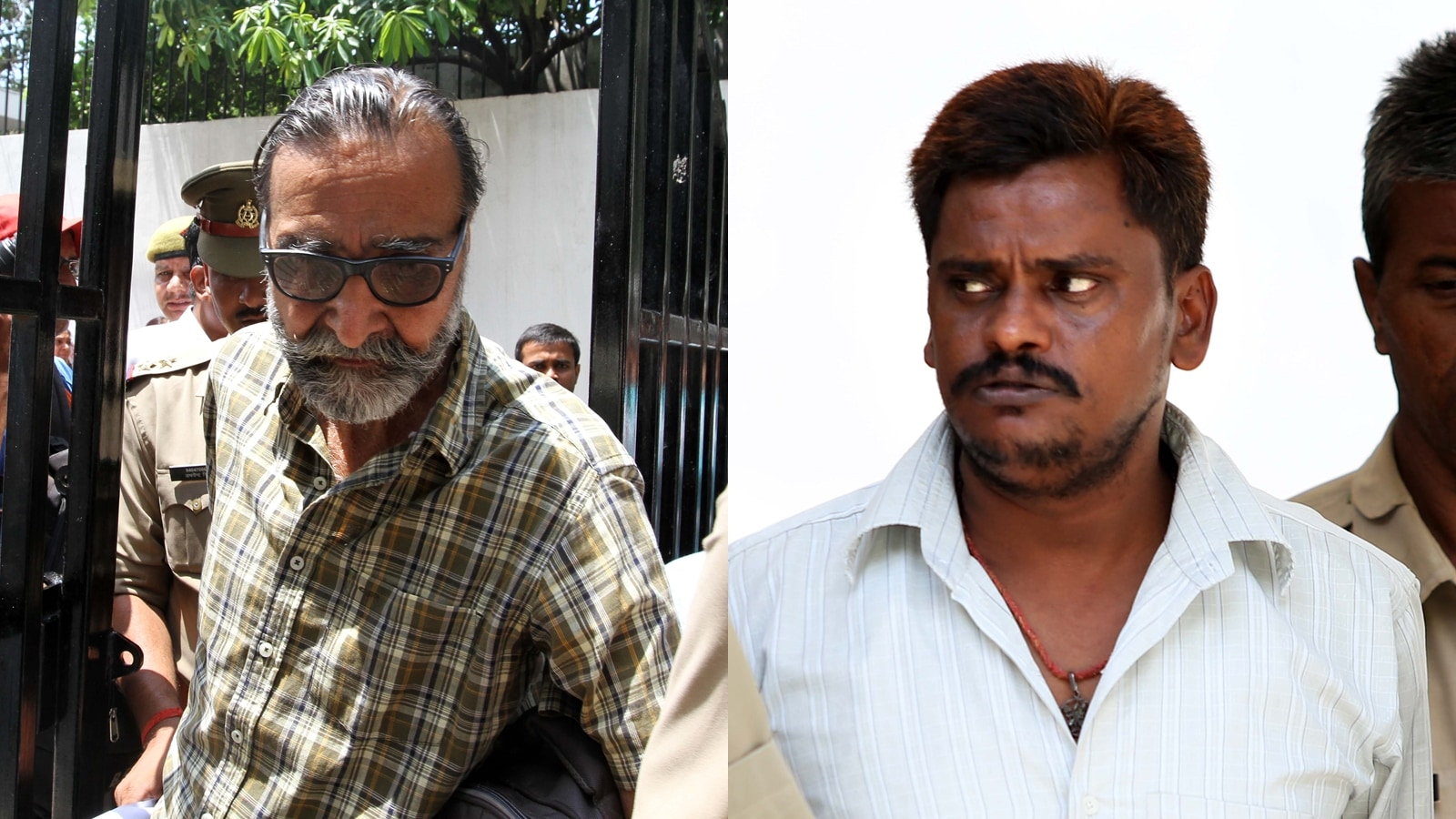 |
Surinder Koli (right) and Moninder Singh Pandher. Photo: Indianexpress |
The Central Bureau of Investigation (CBI), India's premier investigative agency, filed 19 case files against the two men. Koli was charged with murder, kidnapping, rape, and destruction of evidence, while Pandher was accused of illegal human trafficking.
According to case records, Koli made numerous confessions during interrogation. Investigation documents and media reports at the time stated that he admitted to luring young girls into the house with candy and chocolate, sexually assaulting them, and then murdering them.
In 3/2007, a transcript of Koli's statement was released, in which he claimed responsibility for multiple murders and sexual assaults. These revelations caused public outrage and demands for the harshest possible punishment.
However, defense lawyers argued that the confessions could not be considered absolute evidence because Koli later retracted his confession in court, stating that police had beaten him into making it.
A series of death sentences
Pandher's role in the entire case was a matter of much debate. Prosecutors argued that the crimes occurred in his own house and could hardly have taken place over a long period without the owner being fully aware. Some allegations even suggested that Pandher was involved in bringing young women to the villa.
However, investigators found no conclusive evidence proving Pandher's involvement in the murders.
In the early years of the trials, Pandher was still brought to court alongside Koli. In 2009, both were sentenced to death for the murder of a 14-year-old girl. But only a few months later, the Allahabad High Court overturned Pandher's death sentence in that case, citing insufficient evidence to establish him as the direct perpetrator.
Meanwhile, from 2009 to 2019, Koli was sentenced to death in a series of cases involving different victims. At one point, he faced 10 separate death sentences, making him one of the prisoners with the most death sentences in India's judicial history.
In 2014, Koli received an execution order after his mercy plea was rejected. In a special review session held in the early hours of 8/9/2014, the court ordered a stay of execution, saving Koli from the gallows at the last minute.
The case takes a turn
After years of reviewing the files, higher courts began to question the quality of the initial investigation.
A range of issues were identified, such as delayed processing of the crime scene, many victims' families not having their reports properly received, limited forensic evidence collection, and the investigative agency relying too heavily on Koli's confession.
In 10/2023, a major turning point occurred when the Allahabad High Court acquitted both Koli and Pandher in the cases that had been tried. The court concluded that the prosecution had failed to prove guilt beyond all reasonable doubt. Much of the evidence was deemed unreliable to uphold the previous convictions.
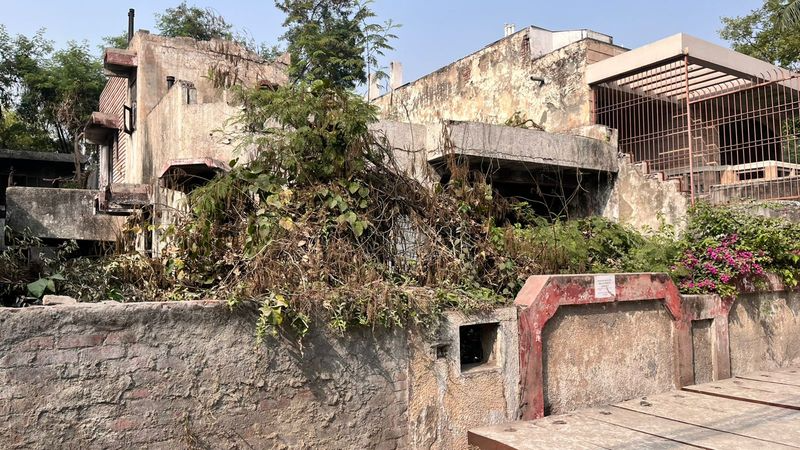 |
House D-5, abandoned for years, was burned in 2014. Photo: Tribuneindia |
In 11/2025, the Supreme Court of India further acquitted Koli in the final pending case, ordering his release after nearly 20 years in prison.
Judges noted that Koli's confession was recorded after he had been in custody for 60 days and "appeared to be tutored". According to the judge, the presence of police investigators right next to Koli raised serious questions.
The court criticized the police and investigative agencies for conducting a flawed, negligent, and delayed investigation, which led to the "real culprit" not being identified. The report stated that investigators "chose to frame a domestic helper and malign him to quickly resolve the case".
The ruling also pointed out that investigators "failed to consider clues, including the aspect of organ trafficking raised by a government committee under the Ministry of Women and Child Development". Reports at the time indicated that the bodies had been dismembered with surgical precision.
An unsolved mystery
In interviews since his release, Pandher has consistently maintained his innocence. Koli has not appeared publicly since his release from prison and has not spoken, but his lawyer, Yug Mohit Chaudhry, stated that "all evidence against Mr. Koli was fabricated, not a single piece of evidence could convict him". The lawyer said Koli was framed to "protect some powerful individual".
In an interview in 11/2025, Pandher suggested that media frenzy, public pressure, and investigative agency errors had derailed the investigation. "If the investigation had been conducted properly, the truth would have been revealed", Pandher said.
Nearly 20 years after the first bones were unearthed from the drain in Noida, the question of the real perpetrator remains unanswered.
Some legal experts believe the families still have a final option: to file a petition with the Supreme Court requesting a reinvestigation. But former Supreme Court judge Madan Lokur suggested this would be unlikely to yield results because too much time has passed, evidence has likely disappeared, and the possibility of a reinvestigation is remote.
Tue Anh (according to BBC, Times of India)