Jacob Kennedy, 28, a bartender in Detroit, believes that while education is important, its exorbitant cost has eroded the value of a degree. Many people he knows with bachelor's degrees worked in office jobs for only one year before quitting and returning to the service industry. "Simply put, office salaries aren't enough to pay off student debt," Jacob said, adding that the cost has overshadowed the actual value.
Jacob's perspective reflects a common sentiment among many Americans today. A November 2025 survey by NBC News revealed a significant shift in public opinion. For the first time, nearly two-thirds (63%) of American voters believe a university degree is no longer worth the investment. They argue that students often graduate with immense debt burdens while lacking specific job skills.
Only 33% of respondents still believe a degree will lead to good job opportunities and high income. This marks a severe decline in confidence compared to 2013, when 53% of the population fully trusted the value of higher education.
"It's astonishing to witness such a dramatic shift in attitudes towards a core principle of the American dream," commented Jeff Horwitt, an expert at Hart Research Associates.
Previously, a university education was an aspiration, a life-changing opportunity. Now, that promise is being questioned across all demographic groups, even among those who already hold degrees.
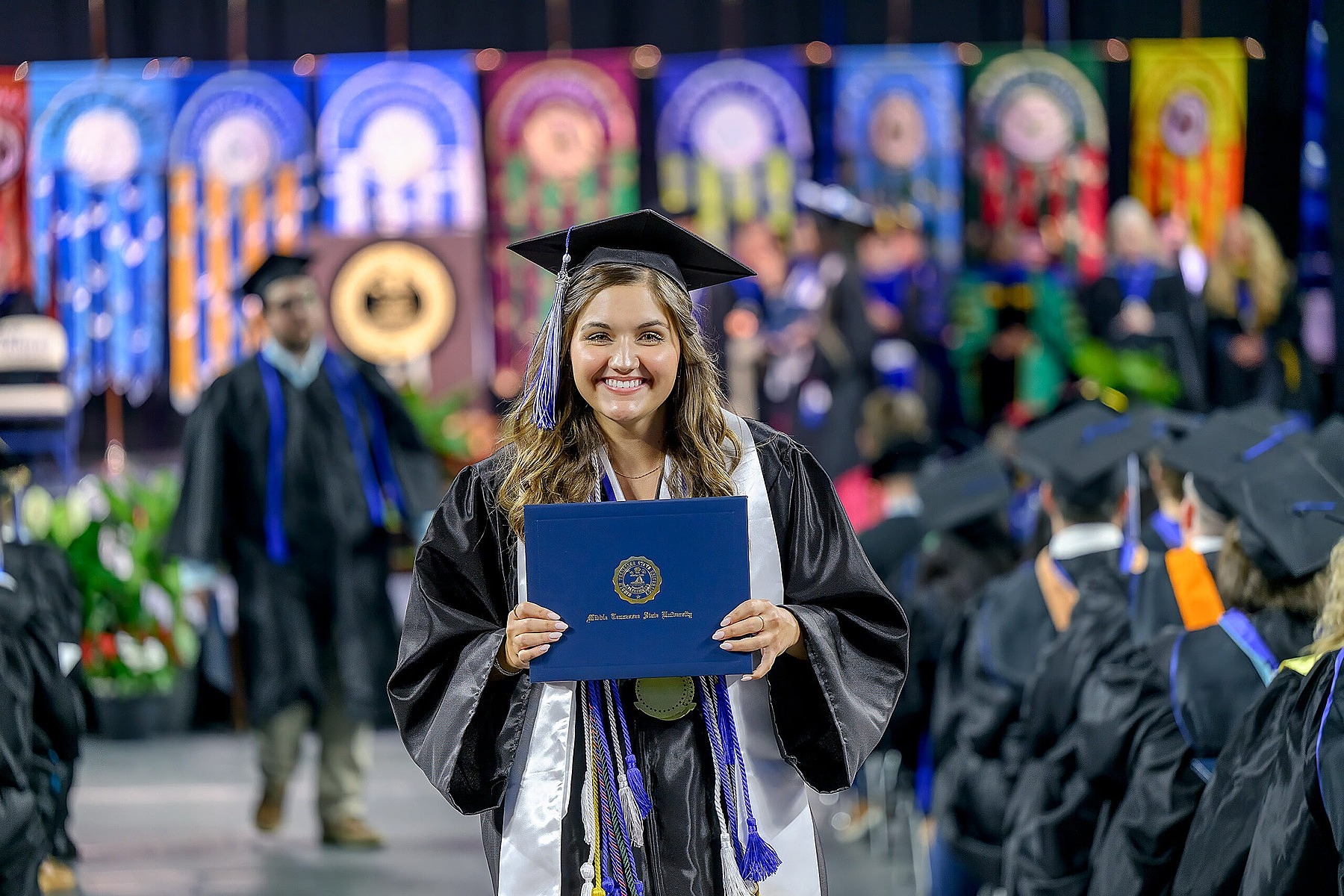 |
Students receive their diplomas at Middle Tennessee State University (US). Photo: MTSU |
Students receive their diplomas at Middle Tennessee State University (US). Photo: MTSU
Cost barriers
In reality, data from the US Bureau of Labor Statistics still indicates that individuals with higher degrees generally earn more. However, skyrocketing tuition fees have become an insurmountable barrier.
According to College Board, after adjusting for inflation, the average tuition at four-year public universities has doubled since 1995. At private institutions, this figure has risen by 75%. Jessica Burns, 38, from Iowa, views a university degree as merely a "ticket to an interview," a prerequisite without inherent value. She chose to attend a community college to save money, while her husband is still burdened by significant debt from attending a private university.
The rise of vocational training
This skepticism makes young people more cautious about financial risks, leading them to pursue faster entry into the labor market through vocational and technical schools.
Josiah Garcia, 24, from Virginia, studied engineering after working as an electrician. He chose to return to school because he recognized the income potential in technical fields, but he believes this does not apply to the arts. "Many of my friends who studied dance or art can't find jobs in their specialized fields. Degrees focused on 'soft skills' should have lower tuition than STEM fields," Garcia stated.
"Universities have lost touch with the majority of the population due to cost issues. They are now perceived as out of touch with reality," Horwitt concluded.
By Minh Phuong (According to NBC News)