Today's market features a variety of imported salts, including Himalayan pink salt, bamboo salt, and Celtic salt, with prices ranging from hundreds of thousands to millions of Vietnamese Dong (VND). This contrasts sharply with traditional granular and refined salts, which typically cost 5,000-10,000 VND per kilogram.
Sellers often justify these high prices by citing manual extraction processes, exceptional purity, and the presence of numerous beneficial minerals.
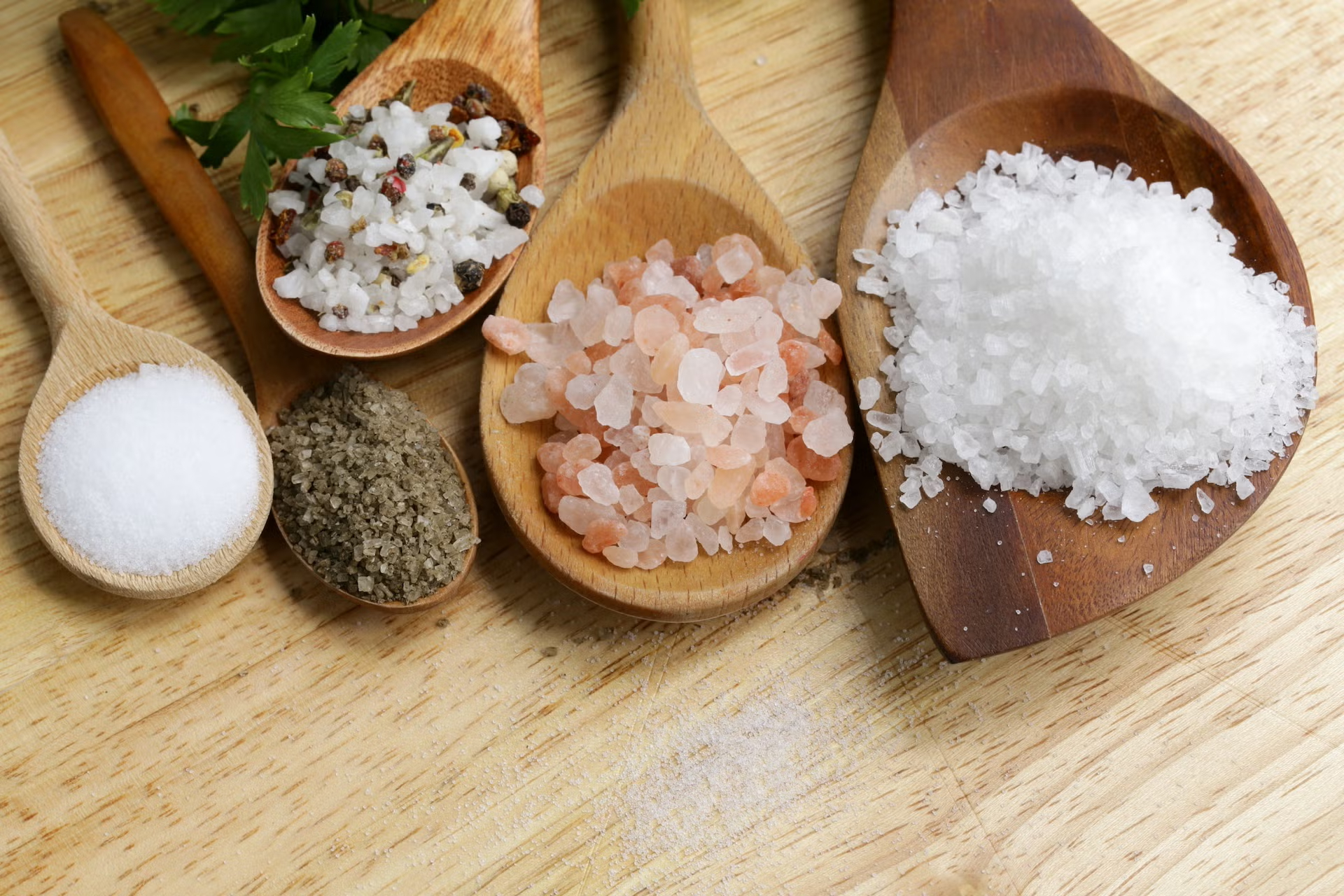 |
The market offers many different types of salt. Photo: Nutritionsource |
However, scientific analyses reveal that the nutritional distinctions between these salt varieties are not substantial.
Chemically, both common refined salt and premium pink salt are primarily composed of sodium chloride (NaCl). The American Heart Association (AHA) confirms that both sea salt and refined salt contain approximately 40% sodium.
Price discrepancies largely stem from extraction and marketing expenses. Industrially produced salt, made on a large scale, remains inexpensive. Conversely, mined salts, such as pink salt, involve costly manual extraction, extensive transportation, and rigorous selection to preserve their natural color and texture, catering to aesthetic preferences.
Many advertisements overstate that pink salt contains up to 84 types of natural minerals. While theoretically true, this claim holds no practical nutritional significance.
A study by Nutrition Research Australia indicated that consuming enough calcium from pink salt to meet daily requirements would necessitate eating up to 6 teaspoons of salt. This intake would result in a sodium consumption 500% higher than the World Health Organization's (WHO) safe recommended limit. Consequently, individuals would face increased risks of cardiovascular disease and stroke due to excessive sodium, long before realizing any purported mineral benefits.
In Vietnam, national standards mandate that common table salt be fortified with iodine to prevent goiter. Fully substituting iodized salt with imported mined salts, which typically lack iodine, could lead to a deficiency of this vital micronutrient.
Nutrition experts advise consumers to avoid the 'price trap.' Salt selection should be based on its intended use, rather than the misconception that 'expensive means more nutritious.'
For daily cooking, iodized or common refined salt offers an economical choice and provides essential micronutrients. Expensive varieties, such as pink salt or flaky salt, are best reserved for decorative purposes, sprinkled on dishes like steak or salad at the final stage to enhance texture and visual appeal.
More critical than the type of salt is the amount consumed. The WHO recommends that adults limit their daily salt intake to under 5 grams to protect cardiovascular health.
Bao Nhien (Source: Aboluowang)