"I lost control because I thought my strict diet was broken," Wood, who lives in Grand Rapids, Michigan, recalled. For Wood, even a minor deviation in a meal was enough to cause significant psychological distress.
Wood exemplifies individuals suffering from longevity fixation syndrome. He pursues a lifestyle of strict discipline to prolong his life, yet paradoxically, this excessive control pushes him into a state of perpetual anxiety.
The 40-year-old's life revolves around numbers. He wakes up at 4h for training, adheres to rigorous calorie-counting formulas for his diet, and works out at the gym twice a day, seven days a week. He meticulously records all metrics: heart rate, blood pressure, body fat percentage, sleep, and blood sugar.
The pursuit of longevity comes at a high price. Twice a month, Wood spends 250-300 USD on vitamin infusions and breathing oxygen through a nasal cannula, a method advertised to help cell regeneration. Every six months, he spends approximately 10,000 USD to check 20 biological markers. Wood's motivation stems from a fear of death, having lost both parents to cancer at a young age.
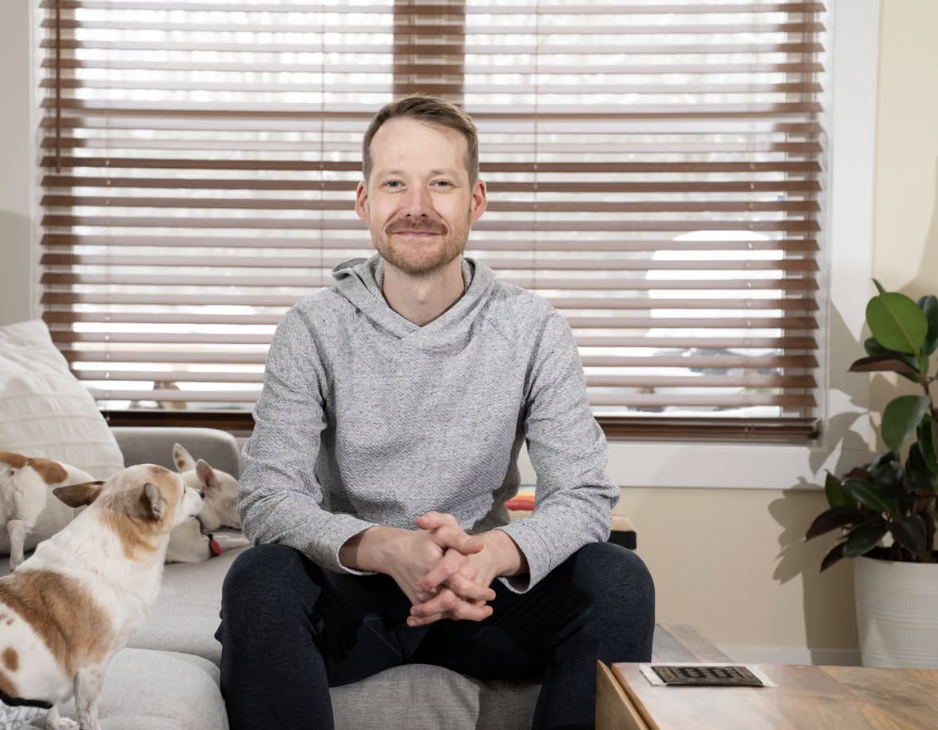 |
Jason Wood, who suffers from longevity fixation syndrome. Photo: Guardian
Jan Gerber, CEO of the Paracelsus Recovery clinic in Switzerland, who coined the term "longevity fixation syndrome", stated that the number of patients like Wood is rapidly increasing. He believes this syndrome is closely related to orthorexia, an eating disorder characterized by an obsession with "clean" eating.
The pursuit of longevity is also fueled by celebrities and influencers. British actor Orlando Bloom reportedly underwent blood filtration to remove microplastics, while Jennifer Aniston is said to use peptide injections for skin rejuvenation. On social media, many influencers promote highly disciplined lifestyles, including routines like early bedtime, breathing exercises, cold plunges, and dietary supplements.
Not only middle-aged individuals, but younger generations are also caught in this cycle. Mark, 26, from the Netherlands, began "optimizing" his body five years ago due to a fear of death.
Before having a beer or a piece of birthday cake, Mark would deliberate for days, then be plagued by guilt. He takes dozens of supplements daily, from omega-3 and zinc to creatine, and bought a blood pressure monitor for self-monitoring. Last year, panic attacks forced Mark to seek help from a psychologist.
In London, the Balance Rehab Clinic reports that approximately 50% of its clients seeking stress treatment show signs of longevity obsession. Many patients are admitted with a collection of "biohacking" devices, such as infrared mats or biometric trackers.
Sarah Boss, the clinic's Clinical Director, once treated a patient who received stem cell injections and used a hyperbaric oxygen chamber daily. "They view their bodies as machines requiring continuous optimization, leading to stress when results are not as expected," she stated.
During treatment, experts encourage patients to "wean off" their measurement devices. Instead of focusing on numbers, they are guided to practice yoga, meditation, and light exercise to learn how to listen to their bodies.
"Only by accepting that the body has limits and that uncontrollable risks always exist can one find a true balance between physical and mental well-being," Boss emphasized.
By Ngoc Ngan (Source: Guardian)