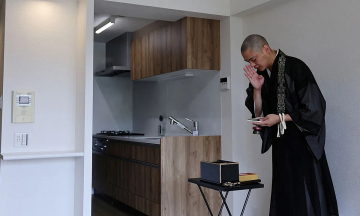
Mertens' decision stemmed from the summer of 2022, when the Copernicus EU environmental organization confirmed Europe experienced its hottest summer on record. Despite the immediate relief, she worries about needing to upgrade to a more powerful unit in two to three years, leading to higher electricity bills.
The urgent need to combat rising temperatures is fueling Europe's air conditioning market, where such devices were once uncommon. According to Clean Energy Wire, the percentage of German households with air conditioning increased from 13% in 2023 to nearly 19% in 2024. Air conditioner production in 2024 also saw a 75% increase compared to 2019. However, this figure remains significantly lower than the 90% in the US and 91% in Japan.
In France, air conditioning was previously seen as wasteful, environmentally unfriendly, and unnecessary. Recent heatwaves, however, are changing this perception.
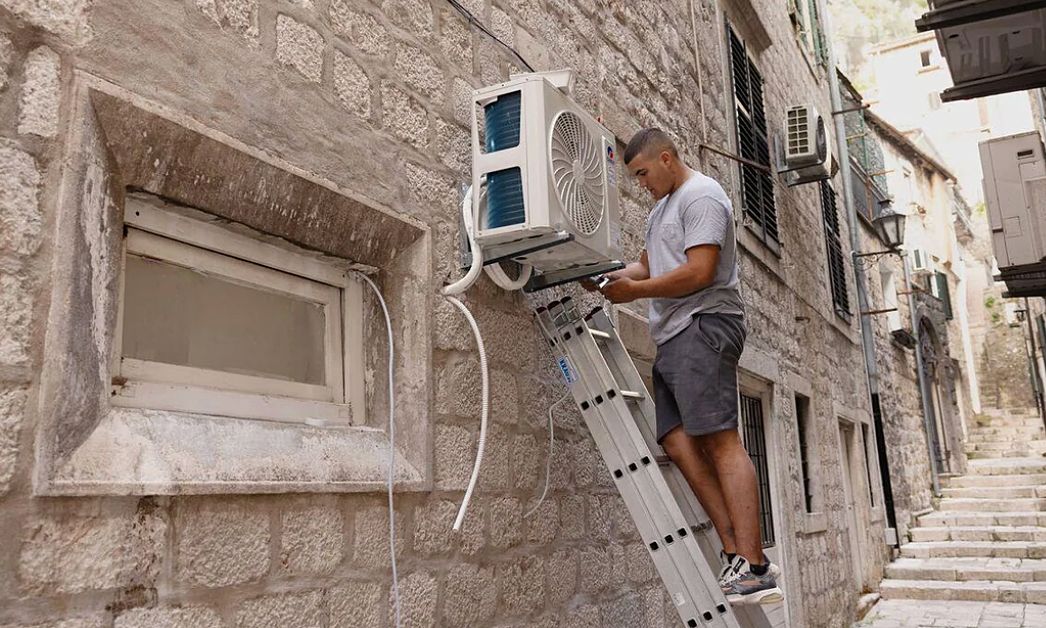 |
A worker installs an air conditioner in Kotor, Montenegro. Photo: Business Standard |
Ruben Arnold, owner of a building energy solutions company in France, acknowledges the environmental impact but finds installing air conditioning unavoidable. "Even knowing it's a selfish choice, there comes a point when all arguments against it are dismissed", he stated.
The heat burden is particularly severe for those living in attic apartments. In Paris, old buildings often feature Haussmann-style zinc roofs. This material absorbs and retains heat, transforming the spaces below into stifling ovens.
Marion Lafuste, 40 years old, recounted that during the recent heatwave, the temperature inside her home soared to 41 degrees Celsius. Attempts to cool down with ice in front of a fan or closed shutters proved ineffective. She mentioned that without a cooler retreat in the countryside, she would have purchased an air conditioner despite her aversion to the device. Meanwhile, Martine Bontemps, a resident of a Paris attic apartment, stated she endures the heat with ceiling fans rather than installing air conditioning.
Meteorological forecasts indicate Paris could frequently experience heatwaves reaching 50 degrees Celsius by 2050. The inability of the body to cool below 20 degrees Celsius at night severely impacts health. Recognizing this, Sophie Julini, 53 years old, installed air conditioning so her 86-year-old mother could rest for a few hours each day.
Nevertheless, researchers at the German Institute for Urban Affairs assess that the health and economic impacts of heat are underestimated. Germany recorded over 8,500 heat-related deaths during the 2023-2025 period, primarily among the elderly.
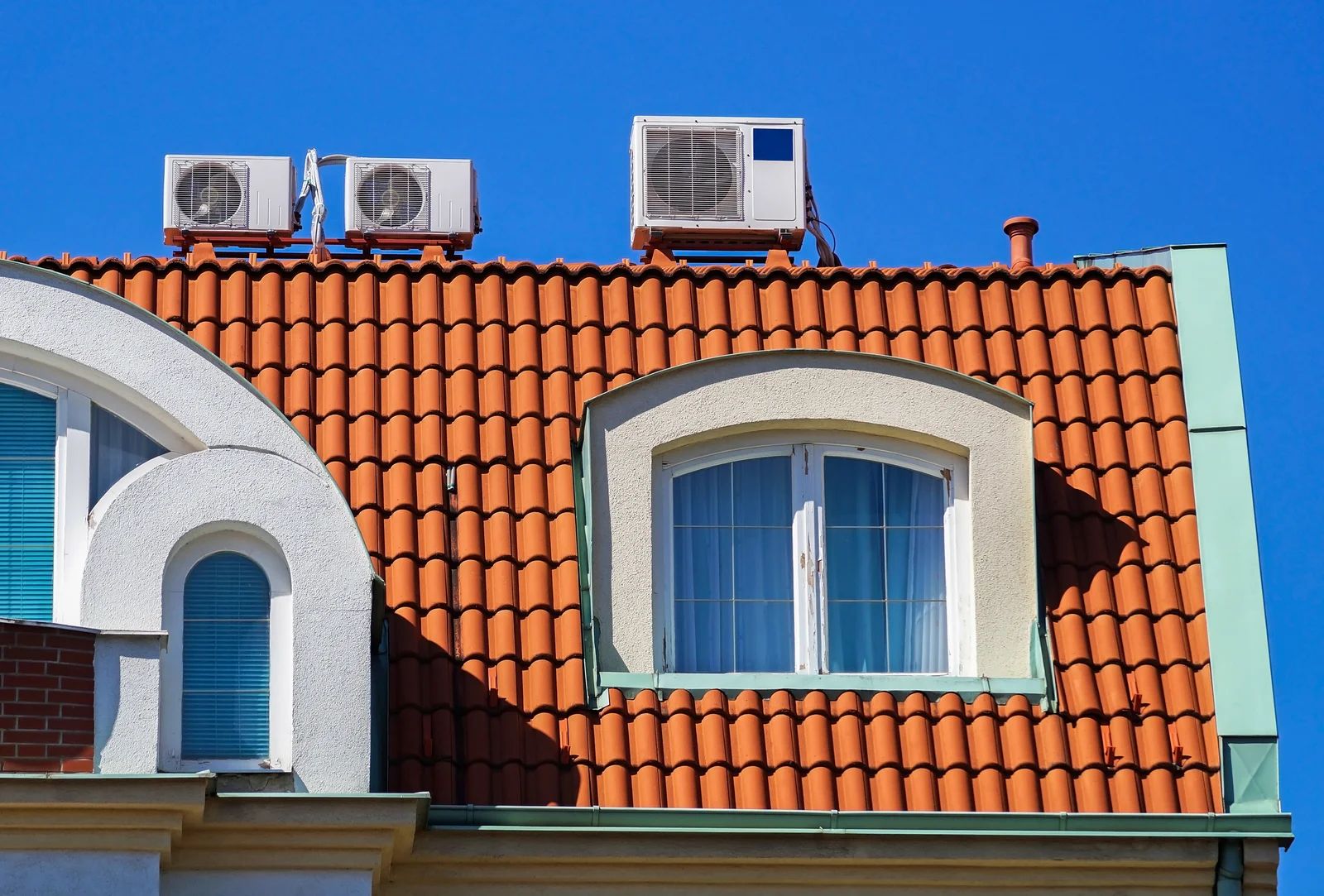 |
More homes in Europe are installing air conditioners to cope with heatwaves. Illustration: France24 |
However, reliance on air conditioning risks exacerbating climate change due to high electricity consumption and greenhouse gas leaks. Jürgen Resch, CEO of the German environmental organization Deutsche Umwelthilfe, explained: "Refrigerant emissions warm the earth, which then further increases the demand for cooling".
Additionally, the German Consumer Protection Center warns that many current air conditioner advertisements are based solely on laboratory conditions, failing to reflect actual consumption. No technology makes heat disappear entirely.
In the long term, air conditioning cannot be the central adaptation tool as it creates inequality. "I still hope the city will have solutions so everyone can be cooled, not just those who can afford an air conditioner", Leila Mertens expressed.
Ngoc Ngan (According to France24, Euro News)