At 6:00, Thu Hang, 35, drove her child from their home in Tay Mo ward, nearly one hour earlier than usual. "Last night, I checked the forecast and knew today would be the peak of the heatwave," she said, "so I put my child to bed at 21:00 to ensure we could leave early."
She had already experienced the heat's intensity over the weekend. On Sunday afternoon, after leaving a parent-teacher meeting, she felt dizzy, her vision blurred, and her arms burned from the sun.
However, their plan was only partially effective. The sun was already blazing early in the day, heating the roads. By 6:45, the elementary schoolyard in Yen Hoa ward was crowded with students and parents, nearly one hour before classes began.
Hang bought her child breakfast before heading to her office at 7:00. "In my department, five out of seven people arrived more than one hour early," she noted, "which has never happened before."
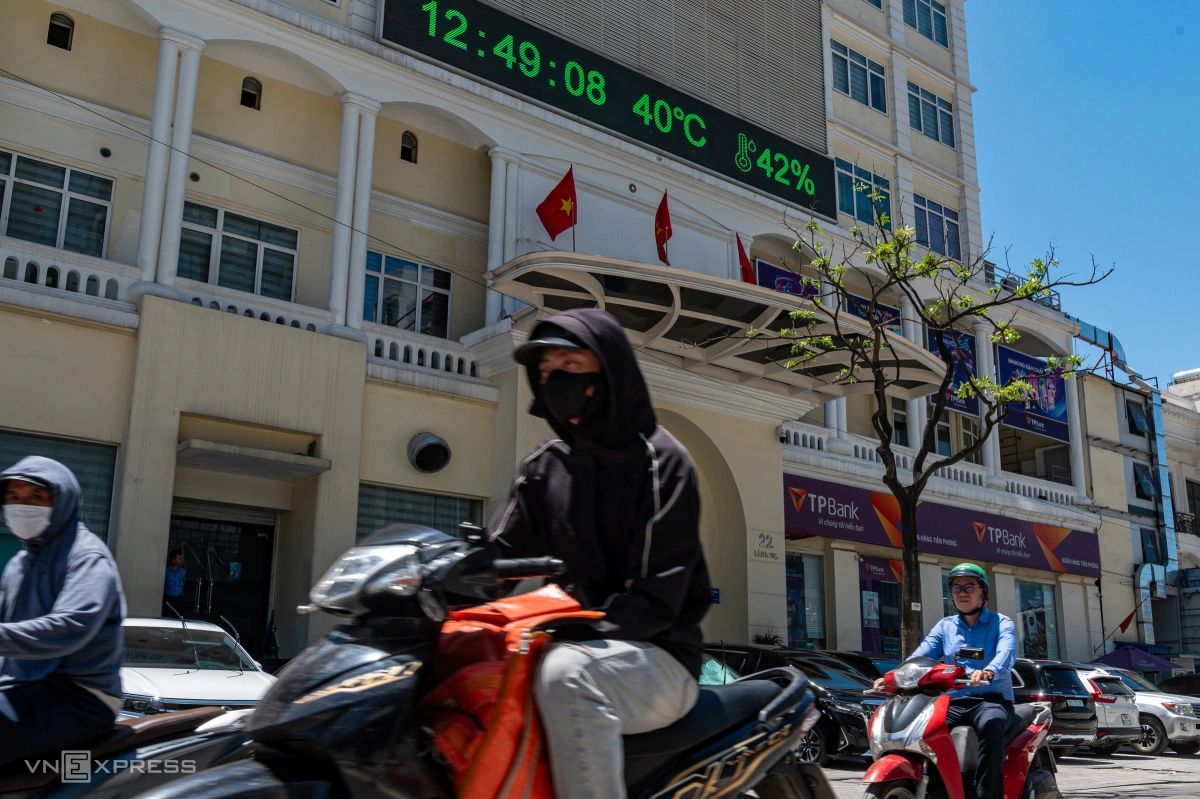 |
At 12:00, a display board on Lang Ha street showed the temperature at 40 degrees C. Streets were deserted, with those needing to venture out completely covered. *The Bang* |
The National Center for Hydro-Meteorological Forecasting reported that northern and north central Vietnam are experiencing the season's most intense widespread heatwave. On the afternoon of 25/5, Hanoi recorded 40,7 degrees C, the highest nationwide. Four of the capital's five monitoring stations registered temperatures of 40 degrees C or higher.
On 25/5, eight provinces and cities in the northern delta and central regions also saw temperatures above 40 degrees C. Forecasts indicate this severe heatwave will persist for at least the next 48 hours.
Weather expert Huy Nguyen explained that this heatwave features a "heat accumulation effect," with temperatures increasing daily. The baseline temperature on 25/5 rose by 0,5-1 degree C compared to the day before.
The "urban heat island effect" further intensifies Hanoi's oppressive heat. Extensive concrete and asphalt surfaces absorb significant radiation, while tall buildings obstruct wind, hindering air circulation. This heat is further amplified by traffic emissions and hot air from millions of air conditioners. As a result, the actual temperature radiating from road surfaces at midday can exceed 50 degrees C.
The intense heat forces residents to alter their daily routines. In parks like Thong Nhat and Thanh Xuan, exercise groups that normally finish by 7:00 or 8:00 were almost non-existent by 6:00.
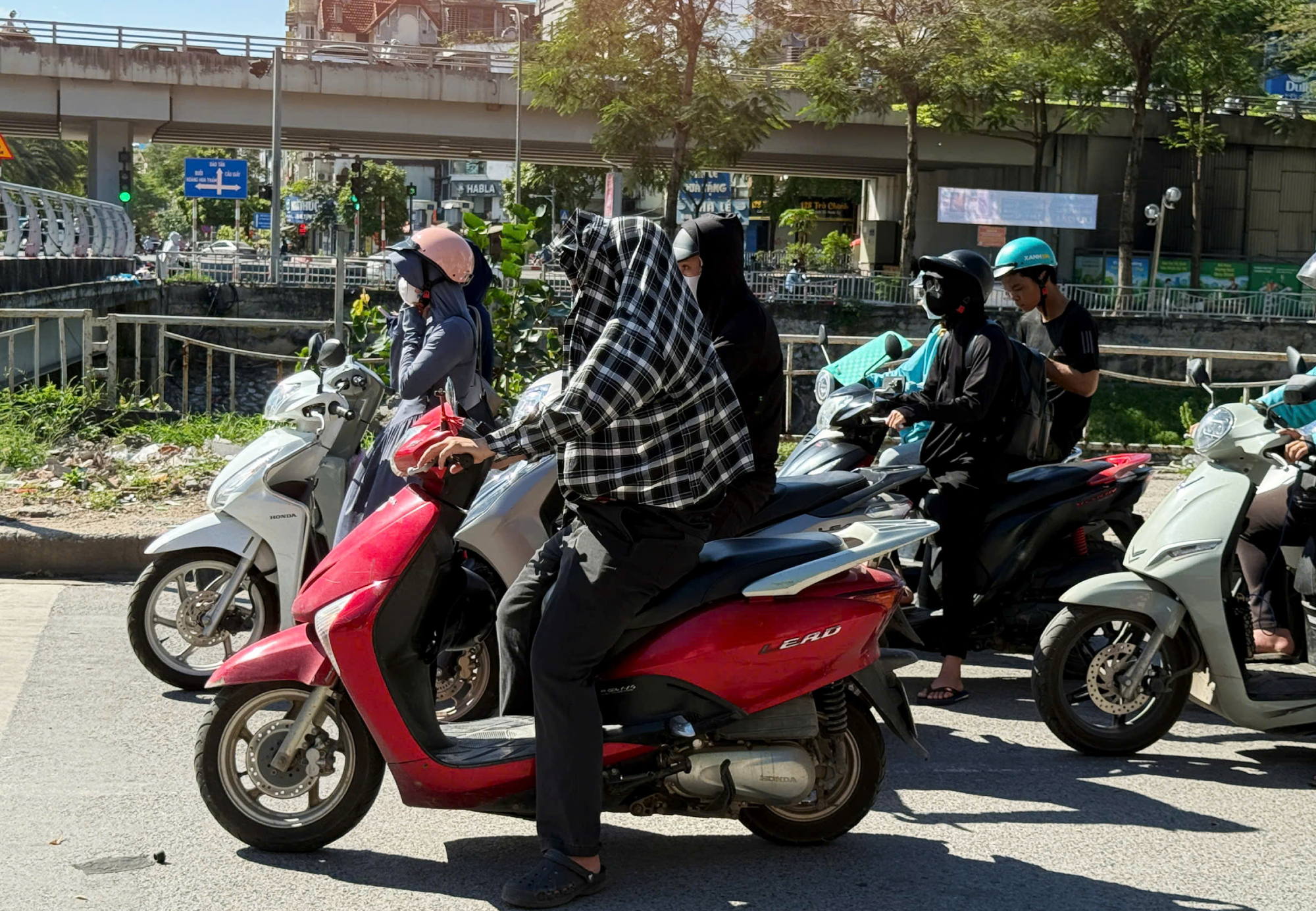 |
Pedestrians wait at a red light at the Dao Tan intersection at 8:45 on 25/5. *Thuy Quynh* |
Many Hanoi residents are starting work earlier to avoid the heat radiating from road surfaces. Minh Nhat, 37, from Nghia Do ward, begins his commute at 6:00 "to beat the heat." He noted that the Hoang Quoc Viet route, usually congested around 7:00, was already crowded by 6:30 on 25/5.
Arriving at his office by 7:00, Nhat and his colleagues often take a short nap for several minutes after breakfast before starting work at 8:00.
Small traders in Hanoi have also adjusted their schedules. Quoc Cuong, 65, and his wife, from Thanh Liet ward, now arrive at the wholesale chicken market at 2:00 instead of 4:00. By 9:00, he packs up his stall, no longer selling until midday, due to intense heat from the road and boiling water stoves.
In local markets, residents are shopping for food from 5:30. Hoang Van Hoat, a butcher at Co Nhue market, Dong Ngac ward, noted that customers began arriving from 5:00. The heat reduced sales, prompting his family to process one pig instead of two. "People are shopping early, so my wife and I are packing up and heading home by 9:00," said the trader, who resides in Phuc Tho, on the outskirts of Hanoi.
Amid extreme weather, health advisories continuously warn residents to minimize outdoor activities between 11:00 and 16:00. They also emphasize rehydration and avoiding sudden temperature changes to prevent exhaustion, heatstroke, and stroke.
Quynh Duong