An office worker living in Goyang, Gyeonggi province, admits this is a daily habit. If he hears footsteps or voices outside, he patiently waits inside until the space is completely silent.
"Even after living here for years and knowing my neighbors are a young couple, I’ve never spoken to them," he stated. "I only open my door when I hear the elevator has closed. I fear inconvenience and do not want to reveal anything about my private life."
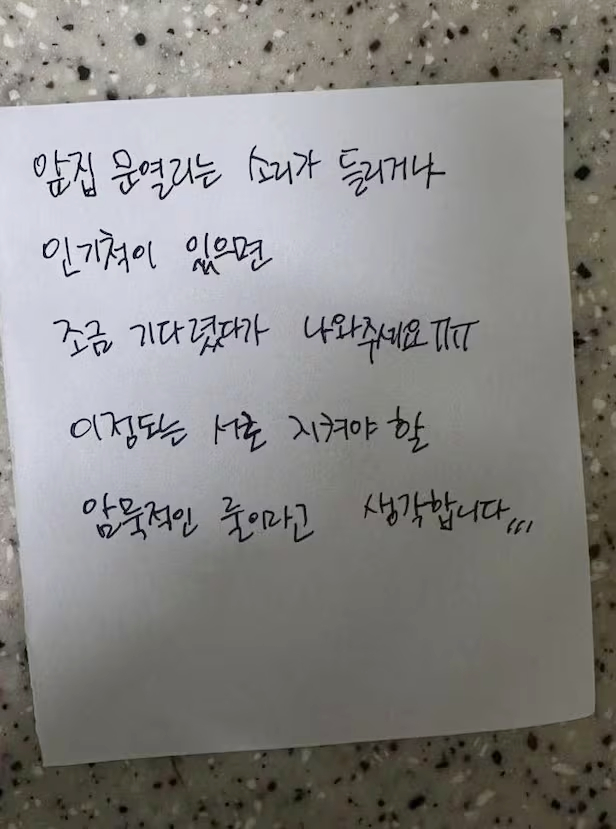 |
A note a family in South Korea received from a neighbor in early 10/2025. Chosun |
A note a family in South Korea received from a neighbor in early 10/2025. Chosun
This detachment is becoming a common trend. Recently, a post on a South Korean online forum sparked intense debate after sharing a note from a neighbor. The note read: "If you hear my door open, please wait a moment before coming out. I believe this is basic courtesy."
The note immediately divided public opinion. Many criticized the request as excessive and rude, but numerous others expressed sympathy, finding close encounters with strangers genuinely stressful.
Beyond the desire for privacy, security concerns are a major reason many people, particularly single women, choose to "hide."
Ji, a single woman living in Yongin, is always startled if someone exits the elevator with her. After reading numerous reports of stalking and residential violence, she actively avoids eye contact. Jung, from Mapo district, Seoul, shared: "It’s frightening to think someone could know exactly where I live and that I’m alone."
Even those who wish to maintain the old culture of greetings are gradually giving up. Shim, who moved to Seoul two years ago, recounted: "I used to greet neighbors in the elevator, but received no response. It was too embarrassing, so now I also remain silent."
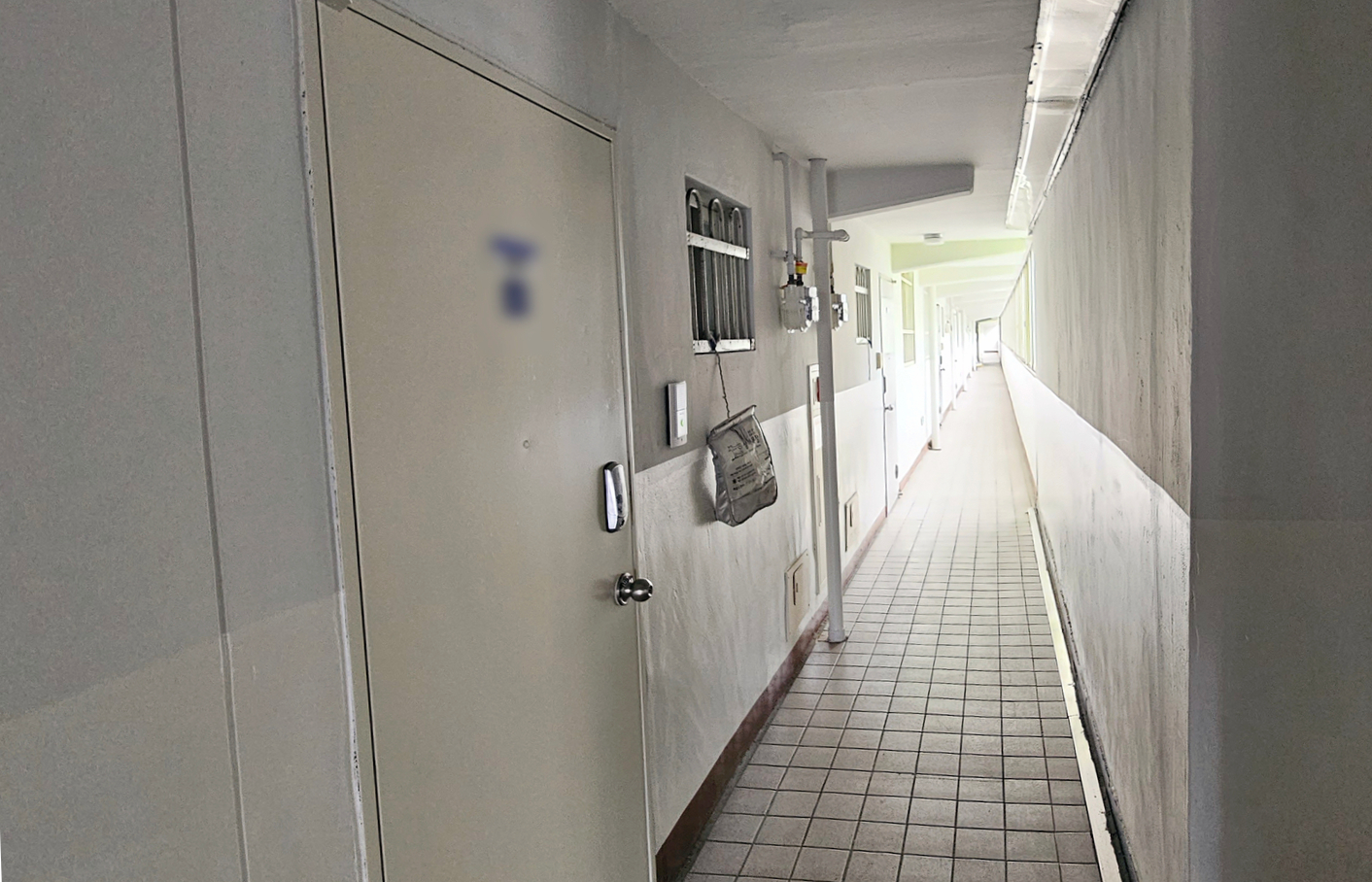 |
A hallway in an apartment in Hwasun district, South Jeolla province, 7/2023. Korea JoongAng Daily |
A hallway in an apartment in Hwasun district, South Jeolla province, 7/2023. Korea JoongAng Daily
An Embrain Trend Monitor survey of 1,000 adults painted a bleak picture of neighborly relations in the "land of morning calm" (South Korea): 79% reported only exchanging formal greetings; 56% agreed that the notion of "neighbors helping each other in times of need" is no longer relevant.
Professor Paik Jong-woo of the Department of Psychiatry, Kyung Hee University Hospital, noted that urban anonymity offers a sense of freedom, but the cost is isolation.
"In a densely populated society like South Korea, the loss of neighborly connections exacerbates loneliness. When personal crises occur, a lack of communication can increase mental health risks, even leading to suicide," Professor Paik warned.
Bao Nhien (via Korea JoongAng Daily)