For four days, a couple in Nuwakot district believed each other had been swept away by the flood. When water surged through their residential area, they became stranded on opposite banks, losing all contact. The psychological support team from the Nepal Mental Health and Counseling Center later located both individuals by phone, enabling them to hear each other's voices again.
Knowing the other was alive, they refused to wait for roads to clear or water to recede, requesting an immediate reunion. A helicopter was dispatched to transport them across the river. At the temporary shelter for displaced residents, their children ran to embrace their parents, breaking into tears.
This reunion was one of the few positive outcomes following the flood on 26/8. By the evening of 31/8, Nepalese authorities reported 951 fatalities, nearly 4,000 people missing, and over 11,000 rescued. Homes, roads, bridges, and many residential areas along the Bhotekoshi and Trishuli rivers had vanished.
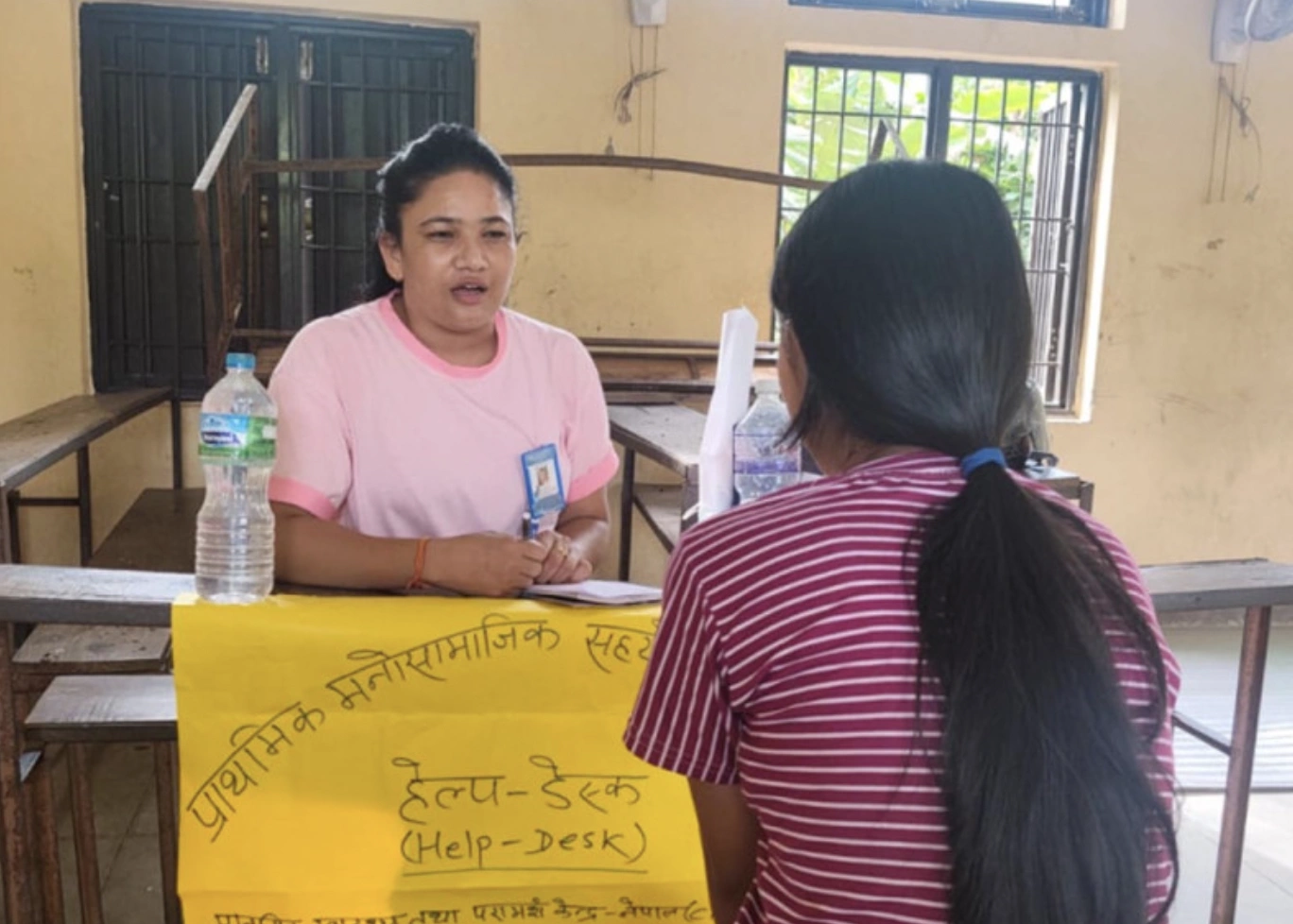 |
Sushila Budha (in pink), a psychological counselor in Bidur, Nepal. Photo: Kathmandu Post |
Gopal Bohara, a supporting psychologist at Bhairum high school in Bidur, stated that many individuals exhibit signs of grief, anxiety, hypervigilance, and suspicion. At the temporary shelter, two children repeatedly woke up screaming in the middle of the night, terrified of the encroaching floodwaters. "Most of them are still in shock and unable to clearly articulate their issues", Bohara said.
Bohara’s team, comprising four individuals, is scheduled to work in Bidur for 10-15 days. They are coordinating with medical personnel to locate relatives and identify cases requiring urgent intervention.
However, psychiatrist Nirajan Bhattarai noted that many adults are avoiding contact with aid workers. Some are wary of being photographed or filmed, suspecting others might exploit their circumstances. "Safety and basic needs must be prioritized first", Bhattarai stated, adding that in-depth counseling would be implemented once the emergency phase passes. His team is currently providing medication to those whose treatment has been interrupted and those suffering from insomnia.
At the temporary shelter, a woman with a history of mental disorder had her medication swept away by the flood. She expressed suicidal ideation and attempted self-harm four times. The support team transported her to Trishuli Hospital for treatment.
Furthermore, many individuals are afraid to sleep in their remaining homes due to fear of further floods. During the day, they return to collect food and check their belongings, then head back to the temporary shelters before nightfall.
Approximately 50 psychiatrists and psychologists have been deployed to Rasuwa and Nuwakot districts to provide psychological first aid. Bagmati province authorities are also preparing an additional 64 counselors. Experts anticipate that once search operations conclude, survivors will more acutely confront their losses, and the need for psychological support could be prolonged.
Ngoc Ngan (According to Kathmandu Post)