Thanh Ha, 32, from Ha Noi, set a goal to lose 3 kg in one month to fit into the ao dai she had tailored for Lunar New Year Tet. However, year-end parties and a heavy workload led her to consistently skip training sessions. "Just thinking about how exhausted I was after work, I'd sigh and skip my run. My weight loss plan stalled," Ha shared.
 |
Runners in costume at a Ho Chi Minh City night race. Photo: VnExpress Marathon |
To overcome this procrastination, Ha decided to register for the 21km distance at a marathon scheduled for March. Although the race takes place after Tet, the pressure to complete a half-marathon forces her to train seriously now. "If I don't build up my fitness from December, I definitely won't be able to run in January. I make myself run 4 sessions each week, and my weight has started to decrease as planned," the runner stated.
Like Ha, Hai Minh, 29, also failed multiple times to achieve his pre-Tet weight loss goals. He often registered for gym memberships or invited friends to run, but gave up after just a few weeks due to endless parties and feasts during the year-end season.
This common situation is what behavioral psychologists call a "break in routine." When external factors like parties and disrupted sleep schedules interfere, people tend to abandon long-term commitments such as exercise. Returning to training after missing a few sessions is often twice as difficult as maintaining consistency.
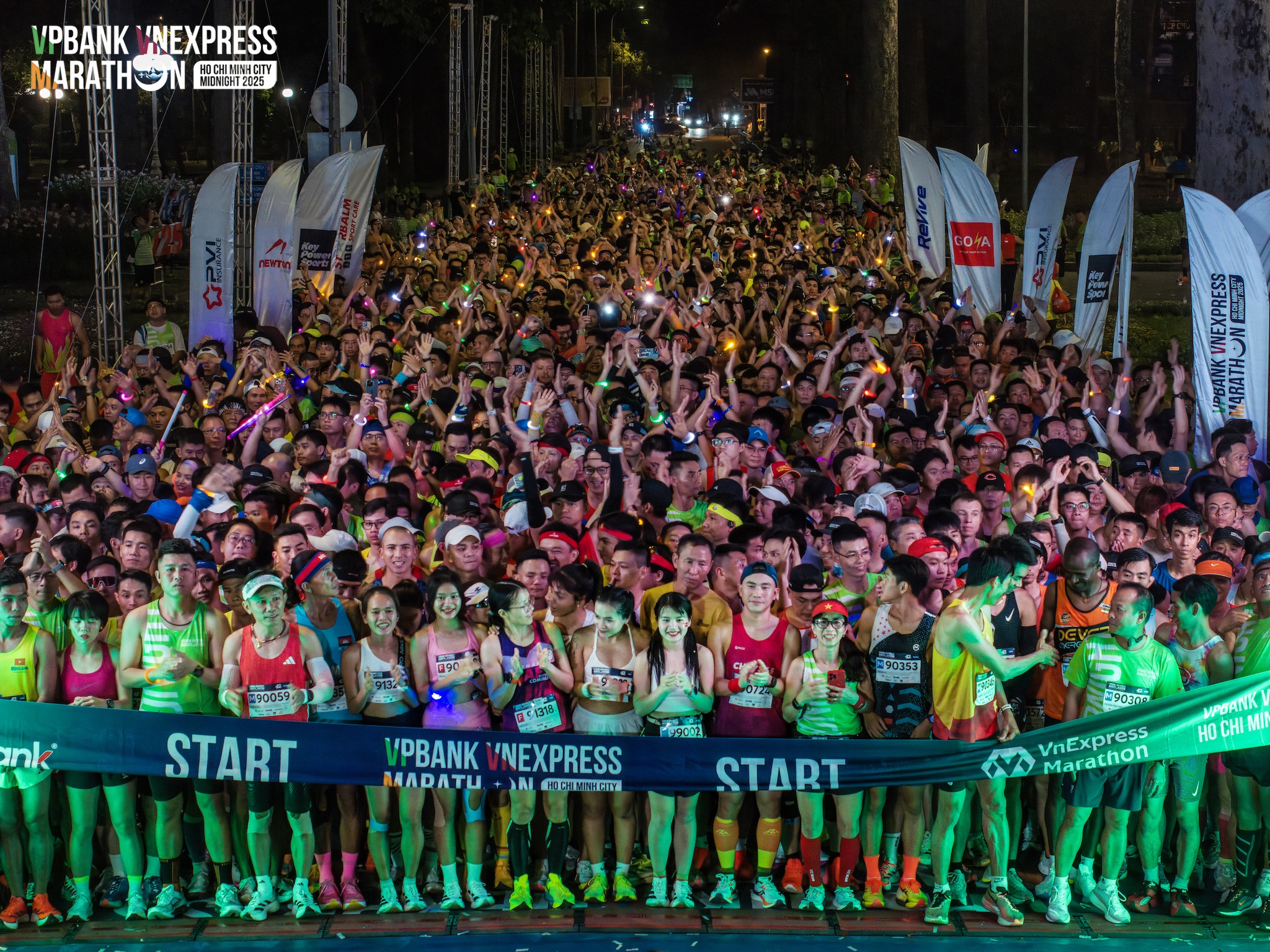 |
The atmosphere at a race can motivate runners to train. Photo: VnExpress Marathon |
According to sports experts, the mindset of procrastinating until the last minute makes it difficult for many to maintain training without a specific, binding goal. Registering for a race acts as an "anchor of discipline." It transforms the vague desire to lose weight into a concrete task, compelling individuals to train. With a race date set, runners can easily build a phased training plan, rather than relying on sporadic motivation.
The training process for a race helps runners burn a significant amount of calories in the period leading up to Tet. On average, one hour of moderate-paced running burns about 500-600 calories. Maintaining a consistent running schedule boosts metabolism, limiting excess fat accumulation even when attending numerous year-end parties. As a result, runners achieve a good physical foundation for the race and a toned physique just in time for Tet.
 |
Improving physique to wear costumes at races also motivates runners to train. Photo: VnExpress Marathon |
Currently, VnExpress Marathon Ho Chi Minh City Midnight is the choice for many southern runners pursuing this dual goal. The race takes place on 22/3 with 4 distances ranging from 5km to 42km. Its timing, three weeks after Tet, is considered ideal: far enough to avoid immediate time pressure, but close enough to maintain training motivation throughout Tet.
"Instead of worrying about gaining weight during Tet, I chose to register for a race. Each long run on the weekend helps me burn off excess energy from banh chung (traditional Tet sticky rice cake) and fatty pork, making me feel much more at ease," shared Duc Minh, a runner in Ho Chi Minh City.
Beyond physical benefits, running in the days leading up to Tet also serves as a mental remedy. Endorphins released during exercise reduce stress, balancing emotions amidst the heavy year-end work pressure.
Lan Anh
VnExpress Marathon Ho Chi Minh City Midnight 2026, held on 22/3, is Vietnam's largest night race. In its 4th season, the event expects to attract 12,000 domestic and international athletes. Running through iconic Ho Chi Minh City landmarks such as Tao Dan park, Independence Palace, Notre Dame Cathedral, and Nguyen Hue walking street at night promises a unique experience, helping runners break through in both performance and mindset. Interested runners can register here.