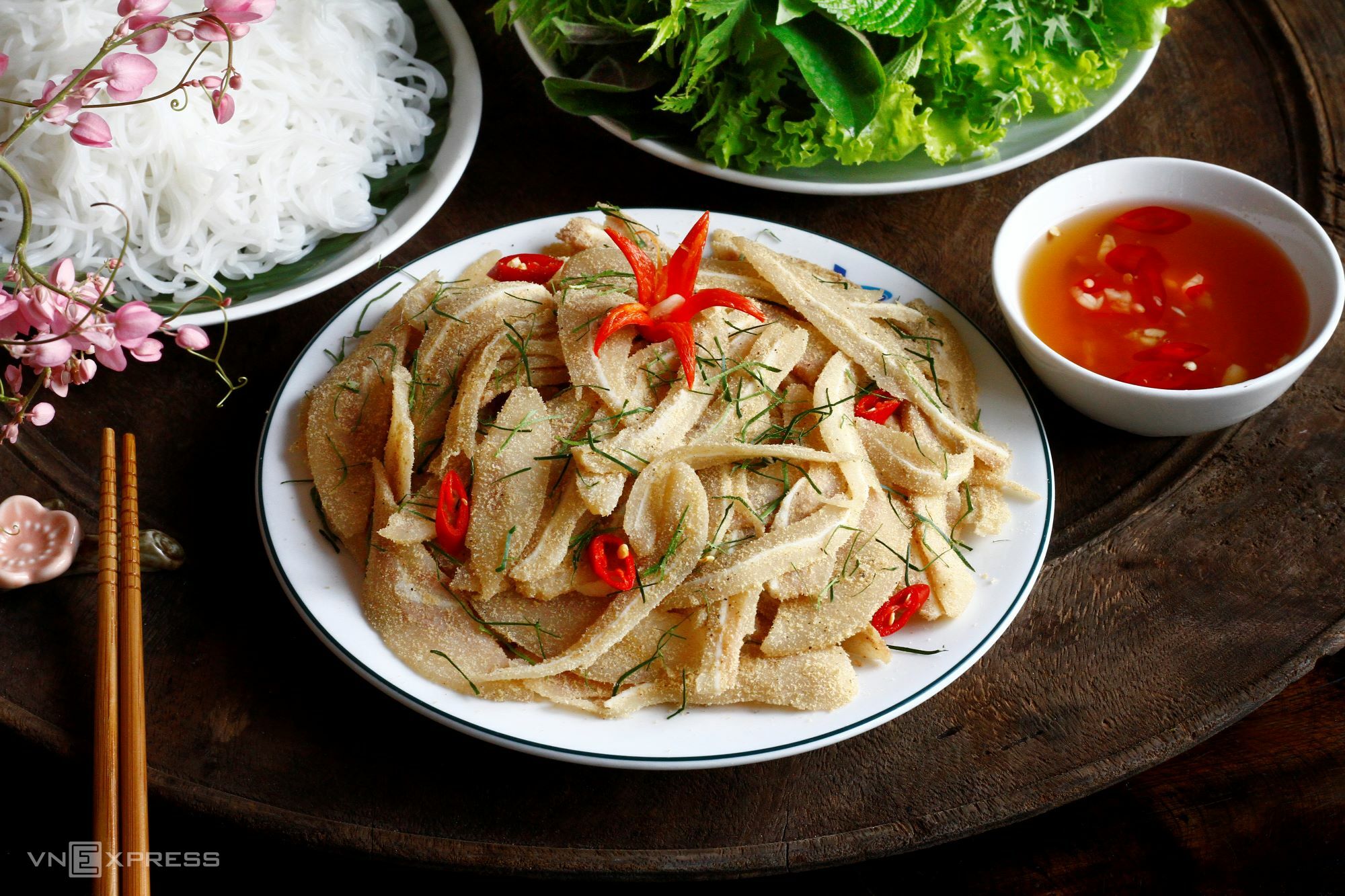
Hanoi nem tai thinh
Hanoi nem tai is a flavorful dish, notable for its crunchy pork ear, aromatic roasted rice powder, and a hint of chili spice. To eat, take a rice paper wrapper, add fresh herbs, some vermicelli, and a few pieces of pork ear, then roll it up and dip it in sweet and sour fish sauce. The appeal of nem tai lies in its balance: rich yet not greasy, fragrant yet refreshing.
 |
Nem chao chan gio
Minced or finely pounded pork hock is mixed with shredded pork skin, galangal, and lemongrass, then lightly steamed or dry-roasted. When eaten, one clearly tastes the tender texture of the meat blended with the warm, spicy aroma of galangal and the chewy crunch of pork skin. This dish often appears at gatherings in the former Ha Nam Ninh region. It is served with fresh herbs, pickled figs, and a dipping sauce of garlic chili fish sauce, which is quite appealing.
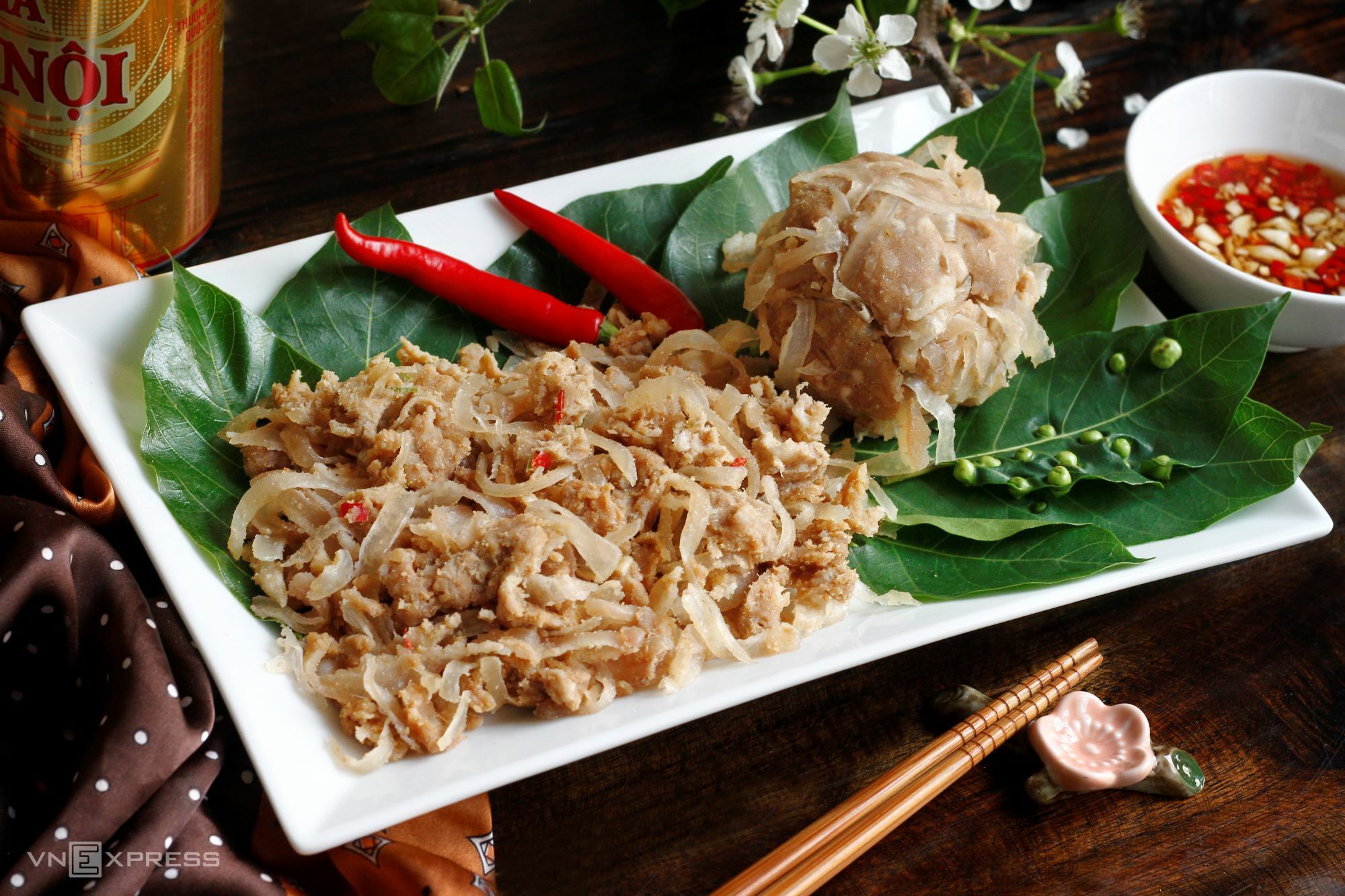
Giao Thuy nem nam
This dish embodies the rustic charm typical of Nam Dinh. Cooked lean pork is finely sliced and mixed with pork skin and fragrant golden roasted rice powder, then shaped into hand-sized balls. This dish does not require elaborate seasoning, but the roasted rice powder must be aromatic and dry to create its characteristic rich, nutty flavor. When eating, it is properly enjoyed wrapped in fig leaves and Polyscias fruticosa leaves, dipped in traditional fish sauce. The initial sensation is the nutty flavor of the roasted rice powder, followed by the chewy crunch of the pork skin, and a lingering aroma on the palate.
 |
Nem Phung
Nem Phung gets its name from Phung town, now part of Dan Phuong district, Hanoi. This rustic dish has gradually become popular, beloved by many Hanoians for gatherings with friends or during festive occasions. Shredded pork and pork skin are mixed with roasted rice powder and then wrapped in fig leaves or small banana leaves. Nem Phung has a richer and nuttier flavor than nem tai, becoming more appealing with each chew. Hanoians often enjoy Nem Phung as an afternoon snack, savoring it slowly with a cup of tea or a light wine. The pleasure of this dish lies in the feeling of a 'leisurely snack' that is light yet full of flavor.
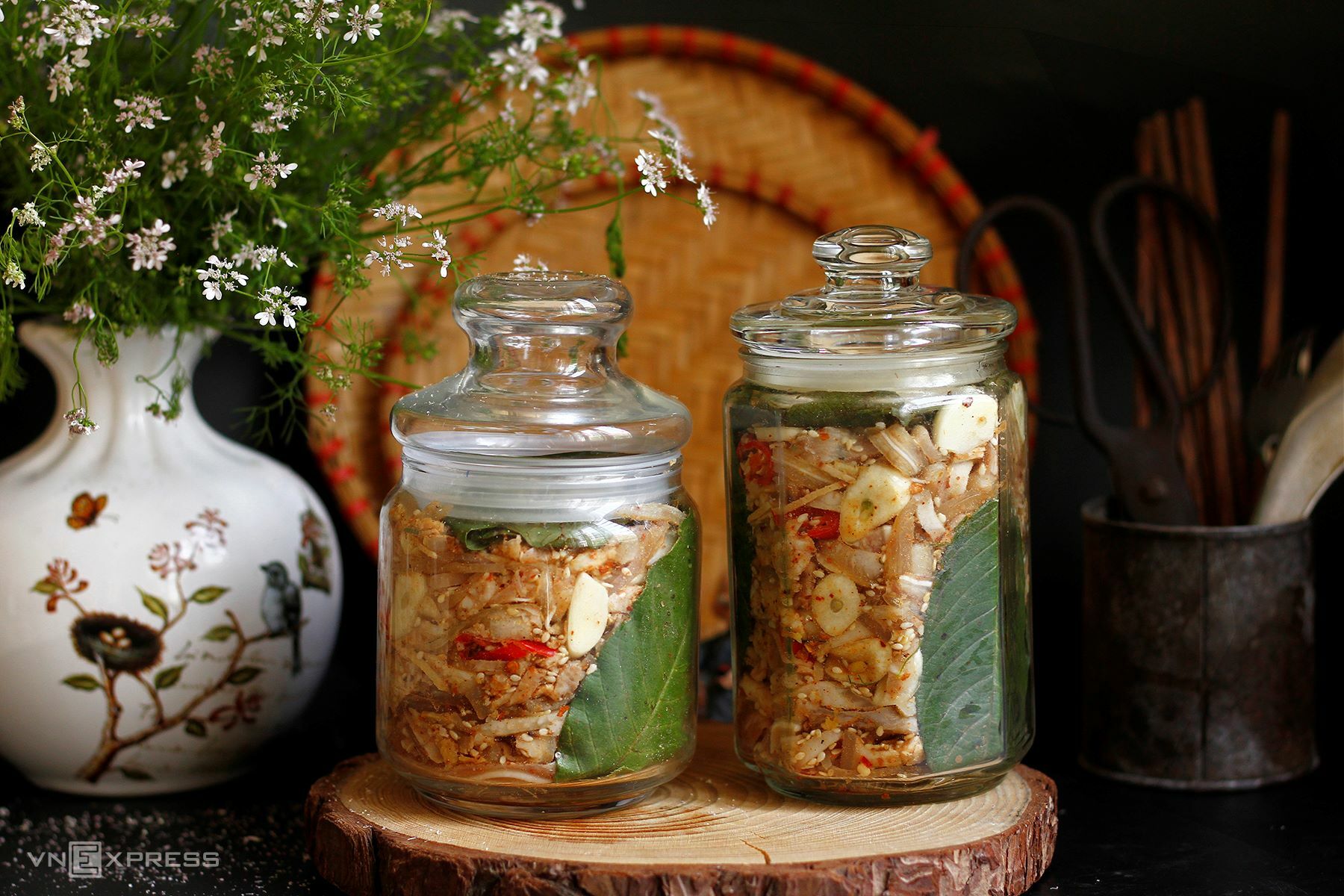
Hue tre
While northern nem thinh dishes emphasize the nutty aroma of roasted rice powder, tre stands out with its naturally fermented mild sourness, fragrant galangal, garlic, and roasted sesame. Pork ear, pork head meat, and pork skin are finely sliced, mixed with spices, then wrapped in banana leaves and further covered with straw, resembling a 'small broom'. When unwrapped, the characteristic fermented aroma bursts forth, stimulating the appetite. Eating tre reveals a clear blend of sour, spicy, salty, and sweet, truly reflecting the sophisticated yet profound spirit of Hue cuisine.
 |
Nem chao
This dish evokes the simple yet refined casual dining experiences of northerners. Unlike nem tai, which uses thinly sliced boiled pork ear, nem chao typically uses pan-fried lean pork shoulder or pork hock mixed with pork skin, galangal, lemongrass, and roasted rice powder. The aroma of roasted rice powder blended with the mild spice of galangal makes the dish both familiar and very appealing. Nem chao is delicious when eaten with young fig leaves, fresh herbs, and a bowl of chili sauce or sweet and sour fish sauce.
Despite their various names and preparation methods, nem, tre, and chao dishes share common characteristics: they utilize fermentation techniques, roasted rice powder, and aromatic herbs to create depth of flavor. These are not merely dishes; they also reflect how ancient Vietnamese people preserved food, balanced flavors, and transformed familiar ingredients into unique regional specialties.
Bui Thuy