Chef Vu Nhat Thong, founder of Eric Cooking Class, explains that this phenomenon stems from the unique heat transfer properties, material structure, and chemical nature of earthenware.
Slow and even heat distribution
Metal pots conduct heat quickly, but often unevenly, leading to heat concentration at the bottom and localized hot spots. This can cause the food layer at the bottom to scorch before the upper portions are cooked or fully flavored.
In contrast, earthenware is a poor heat conductor. This property allows clay pots to heat up slowly. Heat does not concentrate locally but spreads evenly from the bottom to all sides of the pot, creating a stable thermal environment. Consequently, meat and fish are heated uniformly, cooking thoroughly from the inside out, minimizing the risk of the exterior overheating while the interior remains undercooked.
Moisture regulation through microscopic pores
The most significant difference that makes clay pots superior to metal pots for slow-braised dishes is their surface structure, which contains countless microscopic pores.
During cooking, steam released from food and spices permeates these porous holes, then continuously circulates back into the pot as hot moisture. This mechanism acts similar to a miniature, enclosed steaming system, keeping ingredients succulent and preventing them from drying out.
At the same time, a small amount of water can still slowly evaporate through the pot's walls, allowing the braising liquid to thicken naturally, creating a glossy consistency for the dish without needing artificial thickeners.
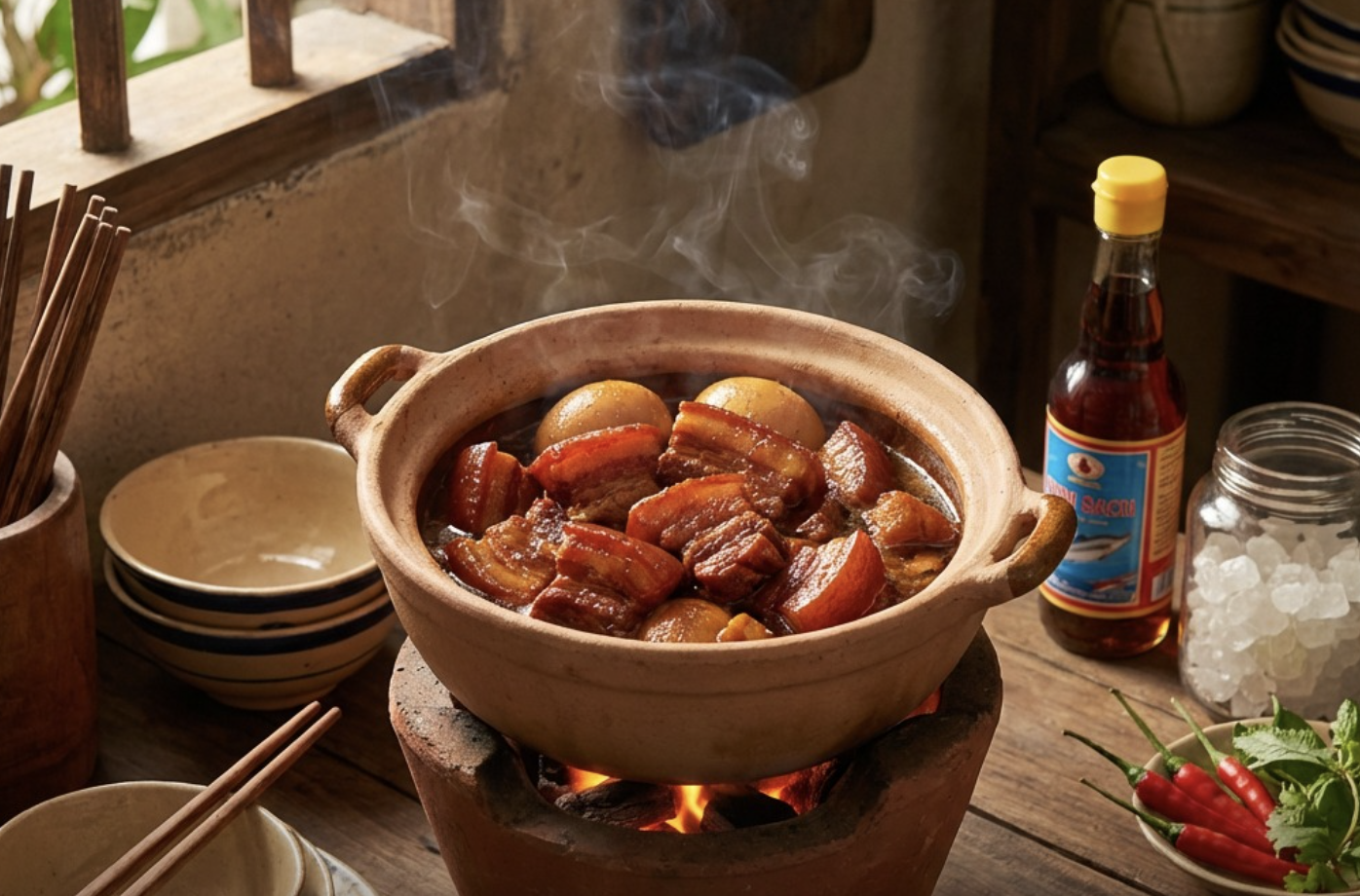 |
Braised dishes taste better when cooked in clay pots due to their physical and chemical properties. *Illustration: AI* |
Chemical inertness preserves original flavor
When preparing traditional Vietnamese braised dishes with strong flavors, cooks often use highly acidic or alkaline ingredients such as fish sauce, caramel sauce, tamarind, or lime. Using low-quality metal pots can lead to mild chemical reactions, sometimes imparting a metallic taste or an off-flavor to the dish.
In contrast, fired clay is an inert material that does not chemically react with food ingredients at high temperatures. This property helps preserve the purity and original flavor of each ingredient, from the sweetness of meat and fish to the aroma of onions, garlic, and pepper.
Preparing a new clay pot to enhance durability
To optimize performance and prevent cracking from thermal shock during use, chef Vu Nhat Thong advises home cooks to prepare new pots with the following steps:
- Water soak: Submerge the entire pot and lid in clean water for 4 to 6 hours. This allows the porous holes to absorb enough water, making the earthenware more resilient to high temperatures.
- Oil application: Remove the pot, thoroughly dry its surface, then apply a thin, even layer of cooking oil across the inside.
- Curing: Place the pot on the stove and heat it on the lowest setting for about 10-15 minutes. Afterward, turn off the heat and let the pot cool naturally before washing and using it.
Bao Nhien