The Prime Minister recently issued a strategy for promoting Vietnam's image abroad for the 2026-2030 period, with a vision to 2045. This document identifies the effort as a key task for foreign information work, holding long-term and comprehensive significance, intrinsically linked to the national development strategy.
National image communication activities are closely integrated with diplomacy, economy, culture, defense, security, people-to-people diplomacy, and digital transformation. This comprehensive approach aims to elevate Vietnam's prestige, standing, and influence on the international stage.
The strategy sets out to build an image of Vietnam as a peaceful, stable, dynamic, creative, responsible, and reliable nation, rich in cultural identity and deeply integrated internationally. It targets a minimum 20% annual increase in Vietnam's presence, recognition, and reputation across international media and global digital platforms. The volume of positive information about Vietnam in international media is also targeted to increase by at least 20% each year.
The workforce engaged in this effort will be developed to be professional, possessing strong foreign language skills, technological proficiency, and the ability to interact effectively with international audiences.
By 2045, the vision is for Vietnam to become a nation with a leading brand and image in Asia, ranking among the top 3 in ASEAN and the top 30 globally in national soft power. Vietnam's image will be positioned as a developed, humane, creative, responsible, and reliable nation, simultaneously an attractive destination for tourism, investment, innovation, and international cultural exchange.
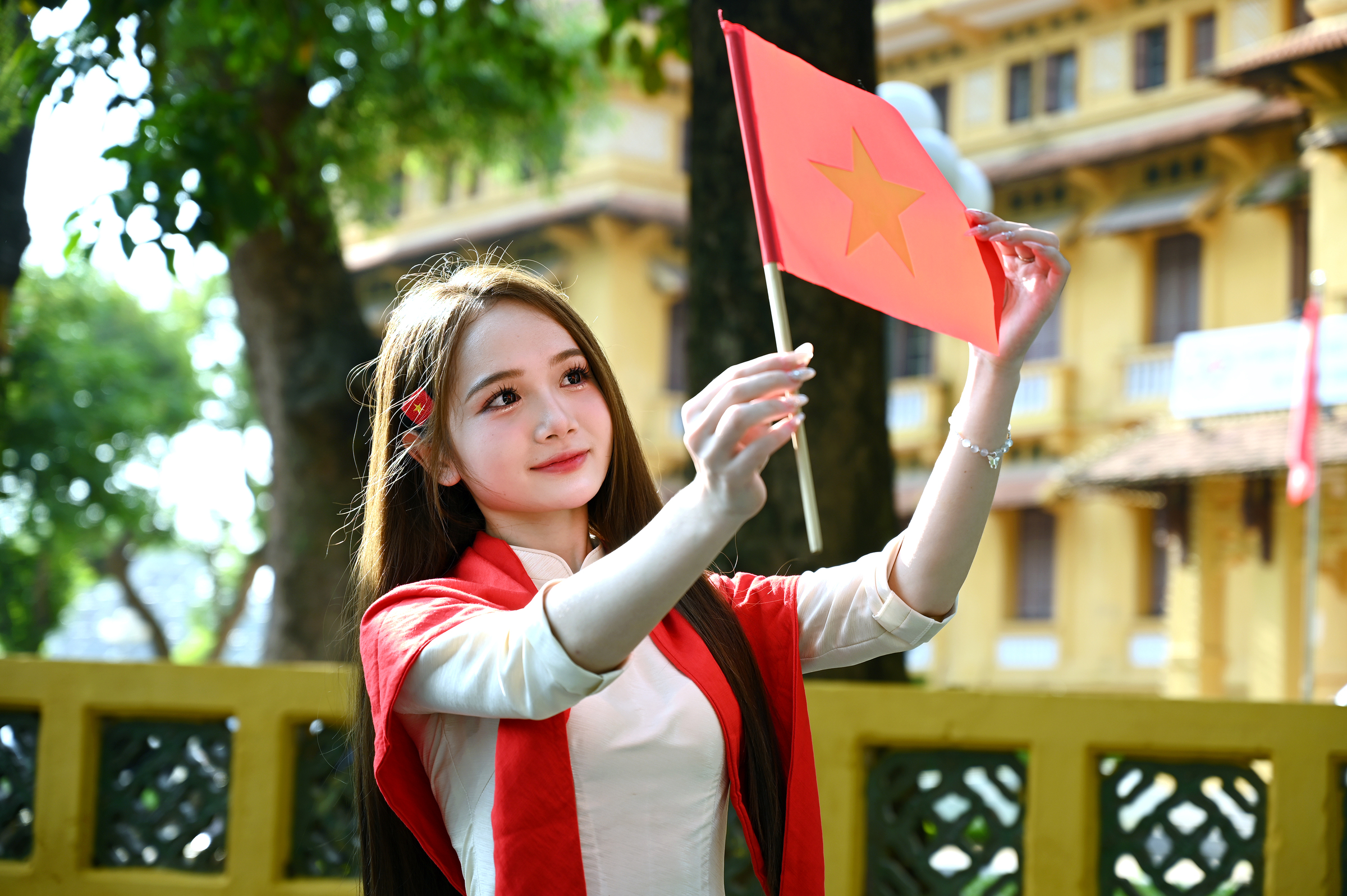 |
Young people in Hanoi take photos around President Ho Chi Minh Mausoleum and the Ministry of Foreign Affairs headquarters. Photo: Giang Huy
To achieve these objectives, the strategy outlines six core solution groups. It emphasizes a shift from one-way propaganda to building a national image, brand, and soft power, focusing on inspiring and creating value and goodwill among the international public.
National communication content and messages will be developed based on clearly defined pillars of Vietnam's image, featuring a central message that remains flexible across different phases and markets. Characteristic stories about Vietnam will be systematically utilized, alongside the development of a unified national image identity kit.
The strategy also mandates the robust application of digital technology, artificial intelligence, and big data in content production and distribution, thereby enhancing Vietnam's presence on international media platforms. Cooperation with foreign media partners, the overseas Vietnamese community, experts, and influencers is also prioritized.
Localities are encouraged to develop their own communication strategies, aligning with their unique regional identities. Furthermore, a system of indicators will be established to measure international recognition and perception of Vietnam.
Funding for implementing the strategy will be secured from the state budget, along with socialized resources and legal sponsorships. The Ministry of Culture, Sports and Tourism is tasked with leading the development of content, messages, the national image identity kit, and the evaluation system. It will also organize key communication campaigns and coordinate the overall implementation.
Vu Tuan