Since february 3, along central Sam Son ward streets such as Nguyen Du, Le Loi, and Tran Hung Dao, household waste has formed large piles, spilling into the road. Plastic bags, food scraps, and old household items have accumulated, emitting a foul odor that forces passersby to cover their noses.
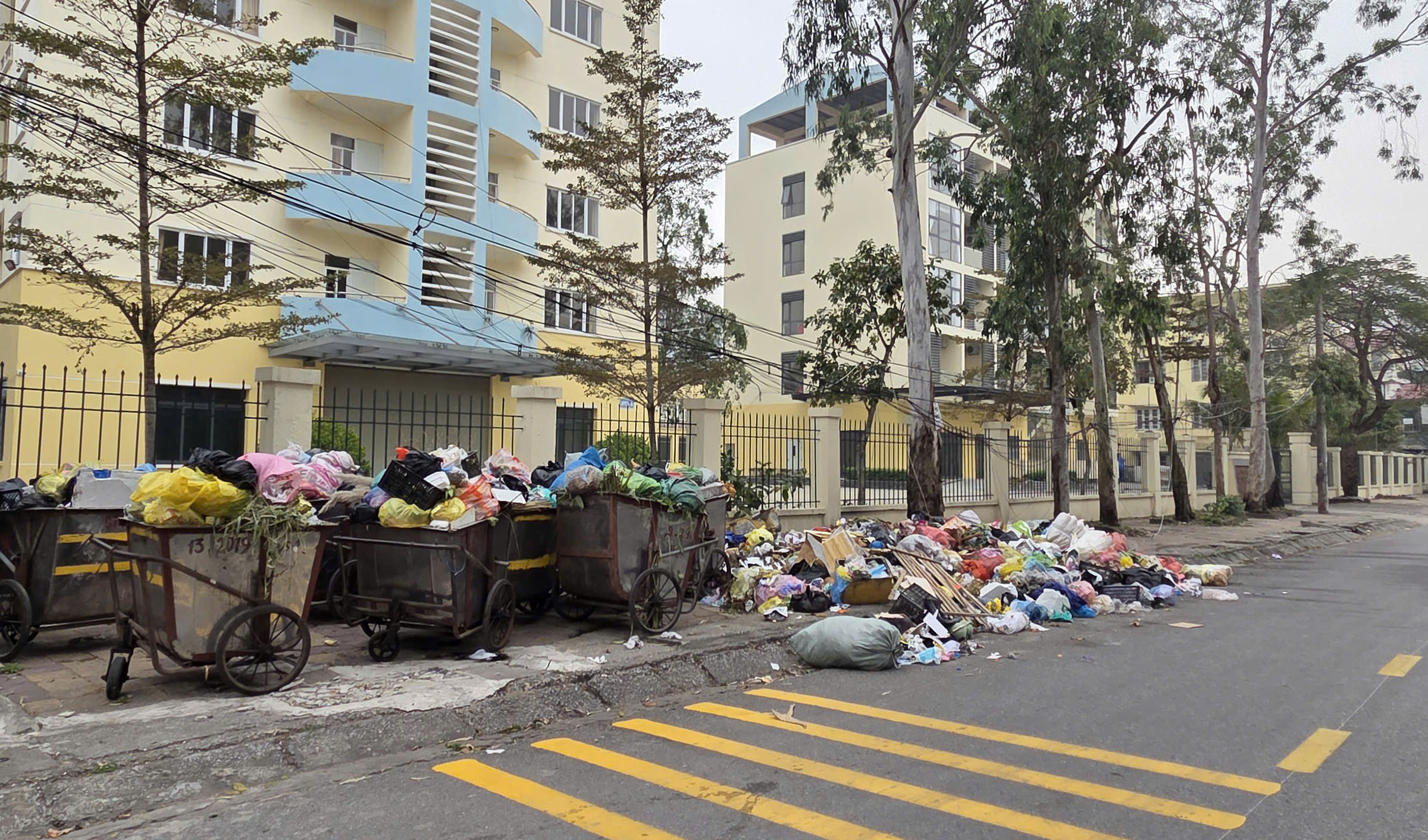 |
Trash piles up, spilling onto Nguyen Du street. Photo: Lam Son |
Residents report that environmental sanitation workers have not collected trash for three days. The stench prevents households living near collection points from opening their doors. Stagnant waste also leads to increased flies, posing a risk of disease.
The waste accumulation stems from the Thanh Hoa Provincial People's Committee's decision to close the Sam Son landfill on january 31. This closure followed years of the site being overloaded and severely polluting the area. According to the plan, starting in february, all household waste from Sam Son residents, agencies, and businesses, as well as surrounding wards, was to be collected and transported to the waste treatment plant in Dong Nam area, Dong Quang ward, over 25 km from the former landfill.
However, according to a leader from Sam Son ward's Economic Infrastructure and Urban Department, the Dong Nam waste plant is also currently overloaded and cannot accept waste from Sam Son ward. The Sam Son ward government is working with Sam Son Environment and Urban Company to address this issue and find a solution soon.
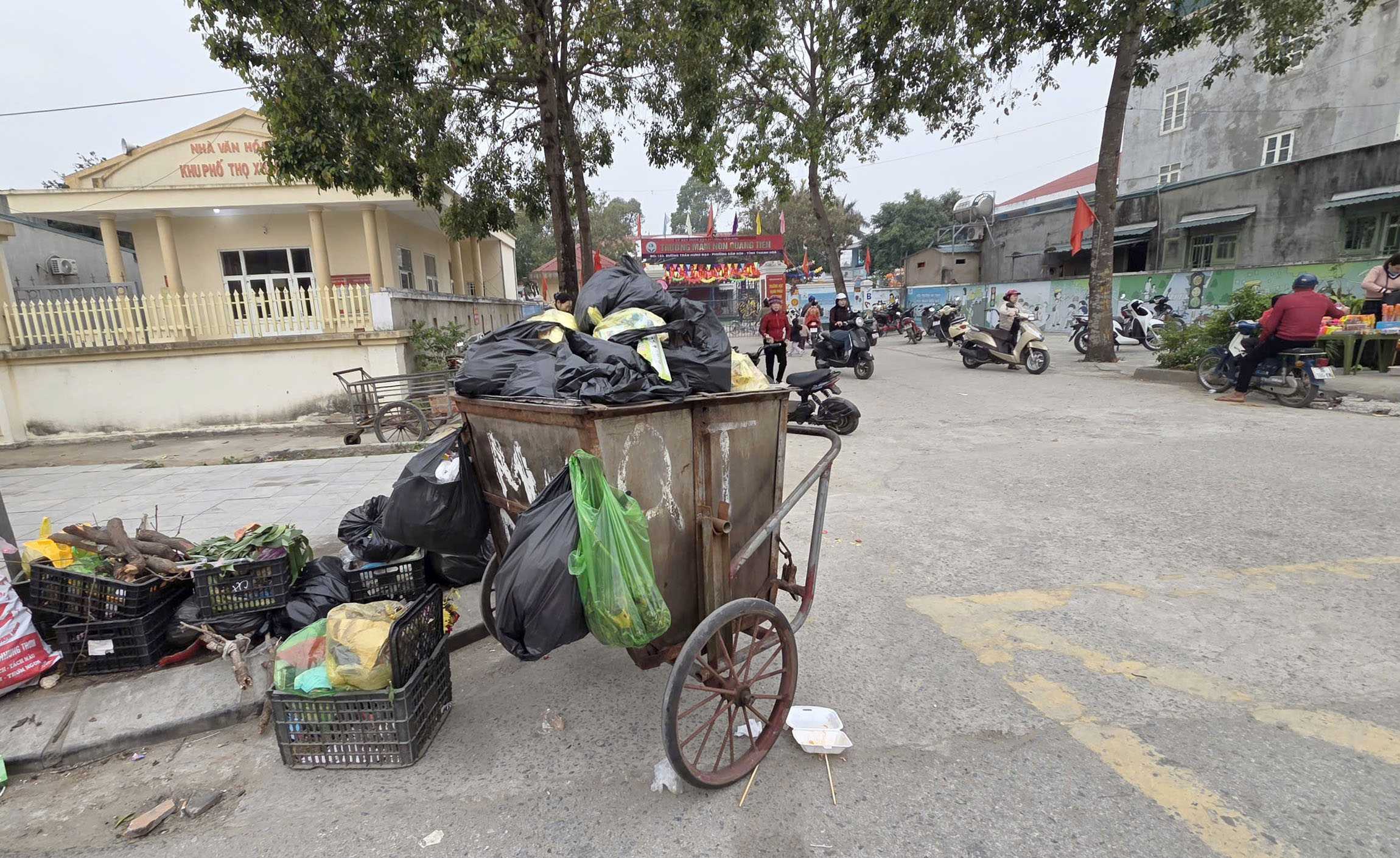 |
Waste accumulates near the gate of Quang Tien Kindergarten, Tran Hung Dao street. Photo: Lam Son |
The Sam Son landfill, spanning 2,7 hectares, began operations in 1997 with a processing capacity of about 25 tons of waste per day. Waste was not sorted or industrially processed; instead, it was primarily collected, accumulated, and then buried or left for natural decomposition. Over the past 10 years, increasing population and tourist numbers have led to the landfill becoming severely overloaded, with all three burial pits now full. At some points, the waste piles reached over 10 meters high from the road surface.
This overload caused severe pollution. Many households located 200-300 meters from the landfill frequently had to keep their doors closed, use mosquito nets while eating, and wear masks while sleeping. During summer, southwest winds spread the foul odor over a wide area, engulfing residential neighborhoods. Leachate also contaminated many surrounding rice fields and crops, forcing some households to abandon their land. In 2010, the Thanh Hoa Provincial People's Committee listed the Sam Son landfill as a facility causing serious environmental pollution.
To address the household waste problem in the Sam Son area, the Thanh Hoa Provincial People's Committee has planned a new waste collection and treatment area in Nam Sam Son ward, covering 14 hectares. This treatment facility is designed to have a phase 1 capacity of approximately 200 tons per day, with the potential to increase to about 500 tons per day in phase 2.
Le Hoang