A resolution issued by the Central Committee on 1/4, focusing on strengthening the Party's leadership in preventing and combating corruption, waste, and negativity in the new period, lauded significant progress and breakthroughs in these efforts.
However, the Central Committee acknowledged persistent challenges, noting that corruption, waste, and negativity in certain sectors have become more serious and sophisticated.
Looking ahead, the Central Committee mandates the synchronized implementation of solutions to make corruption, waste, and negativity "impossible, dared not, unwanted, and unnecessary." It emphasizes prioritizing national, public, and ethnic interests, linking anti-corruption efforts with socio-economic development. The resolution also advocates for both resolute struggle and fostering development, encouraging and protecting innovators who act for the common good, ensuring harmony among the interests of the State, businesses, and the people.
In addressing violations, agencies must adhere to the principle of "no forbidden zones, no exceptions," while considering the context and political and economic impact. Priority will be given to maximizing asset recovery and encouraging proactive remediation of consequences.
A central task highlighted by the Central Committee is the sustained development of an integrity culture, viewing it as a core value and an ethical standard for officials, Party members, businesses, and society. Vietnam aims to build an integrity nation and society, supported by three pillars: institutional integrity, public service integrity, and an integrity-driven body of officials, public servants, and employees. Leaders are prohibited from allowing their spouses, children, or relatives to exploit their influence for personal enrichment.
The Central Committee has called for prompt amendments to the anti-corruption law and the land law. These revisions aim to increase transparency, accountability, and control over the assets and income of individuals in positions of power. Additionally, research is underway to develop an asset registration law.
 |
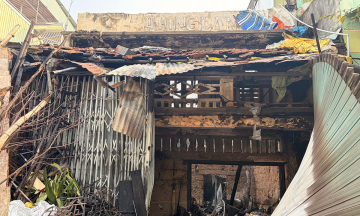
Old headquarters of Hue City agencies abandoned on prime land, March 2026. Photo: Vo Thanh |
The criminal code and the criminal procedure code also require amendment to institutionalize the Party's new perspectives on exempting, reducing, or excluding criminal responsibility in cases involving corruption, waste, and negativity.
The Central Committee emphasized establishing strict criteria for excluding criminal responsibility in instances of risks or damages arising from the application of science, technology, innovation, and digital transformation for the common good. It also aims to institutionalize policies that reduce criminal responsibility and penalties for individuals who lack self-serving motives, voluntarily return assets, mitigate consequences, and cooperate effectively with investigations.
Agencies are also tasked with exploring expanded use of monetary penalties and reduced prison sentences for economic and official crimes. The resolution stresses the need to "completely abolish the 'ask-give' mechanism, preventing special interest groups from embedding or manipulating policies and laws."
Officials' assets and income will face stringent control. Those demonstrating weak capacity, irresponsibility, low prestige, or signs of corruption, waste, or negativity will be replaced or encouraged to resign. Salary and income policies for officials and public servants will be secured to ensure stable livelihoods and job security.
In conjunction with developing a roadmap for nationwide asset transparency, the Central Committee is pushing for increased cashless payments. Simultaneously, the Central Committee strictly forbids exploiting anti-corruption, anti-waste, and anti-negativity initiatives to impede the normal operations of agencies, organizations, or individuals.
Vu Tuan