Can Tho City is struggling to manage hundreds of surplus public properties, including offices and land plots, which remain unutilized and are at risk of dilapidation and waste following administrative restructuring.
By early March, the People's Committee of Can Tho City had issued three decisions approving plans for 684 such facilities. Of these, 78 were transferred from central agencies for management and exploitation.
Under these plans, the Land Fund Development Center was tasked with managing and developing 137 facilities, encompassing former provincial department offices and those received from central authorities. Additionally, one facility was assigned to the Department of Finance for management.
To enhance the efficiency of public asset utilization and align with local authority, 546 surplus houses and land plots were transferred to the People's Committees of various communes and wards, corresponding to their new administrative boundaries.
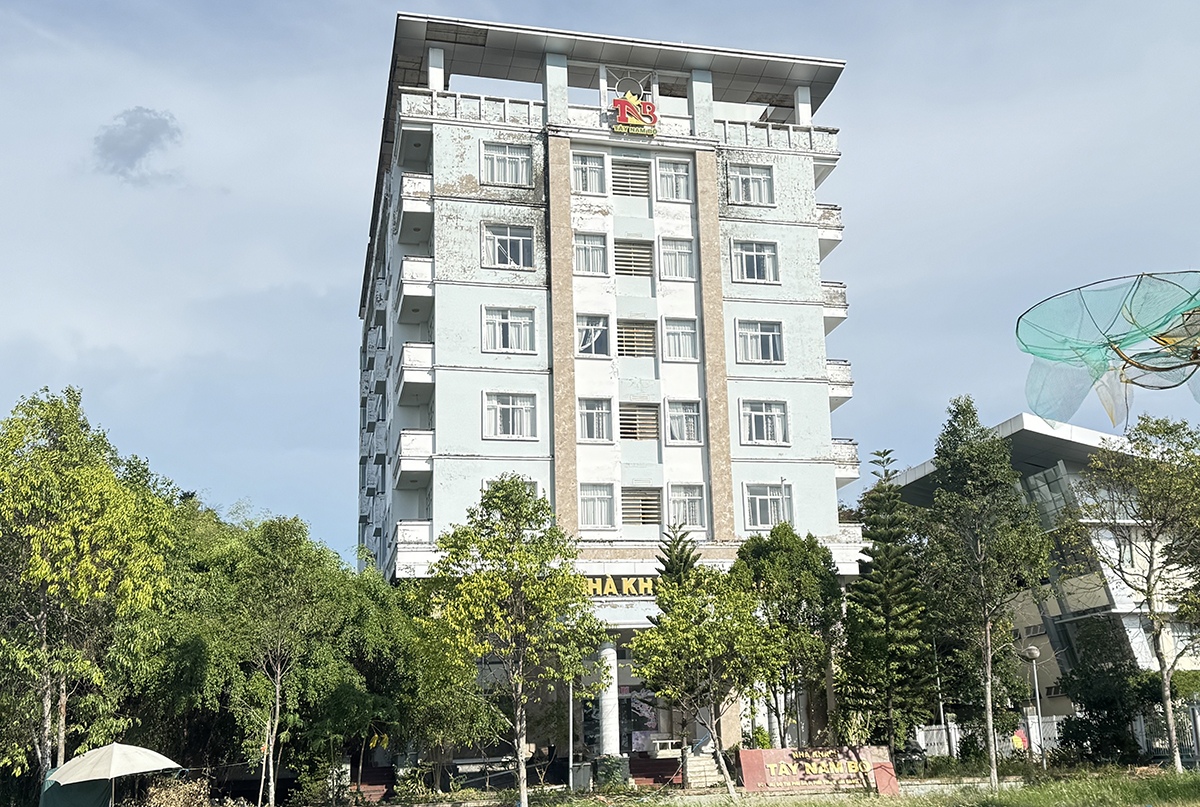 |
The Tay Nam Bo Guesthouse in Hung Phu ward has not been used for several months. Photo: An Binh
Despite these initial steps, the processing of these properties remains slow. As of now, only five communes and wards—Dai Thanh, Trung Nhut, Chau Thanh, My Tu, and Lai Hoa—have submitted their processing plans for a total of 25 facilities. Many other local authorities have yet to complete their plans.
The acquisition of these surplus public assets also faces numerous challenges. While the Department of Finance has coordinated the handover of 96 facilities to the Land Fund Development Center, only 49 have been fully accepted. The remaining properties are still undergoing surveys to determine their exact location and status.
The primary reasons for these delays include incomplete legal documentation for land, structures, and equipment, which hinders accurate assessment of the assets' current condition and value. Furthermore, some transferred facilities do not fall within the Land Fund Development Center's designated management functions, creating additional complexities in their processing.
During a meeting on 15/5, Le Quang Tung, Secretary of the Can Tho Party Committee, underscored the critical importance of effectively managing, arranging, and exploiting surplus public assets after organizational restructuring. This, he emphasized, is crucial to prevent waste and loss of state property.
Tung highlighted that field surveys in several localities, particularly in the former Hau Giang and Soc Trang areas, revealed many offices and land plots remain unutilized post-reorganization, posing a significant risk of waste if not processed promptly.
The central government has mandated that Can Tho City finalize its processing plans for surplus public assets by 30/6 and complete the entire arrangement and processing by 31/12.
Tung urged relevant agencies to thoroughly review, inventory, and classify assets. He also called for the development of processing plans tailored to each asset type and specific conditions.
The Party Secretary also advised that the handling of surplus assets must be linked to practical usage needs, cautioning against rigid, one-size-fits-all approaches. Many former departmental offices, with their specialized structures, are difficult to convert for healthcare or educational purposes, necessitating more suitable exploitation strategies.
Following its merger with Soc Trang and Hau Giang, Can Tho City operates as a centrally-run municipality. It comprises 103 communes and wards, covers an area of over 6,360 km2, ranking third in the Mekong Delta and 19th nationwide, with a population of nearly 4,2 million people.
An Binh