


During a seminar held by the Da Nang City People's Committee on 15/5 to gather feedback on the city's general planning until 2050, with a vision to 2075, Hoang Su, former Deputy Director of the Quang Nam Department of Construction (old), stated that Da Nang's central area is gradually becoming overloaded. Although the core population is currently only about 1,2-1,3 million people, traffic congestion has become a frequent occurrence. Meanwhile, the city's total population is projected to reach 2,5 million by 2030, creating significant pressure on technical infrastructure and the urban environment.
Concurrently, Da Nang is undertaking several large-scale development initiatives, including seven free trade zones, a seaport with a capacity of 70 million tons per year, and an international financial hub. Therefore, Su proposed establishing a "new Da Nang" in the south instead of continuing to concentrate residents in the existing urban core. This new urban area is envisioned to stretch from the southern Co Co river to the end of the old Thang Binh district, covering an area of approximately 20,000 hectares.
This proposed area is about 30 minutes away from the current center by oto. The objective is to stabilize the population size in the core urban area while decentralizing residents to the new region to reduce pressure on traffic, the environment, and social infrastructure. The city could consider relocating some of the approved free trade zones (FTZ) to the south, planning about 4,000 hectares to form a "super FTZ."
He also recommended moving the city's administrative center to the new urban area south of Cua Dai, in the southern Hoi An region. According to him, this is not merely a planning decision but also demonstrates a commitment to developing an ecological, modern city to attract international investors.
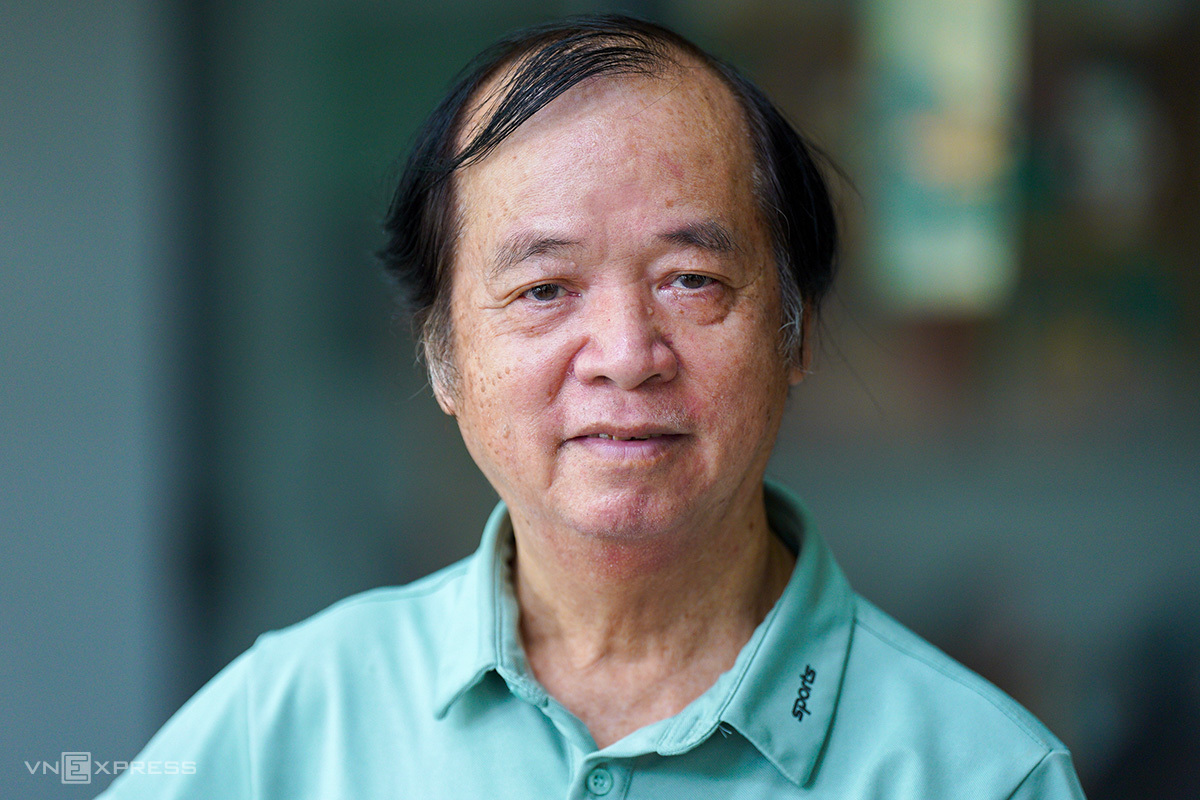 |
Architect Hoang Su, former Deputy Director of Quang Nam Department of Construction (old). *Photo: Nguyen Dong*
Agreeing with the direction of expanding development space, Le Tri Thanh, Chairman of the Da Nang City Vietnam Fatherland Front Committee, suggested that the city needs to clearly define functional urban areas linked to the economic drivers of each region. The new administrative center in phase 2030-2045 should not only house state agencies but also be synchronously planned with infrastructure, urban space, and accompanying amenities to foster long-term development.
Many experts at the seminar also proposed clearly defining functions for each area, such as industrial-port urban areas connected with Chu Lai, a chain of coastal tourism urban areas, an education and training urban area, and a heritage urban area around Hoi An.
Previously, on 6/4, Deputy Prime Minister Tran Hong Ha signed a decision approving the general planning task for Da Nang city until 2050, with a vision to 2075. According to the orientation, Da Nang will become a major growth pole for the entire country, serving as a logistics, marine economy, and free trade center.
The city is also oriented to develop an urban model linked with Dien Ban and Hoi An to form a unified coastal urban space, connecting the tourism chain from Ba Na and Son Tra to Hoi An and My Son.
After its merger with Quang Nam from 1/7/2025, Da Nang will comprise 23 wards, 70 communes, and the Hoang Sa special zone, covering an area of over 11,859 km2 with a population exceeding 3 million, making it the largest centrally-run city in the country by area. According to the plan, by 2050, the city's total population is projected to reach approximately 6 million, with an urban population of about 4 million. The scale of residential land will increase to 28,000-44,000 hectares to meet new development needs.
Nguyen Dong


