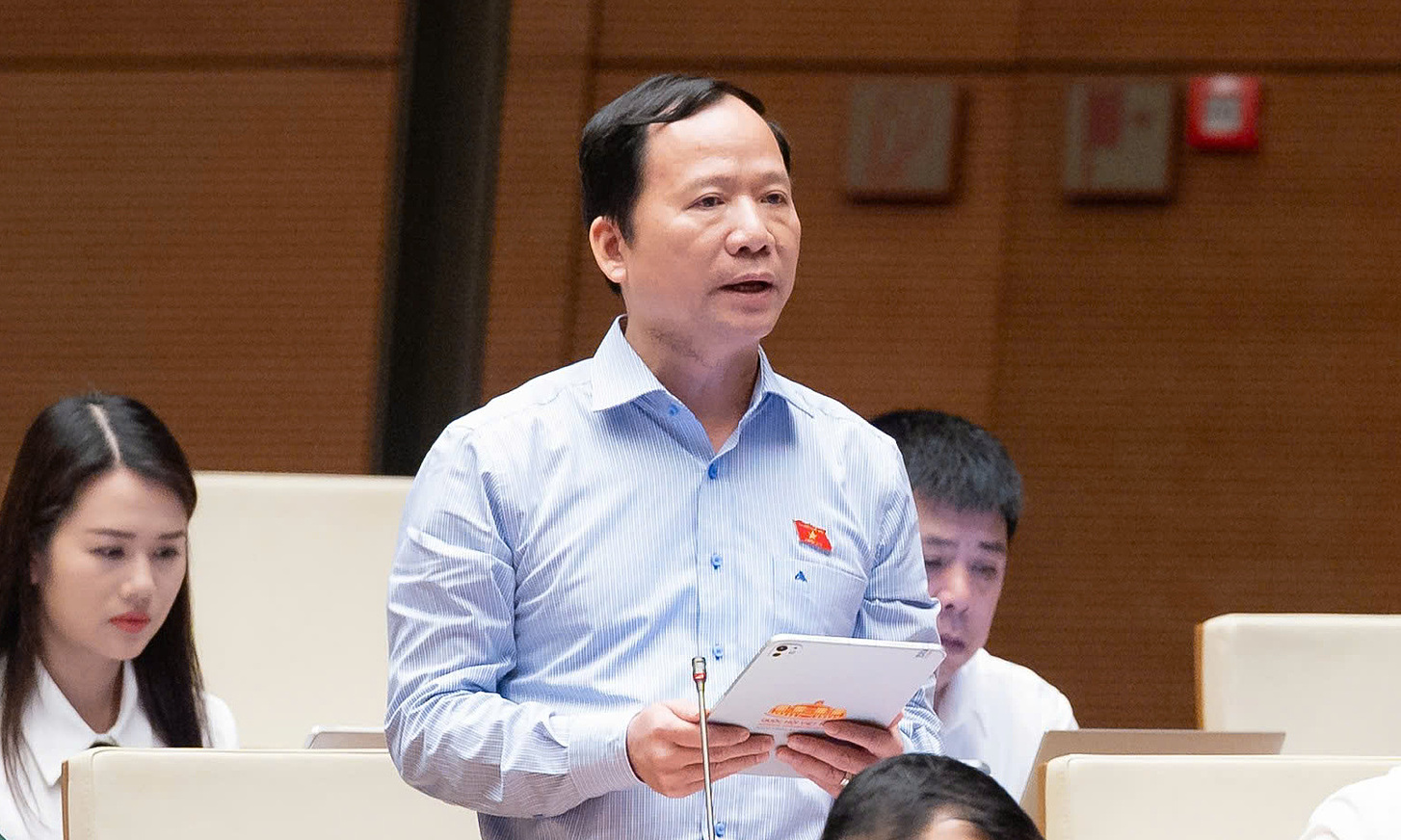
Most Venerable Thich Duc Thien, Deputy Chairman and Secretary General of the Executive Council of the Vietnam Buddhist Sangha, has called for a state co-funding mechanism for the auction of exceptionally rare artifacts. This proposal, made during a discussion on the draft Resolution for Vietnamese cultural development at the National Assembly on the morning of 22/4, aims to generate additional resources to bring Vietnamese heritage from abroad back to the country.
Thich Duc Thien highlighted that many rare Vietnamese artifacts are currently scattered abroad. These items hold special historical, cultural, and sovereign value, making a robust policy for their repatriation essential. He asserted that such a policy must mobilize both state and societal resources, as bringing these artifacts back would preserve heritage and contribute to enhancing soft power, serving socio-economic development.
The current draft Resolution already proposes several support mechanisms to encourage organizations and individuals to participate in repatriation efforts. Specifically, high-value artworks and heritage items that meet national treasure criteria or are rare artifacts from abroad, if purchased or auctioned and brought to Vietnam for non-profit display, will be exempt from import tax, customs fees, and value-added tax.
Furthermore, the draft stipulates that if a repatriated artifact is transferred to a third party by its owner instead of being handed over to the State, all tax and fee obligations must be fulfilled. Concurrently, for national treasures and rare artifacts of Vietnamese origin located abroad, a budget will be promptly allocated once the Prime Minister approves the policy for their purchase or auction and repatriation.
Building on these existing mechanisms, Most Venerable Thich Duc Thien proposed adding direct financial incentive policies to create clearer motivation. These incentives could include income tax deductions for the value of exceptionally rare artifacts brought back to Vietnam.
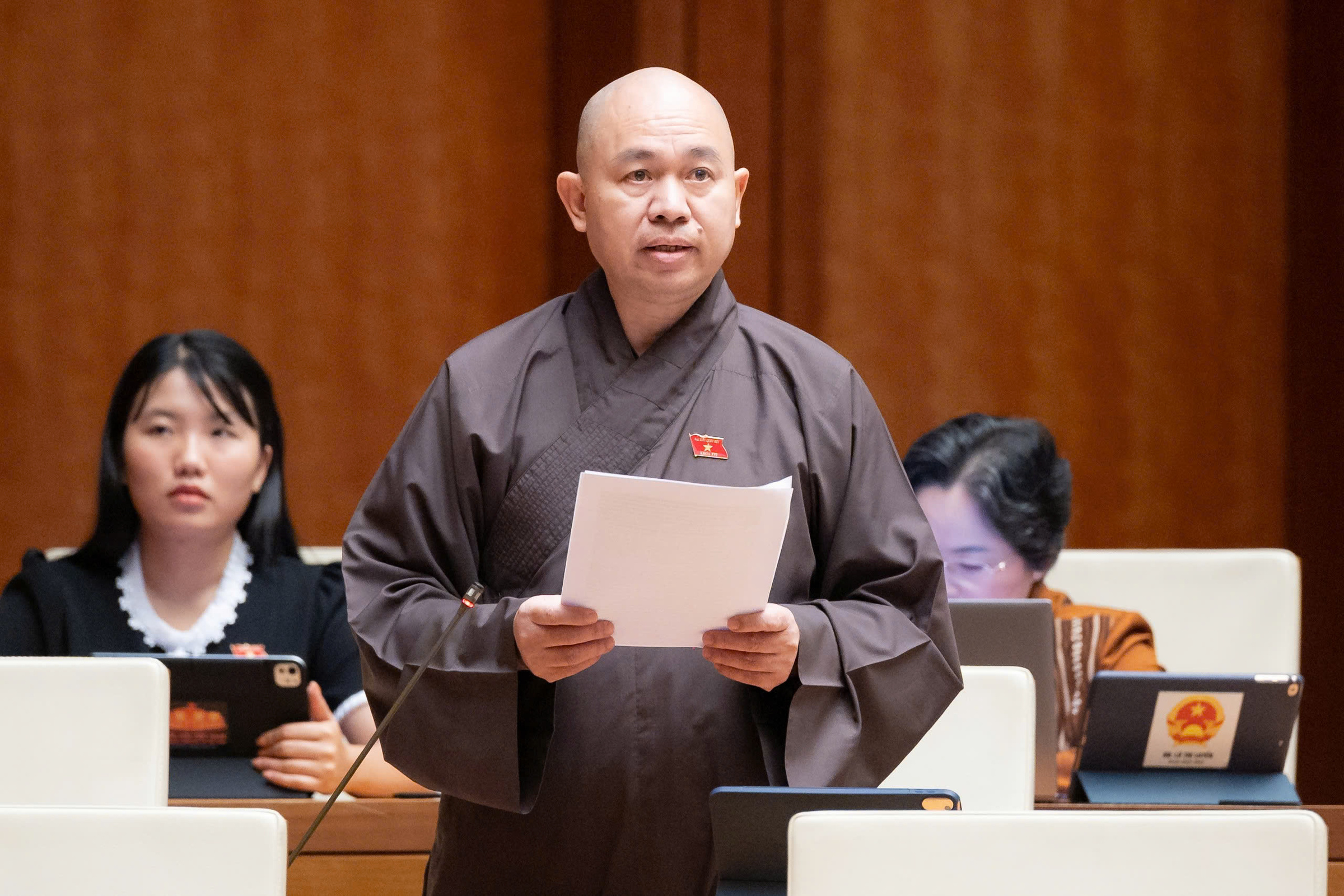 |
Most Venerable Thich Duc Thien, Deputy Chairman and Secretary General of the Executive Council of the Vietnam Buddhist Sangha, speaking at the National Assembly on the morning of 22/4. *Photo: National Assembly Media* |
He further proposed that the State participate in co-funding auctions for exceptionally rare artifacts. This mechanism, he explained, would enhance competitiveness in international auctions, preventing artifacts from continuing to fall into the hands of foreign collectors due to resource limitations. Additionally, he stressed the need for a policy to recognize repatriated artifacts as special cultural assets and to honor organizations and individuals involved in finding, purchasing, donating, or transferring these artifacts to the State.
A notable instance of repatriation occurred in early 2023, when Nguyen The Hong, a private collector from Bac Ninh, spent 6,1 million EUR, equivalent to over 153 billion VND, to purchase the "Hoang De Chi Bao" golden seal from an auction house in France. The seal was successfully brought back to Vietnam with the support of functional agencies.
According to the Cultural Heritage Law, an artifact is an item with typical historical, cultural, or scientific value, dating back 100 years or more. Items that are exceptionally representative, unique, and linked to significant historical events or figures are considered for recognition as national treasures.
Vu Tuan